

Paper
- +3
Rajesh Bansal, Anirudh Burman, Rudra Chaudhuri, …
{
  "authors": [
    "Srinath Raghavan"
  ],
  "type": "other",
  "centerAffiliationAll": "",
  "centers": [
    "Carnegie Endowment for International Peace",
    "Carnegie India"
  ],
  "collections": [],
  "englishNewsletterAll": "",
  "nonEnglishNewsletterAll": "",
  "primaryCenter": "Carnegie India",
  "programAffiliation": "",
  "programs": [],
  "projects": [
    "Security Studies"
  ],
  "regions": [
    "United States",
    "Asia",
    "South Asia",
    "Pakistan",
    "India"
  ],
  "topics": [
    "Foreign Policy"
  ]
}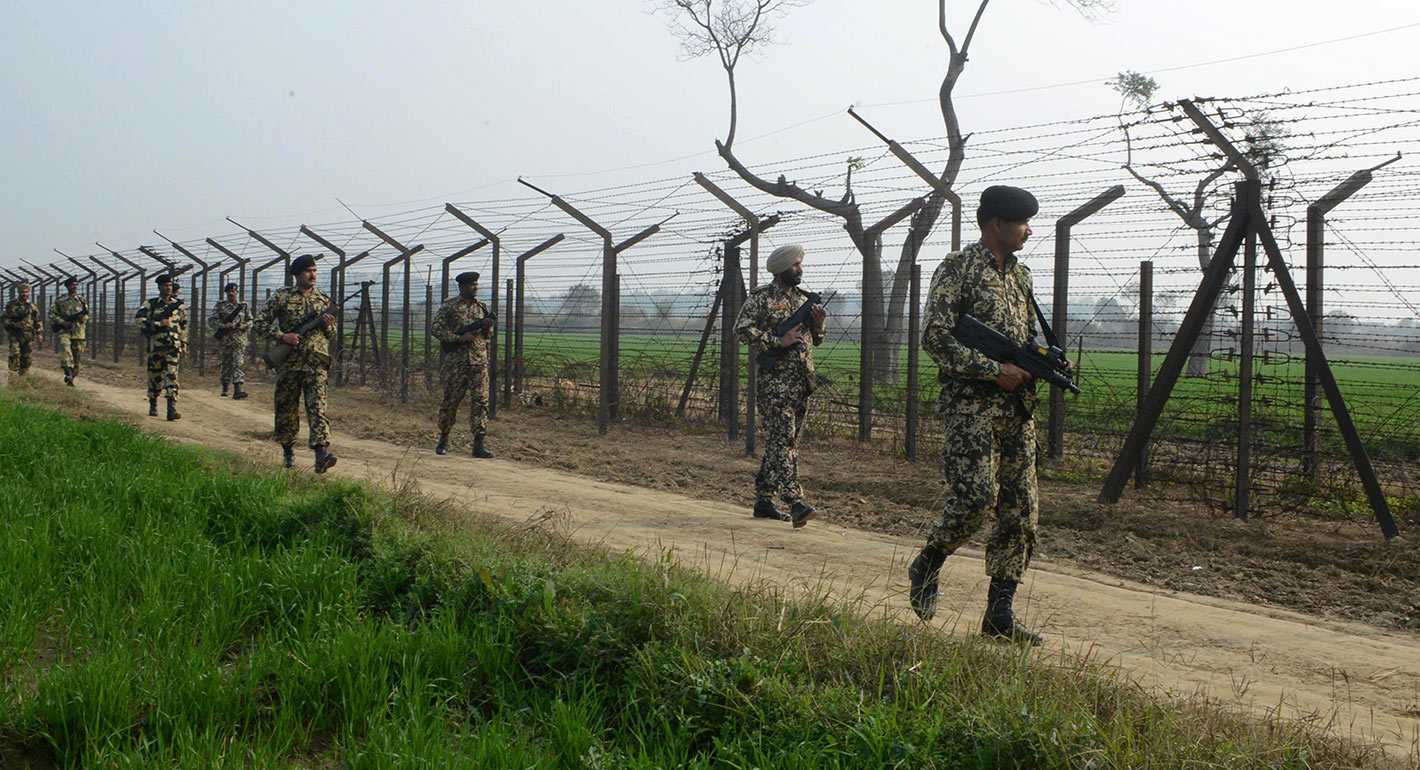
Source: Getty
The rise of India as a major Asian power is a significant geopolitical process of our times.
Source: Journal of Strategic Studies
The rise of India as a major Asian power is a significant geopolitical process of our times. While India’s growing economic heft is undoubtedly true, it is also a partial and an ahistorical reading. On the one hand, it assumes that the institutional sinews of power flow automatically from economic growth. On the other hand, it overlooks the longer trajectory of India's rise going back to the decade preceding independence – an arc of historical evolution that marks out India from many other post-colonial states. This article identifies India’s participation in the second World War as the starting point of its ‘long rise’ as an Asian power. In analyzing the military transformations that India underwent during the war, it focuses on the institutional dimension of these changes and considers the longer-term changes wrought by the war in the composition of the army, the logistical and support infrastructure, and the emergence of an indigenous military industrial base. Taken together, the article argues, these changes positioned India as a potential regional military power even before it emerged as an independent actor in the international system.
This article was originally published in a special issue of the Journal of Strategic Studies.

Nonresident Senior Fellow
Srinath Raghavan is a nonresident senior fellow at Carnegie India. His primary research focus is on the contemporary and historical aspects of India’s foreign and security policies.
Recent Work


Rajesh Bansal, Anirudh Burman, Rudra Chaudhuri, …
Srinath Raghavan
Carnegie India does not take institutional positions on public policy issues; the views represented herein are those of the author(s) and do not necessarily reflect the views of Carnegie, its staff, or its trustees.

As AI grows more sophisticated, as the supply chains that power it become more contested, and as access to frontier models becomes geopolitically charged, India must begin to ask a different set of questions. Not what applications it can build on someone else’s infrastructure but what the world needs.

Konark Bhandari

The Indian Ocean Region hosts one of the densest concentrations of subsea cables in the world. Yet, despite accounting for a significant share of global internet traffic, India’s participation remains limited.

Charukeshi Bhatt

How is AI reshaping space security, creating governance challenges, and where does international diplomacy stand today?


Tejas Bharadwaj, Almudena Azcárate Ortega

After the chill in ties between 2020 and 2024 that brought India–China relations to their lowest point in several decades, the two countries have engaged each other afresh. This paper argues that there are predominantly four imperatives guiding India’s approach to China, and they exist in an order of priority.

Saheb Singh Chadha

This piece argues that India’s central challenge is not managing a single flashpoint but resolving the underlying tension between expansion and institutional coherency of the BRICS grouping.

Vrinda Sahai