

Commentary
How is AI reshaping space security, creating governance challenges, and where does international diplomacy stand today?
Tejas Bharadwaj, Almudena Azcárate Ortega
{
  "authors": [
    "Richard Sokolsky",
    "Aaron David Miller"
  ],
  "type": "legacyinthemedia",
  "centerAffiliationAll": "",
  "centers": [
    "Carnegie Endowment for International Peace",
    "Malcolm H. Kerr Carnegie Middle East Center"
  ],
  "collections": [
    "Iranian Proliferation"
  ],
  "englishNewsletterAll": "",
  "nonEnglishNewsletterAll": "",
  "primaryCenter": "Carnegie Endowment for International Peace",
  "programAffiliation": "",
  "programs": [],
  "projects": [],
  "regions": [
    "North America",
    "United States",
    "Middle East",
    "Iran"
  ],
  "topics": [
    "Political Reform",
    "Foreign Policy",
    "Nuclear Policy"
  ]
}
Source: Getty
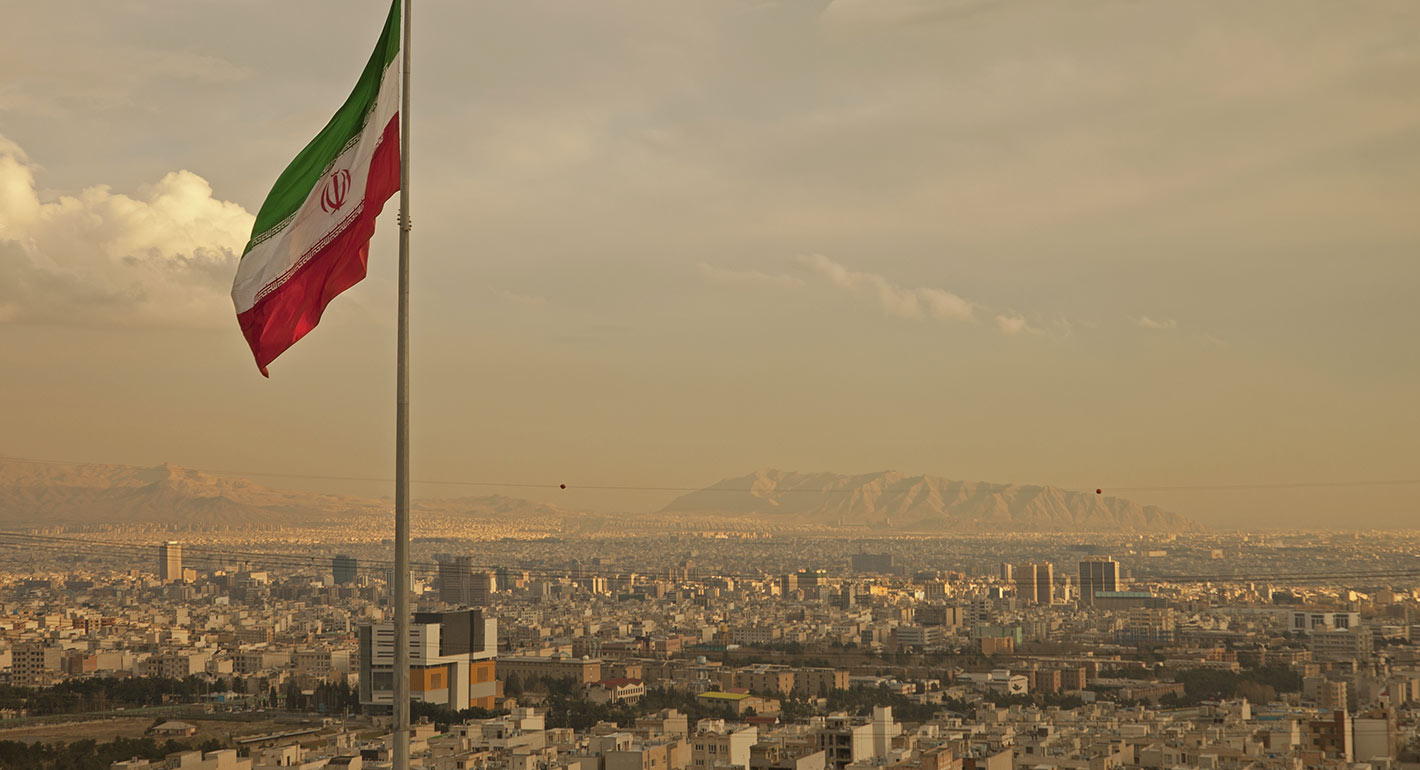
The Trump administration made the choice last May to withdraw from a flawed but still highly functional arms control agreement. A year on, it has not developed an alternative to replace it or turn back Iran’s influence in the region.
Source: USA Today
The Maduro regime in Venezuela may yet go way of the dodo. But for regime changers in the Trump administration, particularly national security adviser John Bolton and Secretary of State Mike Pompeo, President Nicolás Maduro’s tenacity in clinging to power should be a cautionary tale. That’s especially true as they seem to be pursuing the same objective in Iran. Like Venezuela, they are subjecting Iran to a campaign of maximum pressure. Yet regime change there is much more difficult and complicated than in Venezuela, where they’ve had no success so far.
Wednesday is the first anniversary of President Donald Trump’s withdrawal from the Iran nuclear agreement. He and his administration are marking it by deploying significant air and naval forces to the Persian Gulf and engaging in bellicose rhetoric, reacting to intelligence reports about preparations for possible Iranian attacks on U.S. forces.
Both responses appear designed to goad Iran into taking actions that would provide a pretext for U.S. military attacks against Iranian territory or its forces and proxies throughout the region. For its part, Iran said Wednesday it will stop complying with parts of the nuclear deal and threatened to resume higher uranium enrichment if a new deal that excludes the U.S. isn't reached soon. At this point, it’s well worth asking: what exactly is the Trump administration’s policy toward Iran, and will it get them what they want?
Regime changers understandably believe dispatching Maduro’s regime is just a matter of time. The president has long been hostile to Maduro, and regime change is his administration's clear goal. Venezuela is close by in the Western hemisphere; nearly 50 countries including the EU and much of Latin America stand with the U.S.; rival leader Juan Guaido has popular support and constitutional authority to boot; and the country faces the worst humanitarian disaster in the hemisphere, almost all a result of Maduro’s corruption and mismanagement.
If any place was ripe for regime change, you’d think it would be Venezuela. And yet in at least three false starts this year, Maduro has hung on — largely as result of the loyalty of the upper echelons of the Venezuelan military; the opposition’s missteps and the support of the Russians and Cubans.
The administration is not heeding these warnings. Sitting in Tehran, it would be easy for Iranian leaders to conclude that the goal of U.S. policy toward Iran has nothing to do with changing its regional behavior or renegotiating the Iran nuclear accord — and everything to do with strangling Iran economically to fracture the regime or provoke a massive public uprising that would ultimately lead to the its collapse. And they’d be right. But this is fabulist thinking, and trying to topple the regime would only lead to catastrophic failure or catastrophic success. Here are eight reasons why:
Developing a successful policy to check Iran’s regional and nuclear ambitions is a very heavy lift. It’s particularly tough given the reality that the Iranian regime is determined to use the U.S. as an adversary to prevent uncontrolled westernization and to spread its ideological message at home and in region. And the toxic politics of the Iran issue on the U.S. side makes compromise unlikely.
Reimposing sanctions won’t produce regime collapse, a new regime any less hostile to Washington, or a less militant regional policy. Maybe reeling under pressure of sanctions, the regime would open a channel to Washington. But even this wouldn't guarantee a serious negotiation.
The Trump administration made the choice last May to withdraw from a flawed but still highly functional arms control agreement. A year on, it has not developed an alternative to replace it or turn back Iran’s influence in the region. The inconvenient reality is that in the absence of clear goals and policies, all it has come up with is saber rattling — which could easily lead to an unnecessary and potentially dangerous U.S.-Iranian military confrontation.

Nonresident Senior Fellow, Russia and Eurasia Program
Richard Sokolsky is a nonresident senior fellow in Carnegie’s Russia and Eurasia Program. His work focuses on U.S. policy toward Russia in the wake of the Ukraine crisis.

Senior Fellow, American Statecraft Program
Aaron David Miller is a senior fellow at the Carnegie Endowment for International Peace, focusing on U.S. foreign policy.
Carnegie India does not take institutional positions on public policy issues; the views represented herein are those of the author(s) and do not necessarily reflect the views of Carnegie, its staff, or its trustees.

How is AI reshaping space security, creating governance challenges, and where does international diplomacy stand today?


Tejas Bharadwaj, Almudena Azcárate Ortega

After the chill in ties between 2020 and 2024 that brought India–China relations to their lowest point in several decades, the two countries have engaged each other afresh. This paper argues that there are predominantly four imperatives guiding India’s approach to China, and they exist in an order of priority.

Saheb Singh Chadha

This piece argues that India’s central challenge is not managing a single flashpoint but resolving the underlying tension between expansion and institutional coherency of the BRICS grouping.

Vrinda Sahai

A partnership between India, a country of subcontinental size, and Africa, a continent of fifty-four countries, may seem asymmetric until one notes that both are home to nearly the same number of people—1.4 billion. This essay spells out the existing challenges to the partnership, its optimal potential, and the possible pathways to realize it over the next quarter-century.

Rajiv Bhatia

The U.S.–India semiconductor cooperation story is well-stocked with top-level strategic intent. What remains unresolved, however, are some underlying challenges that will determine whether the cooperation actually functions. Three such friction points stand out.

Shruti Mittal