

Article
Thomas de Waal
{
  "authors": [
    "Thomas de Waal"
  ],
  "type": "other",
  "centerAffiliationAll": "dc",
  "centers": [
    "Carnegie Endowment for International Peace",
    "Carnegie Europe"
  ],
  "collections": [
    "Europe’s Eastern Neighborhood"
  ],
  "englishNewsletterAll": "ctw",
  "nonEnglishNewsletterAll": "",
  "primaryCenter": "Carnegie Europe",
  "programAffiliation": "EP",
  "programs": [
    "Europe"
  ],
  "projects": [],
  "regions": [
    "Russia",
    "Eastern Europe",
    "Caucasus",
    "Georgia",
    "Iran"
  ],
  "topics": [
    "Security"
  ]
}
Source: Getty
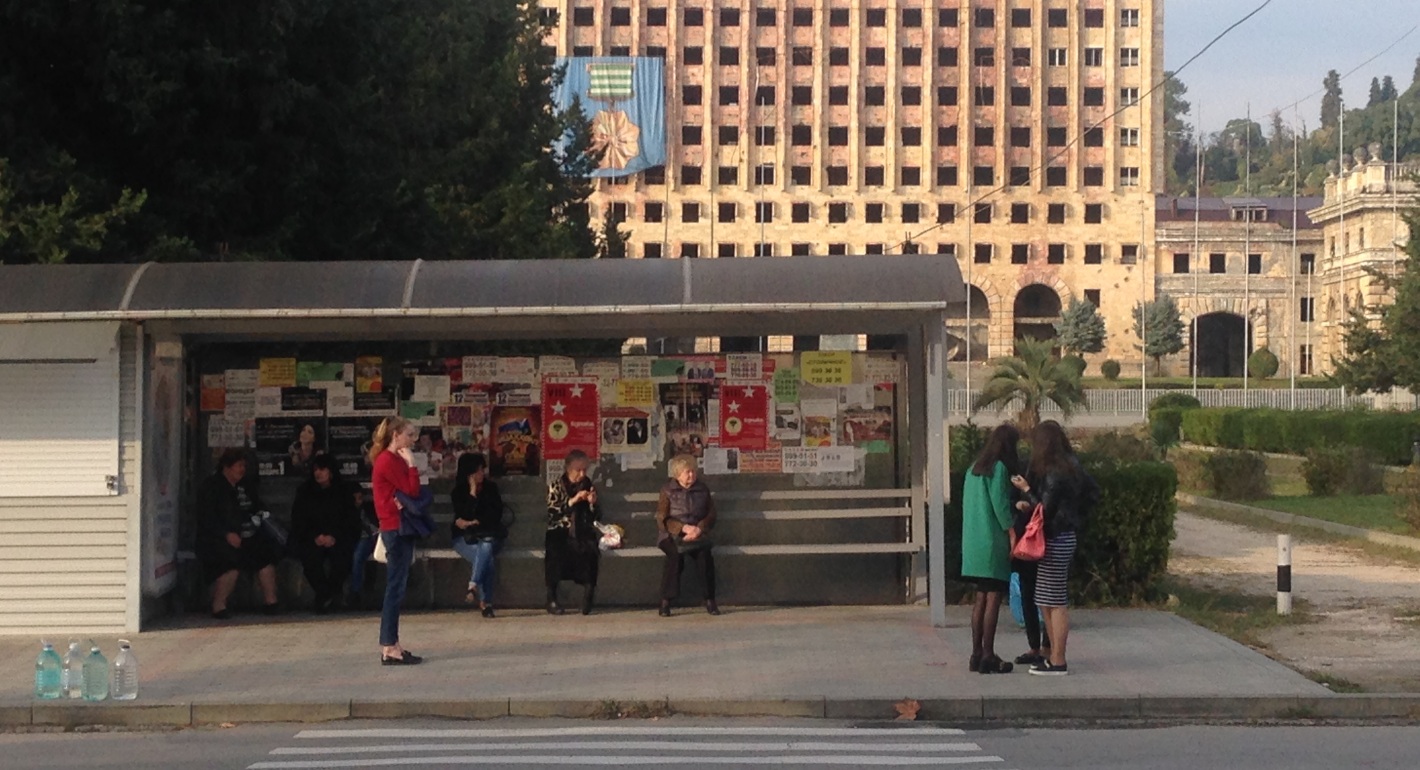
Abkhazia has grown more internationally isolated and dependent on Russia over the last decade, and the big political issues about its future remain unresolved.
Source: CENTRE FOR EUROPEAN POLICY STUDIES
Abkhazia today is in the peculiar state of having both entrenched its de facto separation from Georgia but also finding itself in almost complete international isolation. Recognition as an independent state in 2008 by Russia, (followed by Nauru, Nicaragua, Syria and Venezuela, four other countries with no close connections to the region), coincided with the closure of UNOMIG, the United Nations mission in the region, a reduced presence of international NGOs and humanitarian organizations there and a policy of unequivocal support for Georgia by its Western friends. Since then Abkhazia has become more secure and better off but also even more dependent on Russia, financially, militarily and politically. Yet the patron-client relationship is often strained. The two sides argue over several issues and Russian direct assistance has fallen in the last few years.This publication was prepared within the framework of the CEPS-led 3DCFTAs project, enabled by financial support from Sweden. To download the publication, please consult the following link.

Senior Fellow, Carnegie Europe
Thomas de Waal is a senior fellow at Carnegie Europe, specializing in Eastern Europe and the Caucasus.
Recent Work
Thomas de Waal
Thomas de Waal

After the chill in ties between 2020 and 2024 that brought India–China relations to their lowest point in several decades, the two countries have engaged each other afresh. This paper argues that there are predominantly four imperatives guiding India’s approach to China, and they exist in an order of priority.

Saheb Singh Chadha

This piece argues that India’s central challenge is not managing a single flashpoint but resolving the underlying tension between expansion and institutional coherency of the BRICS grouping.

Vrinda Sahai

This piece argues that the present Indian strategy, based on opportunistic diversification and utilization of limited strategic reserves, remains inadequate when confronting supply disruptions. It evaluates India’s options in the short, medium, and long terms.
Vrinda Sahai

This piece examines India’s response to U.S. sanctions and tariffs, specifically assessing the immediate market consequences, such as alterations in import costs, and the broader strategic implications for India’s energy security and foreign policy orientation.
Vrinda Sahai
The India-Pakistan conflict that played out between May 6 and May 10, 2025, offers several military lessons. This article presents key takeaways from Operation Sindoor and breaks down how India’s preparations shaped the outcome and what more is needed to strengthen future readiness.

Dinakar Peri