

Paper
Sarah Yerkes, Natalie Triche, Amr Hamzawy
{
  "authors": [
    "Sarah Yerkes"
  ],
  "type": "legacyinthemedia",
  "centerAffiliationAll": "dc",
  "centers": [
    "Carnegie Endowment for International Peace"
  ],
  "collections": [],
  "englishNewsletterAll": "menaTransitions",
  "nonEnglishNewsletterAll": "",
  "primaryCenter": "Carnegie Endowment for International Peace",
  "programAffiliation": "MEP",
  "programs": [
    "Middle East"
  ],
  "projects": [],
  "regions": [
    "North Africa",
    "Tunisia"
  ],
  "topics": [
    "Political Reform",
    "Foreign Policy"
  ]
}
Source: Getty
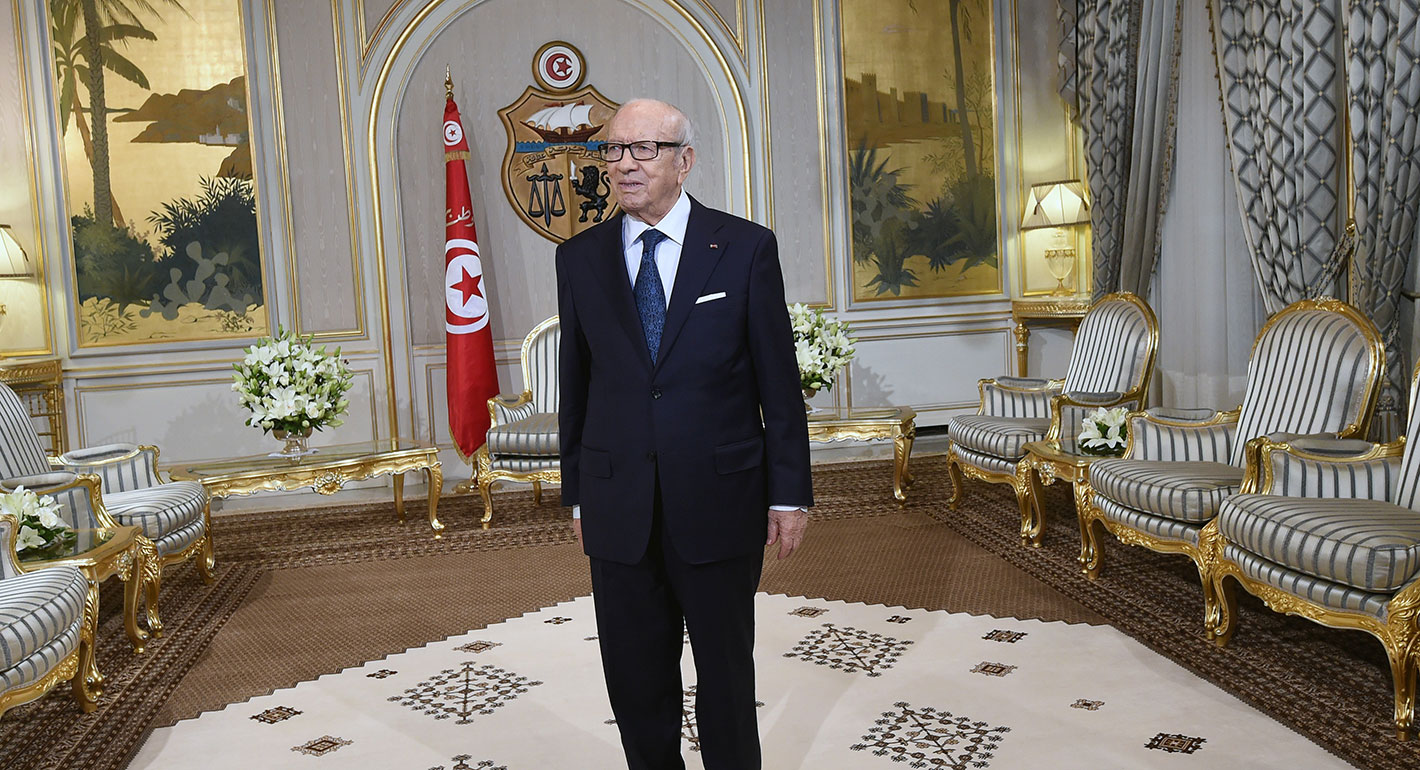
President Beji Caid Essebsi was Tunisia’s first democratically elected president. His death could lead to the unraveling of the Nidaa Tounes party, which in recent years has suffered from in-fighting and lacked a coherent vision
Source: Axios
The death of Tunisian President Beji Caid Essebsi on Thursday will complicate the country's upcoming elections and may spell the end of his increasingly fractious Nidaa Tounes political party.
The big picture: The 92-year-old leader was Tunisia's first democratically elected president. It could now fall to the interim president, 85-year-old Speaker of Parliament Mohammed Ennaceur, to finalize the Constitutional Court — a body whose absence has stunted the democratic transition as parliament has failed to agree on the court's number of members.
Where it stands: Tunisia was already scheduled to hold presidential elections on November 17, yet the ISIE — Tunisia's electoral body —announced it would move the elections up to September 15, to comply with a constitutional requirement that new elections be held within 90 days of the president’s death.
What's happening: The interim president must decide what to do about a controversial electoral law, passed by parliament in June, that would both raise the electoral threshold from 3% to 5% and exclude some popular presidential candidates, including television magnate Nabil Karoui, from the race.
The impact: Essebi's death could lead to the unraveling of the Nidaa Tounes party, which in recent years has suffered from in-fighting and lacked a coherent vision.

Acting Co-Director and Senior Fellow, Middle East Program
Sarah Yerkes is acting co-director and a senior fellow in the Middle East Program at the Carnegie Endowment for International Peace. Her research focuses on democracy and governance, U.S. foreign policy towards the Middle East and North Africa, and political and economic reform in Tunisia.
Recent Work

Sarah Yerkes, Natalie Triche, Amr Hamzawy
Carnegie India does not take institutional positions on public policy issues; the views represented herein are those of the author(s) and do not necessarily reflect the views of Carnegie, its staff, or its trustees.

After the chill in ties between 2020 and 2024 that brought India–China relations to their lowest point in several decades, the two countries have engaged each other afresh. This paper argues that there are predominantly four imperatives guiding India’s approach to China, and they exist in an order of priority.

Saheb Singh Chadha

This piece argues that India’s central challenge is not managing a single flashpoint but resolving the underlying tension between expansion and institutional coherency of the BRICS grouping.

Vrinda Sahai

A partnership between India, a country of subcontinental size, and Africa, a continent of fifty-four countries, may seem asymmetric until one notes that both are home to nearly the same number of people—1.4 billion. This essay spells out the existing challenges to the partnership, its optimal potential, and the possible pathways to realize it over the next quarter-century.

Rajiv Bhatia

The India–EU Free Trade Agreement (FTA) is shaping up to be one of the most consequential trade negotiations, both economically and strategically. But, what’s in the agreement, what’s missing, and what will determine its success in the years ahead
Vrinda Sahai, Nicolas Köhler-Suzuki

Trump 2.0 has unsettled India’s external environment—but has not overturned its foreign policy strategy, which continues to rely on diversification, hedging, and calibrated partnerships across a fractured order.



Milan Vaishnav, ed., Sameer Lalwani, Tanvi Madan, …