

Paper
Ariel (Eli) Levite, Toby Dalton
{
  "authors": [
    "Toby Dalton"
  ],
  "type": "legacyinthemedia",
  "centerAffiliationAll": "dc",
  "centers": [
    "Carnegie Endowment for International Peace"
  ],
  "collections": [
    "U.S. Nuclear Policy",
    "Korean Peninsula"
  ],
  "englishNewsletterAll": "ctw",
  "nonEnglishNewsletterAll": "",
  "primaryCenter": "Carnegie Endowment for International Peace",
  "programAffiliation": "NPP",
  "programs": [
    "Nuclear Policy"
  ],
  "projects": [],
  "regions": [
    "North America",
    "United States",
    "East Asia",
    "North Korea"
  ],
  "topics": [
    "Nuclear Policy",
    "Arms Control"
  ]
}
Source: Getty
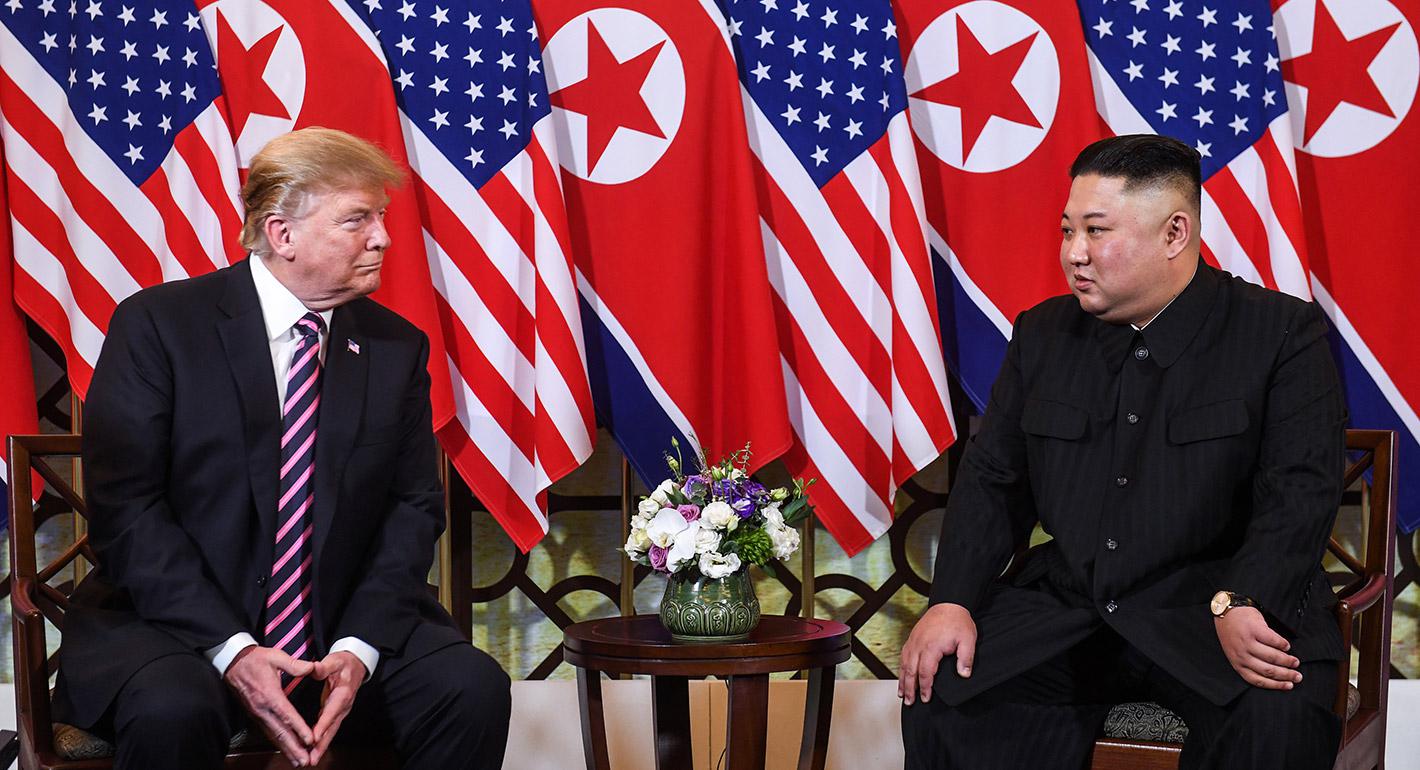
There is a vast gap between the United States and North Korea’s expectations and visions for the denuclearization negotiations. Artful compromise is needed to avoid an acrimonious break up.
Source: Kyodo News
The United States and North Korean negotiators met over the weekend in Stockholm, but could not bridge the gulf in ideas about the future of Pyongyang's nuclear arsenal and the benefits Pyongyang should gain from relinquishing it. The North Korean press release after the talks succinctly captures the problem: “It is not likely at all that (the United States) can produce a proposal commensurate with the expectations of the DPRK.”
North Korean leader Kim Jong Un seeks to be treated as a legitimate possessor of nuclear weapons, with all the assumed political benefits and sanctions relief that such a status might convey. Official Washington refuses to acknowledge that no amount of pressure or inducement will result in North Korea's unilateral disarmament. The chasm between America's political fantasy and North Korea's great expectations is vast.
North Korea's apparently successful test of a new, solid-fuel missile launched from an undersea platform on the eve of the Stockholm meeting sent a clear message: Pyongyang plans to retain nuclear weapons for the foreseeable future, come what may. United Nations Security Council sanctions and other forms of pressure will not compel North Korea to abandon this objective.
Yet it is not clear what North Korea's leaders believe will happen if the international community acquiesces to Pyongyang's desired nuclear status. For all the supposed power they convey, nuclear weapons make for poor instruments of blackmail. Weak states with nuclear weapons may gain some protection against predation from powerful states, but nuclear weapons cannot resolve the underlying sources of weakness. Nuclear weapons have not made Pakistan wealthier, safer, or internally stronger, even if they preclude an invasion by India, for example.
North Korea could return to testing nuclear weapons and intercontinental ballistic missiles in 2020, when Kim's self-imposed year-end deadline for progress in talks with Washington expires. Such resumed testing -- and the corresponding potential for miscalculation or accident -- will attract more international opprobrium, but is unlikely to persuade the international community to relieve U.N. sanctions. If Kim has a plan for how to turn nuclear weapons into economic development and international political strength without negotiating with Washington, it is not apparent.
Meanwhile, the continued inadequacy of U.S. policy toward North Korea is plain to see. U.S.-led maximum pressure cannot produce disarmament. Putative offers of economic and security inducements from Washington are not credible. Rather than seek a more realistic and less ambitious near-term option -- a verifiable cap on North Korea's arsenal, for instance -- both Republicans and Democrats prefer to continue demanding the unattainable outcome of total denuclearization. That way, they avoid the political costs of negotiating a compromise “bad” deal, even as Pyongyang's continued nuclear development makes the world less safe.
From here, two likely paths diverge, assuming Stockholm was the final meeting for working-level negotiators.
Path one: irreconcilable differences drive Trump and Kim to break up. In 2020, North Korea returns to periodically rattling the world with nuclear or missile tests, while the United States avoids reckoning with policy failure in order to keep its principled position.
Path two: Trump and Kim meet for a fourth time, perhaps in Pyongyang. Without expert preparation, however, a “big deal” that satisfies both parties is less likely than a vaguely worded sequel to the June 2018 Singapore summit statement.
Ultimately, artful compromise between rightsized North Korean expectations and American political realities is the necessary path forward. Compromise will be politically difficult, but is far safer than the alternatives.

Senior Fellow and Co-director, Nuclear Policy Program
Toby Dalton is a senior fellow and co-director of the Nuclear Policy Program at the Carnegie Endowment. An expert on nonproliferation and nuclear energy, his work addresses regional security challenges and the evolution of the global nuclear order.
Recent Work

Ariel (Eli) Levite, Toby Dalton
Ariel (Eli) Levite, Toby Dalton
Carnegie India does not take institutional positions on public policy issues; the views represented herein are those of the author(s) and do not necessarily reflect the views of Carnegie, its staff, or its trustees.

How is AI reshaping space security, creating governance challenges, and where does international diplomacy stand today?


Tejas Bharadwaj, Almudena Azcárate Ortega

The U.S.–India semiconductor cooperation story is well-stocked with top-level strategic intent. What remains unresolved, however, are some underlying challenges that will determine whether the cooperation actually functions. Three such friction points stand out.

Shruti Mittal

India and the United States are close to concluding a Reciprocal Defense Procurement Agreement (RDPA) that will allow firms from the two countries to sell to each other’s defense establishments more easily. While this may not remedy the specific grievances both sides may have regarding larger bilateral issues, an RDPA could restore some momentum, following the trade deal announcement.

Konark Bhandari

On the last day of the India AI Impact Summit, India signed Pax Silica, a U.S.-led declaration seemingly focused on semiconductors. While India’s accession to the same was not entirely unforeseen, becoming a signatory nation this quickly was not on the cards either.
Konark Bhandari

This piece examines India’s response to U.S. sanctions and tariffs, specifically assessing the immediate market consequences, such as alterations in import costs, and the broader strategic implications for India’s energy security and foreign policy orientation.

Vrinda Sahai