

Commentary
H. A. Hellyer
{
  "authors": [
    "H. A. Hellyer"
  ],
  "type": "legacyinthemedia",
  "centerAffiliationAll": "dc",
  "centers": [
    "Carnegie Endowment for International Peace",
    "Malcolm H. Kerr Carnegie Middle East Center"
  ],
  "collections": [],
  "englishNewsletterAll": "menaTransitions",
  "nonEnglishNewsletterAll": "",
  "primaryCenter": "Carnegie Endowment for International Peace",
  "programAffiliation": "MEP",
  "programs": [
    "Middle East"
  ],
  "projects": [],
  "regions": [
    "Middle East",
    "Iraq",
    "Syria",
    "Levant"
  ],
  "topics": [
    "Security",
    "Foreign Policy"
  ]
}
Source: Getty
Does the death of al-Baghdadi herald the end of the self-proclaimed Islamic State? In a word: No.
Source: Australian Broadcasting Company
On Sunday morning, the world woke up to the news that the leader of the so-called “Islamic State” group (ISIS), Abu Bakr al-Baghdadi, had been killed in northern Syria. Amid the flurry of analysis and commentary that filled the airwaves immediately thereafter — which included such elements as the bravery of a dog, the theft of al-Baghdadi’s underwear and the ISIS leader’s lack of scholarly pedigree — a number of pertinent questions have been raised. And as is typical in the aftermath of such sensational events, some spurious claims have been made, and therefore some correctives are needed.
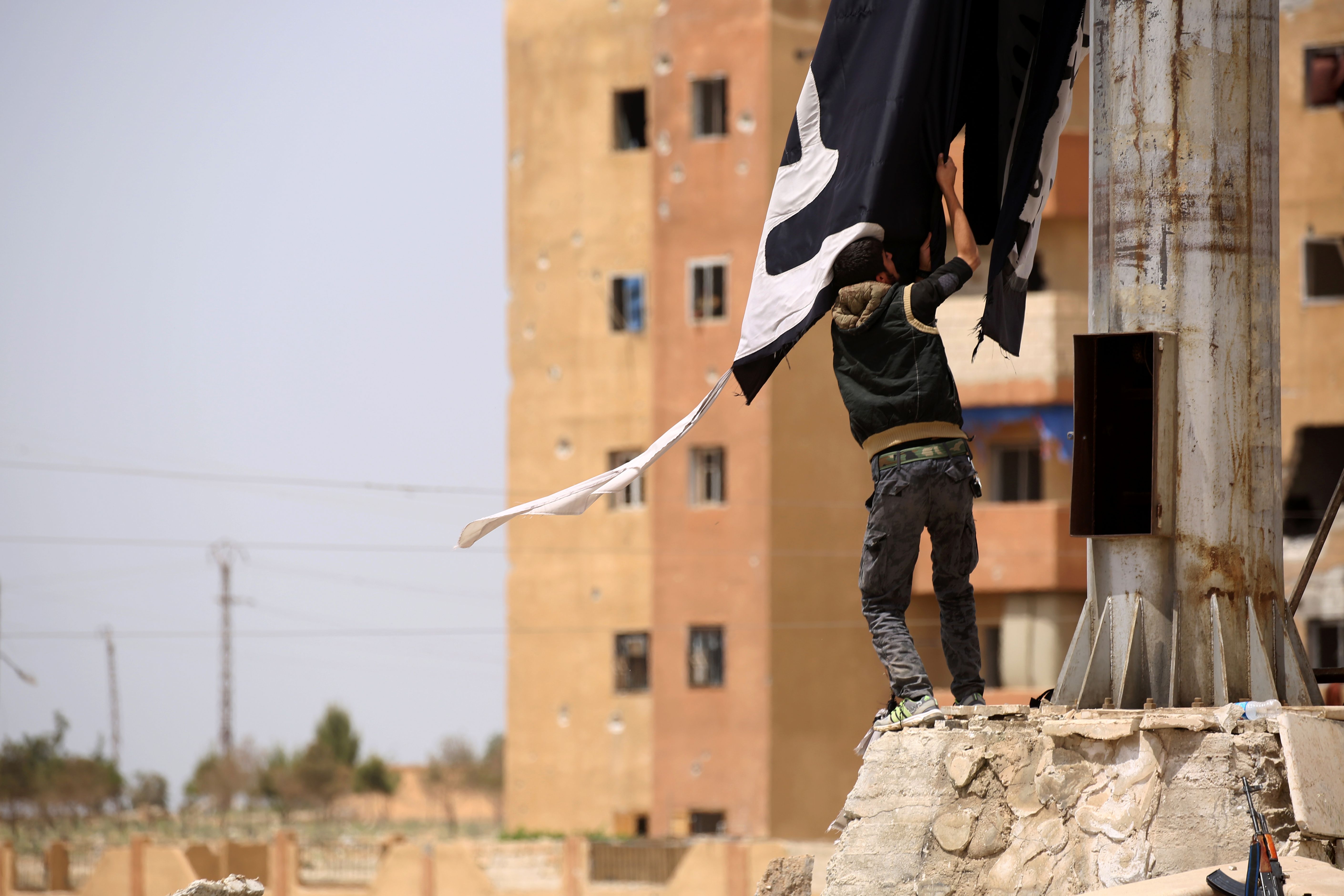
Does the death of al-Baghdadi herald the end of ISIS? In a word: No. The group continues. But there is good news: ISIS had already fractured and was steadily weakening prior to al-Baghdadi’s death. The core narrative of ISIS was that it is not a mere “terrorist group”; it is the governing body of a functioning state with territory at its disposal. That “state” — which never really was a state — has been radically disrupted and no longer exists, thanks to the effective actions of members of the international community.
That’s the good news; here’s the bad news: the members of the group are likely to coalesce around local franchises, or depart to other terrorist organisations. While it is difficult to see ISIS ever fully recovering from the demise of its “state” in 2017, that doesn’t mean terrorist activity at the hands of its members is going to cease in the short term.
Al-Baghdadi’s death will do little to curb the advance of extremism, because of two significant factors. First, extremist ideology, as described in a recent GREASE project paper on radicalisation, remains a potent force. Second, the political grievances that figure so prominently in the extremist narratives continue to exist, which makes recruitment strategies more durable.
Was al-Baghdadi’s death mourned as that of a martyr in Muslim communities? The answer is definitive: No. On the contrary, where Muslim communities or prominent figures spoke of the killing, there were signs of relief that a man who oversaw such a pernicious and wantonly violent group was no more. It bears repeating that the vast majority of the victims of ISIS were Muslims — religiously-oriented or otherwise.
In much of the Western media, we have become accustomed to viewing ISIS as a problem because of the attacks it made on non-Muslim, and particularly Western, targets. But the brunt of their bloodlust was felt by Muslim communities, who suffered the aggression of the group far more than any other. Indeed, the forces that fought the most, and sacrificed the most, against ISIS were Muslim of various ethnicities. This week, they have shed no tears for the death of al-Baghdadi. On the contrary, he is one less figure they have to worry about.
Was the death of al-Baghdadi, even if not mourned, noted as the death of an “Islamic scholar”? Well, yes: but mainly by two groups. The first are the fans of the ISIS ideology, which is hardly surprising; the second are those critics of ISIS who wanted simultaneously to claim that ISIS’s ideology is intrinsically connected to Islam as a religion.
Among Muslim religious authorities, Muslim communities more generally and religious studies specialists, such an error of intrinsic association has been rejected. Scores of religious authorities within the Muslim world have independently and collectively denied such legitimacy and authenticity to ISIS ideology tout court, and particularly to al-Baghdadi. Indeed, the ideology has been described as deviant and heterodox. The main difference of opinion among religious authorities has been whether such errant beliefs took one out of Islam altogether, or if adherents to the ideology were Muslims guilty of a tremendous sin.
That is deeply significant. Islamic thought enjoys a large degree of religious pluralism internally — yet, within that vast collective of Muslims worldwide, it was always a tiny minority who viewed ISIS with anything other than utter disdain and dismissal.
The list of groups that are relieved by al-Baghdadi’s death is long. At the top of the list are those religious groups within Muslim majority countries that suffered most egregious at the hands of ISIS’s extremist and expansionist ambitions — groups like the Yazidis, who faced a genocide in Syria and Iraq after having lived as part of those countries for centuries; and Christians of different stripes, who withstood a sustained onslaught by the group in Syria, Iraq or in countries further afield, like Egypt (where the Copts were singled out for particularly brutal treatment).
And then there are the Shi’i Muslims, who ISIS rejected as being Muslim altogether. There are Muslims who advocate Sufism, a mainstream part of normative Sunni Islam, and who were relentlessly persecuted by ISIS. The list goes on. While the majority of victims of ISIS were Sunni Muslims, minority groups are the ones whose existence and identities will be indelibly affected for many years to come.
Osama bin Laden and Abu Bakr al-Baghdadi were two very different leaders, and of very different terrorist entities. Bin Laden was a better-known name in the West and in the Muslim world, unlike al-Baghdadi who thrived on the phantom-like reputation he cultivated. Western newspapers sought and successfully interviewed bin Laden a number of times in the early and mid-1990s, whereas al-Baghdadi remained an unfamiliar, remote figure, which allowed a certain mythology to grown up around him.
Critical to the rise and spread of ISIS was the American occupation of Iraq, and the abuses and violations that took place in its wake — indeed, it’s likely ISIS would have never developed as a separate entity from al-Qa’eda had it not been the American invasion in 2003. Al-Qa’eda, on the other hand, enjoyed a certain notoriety and prominence long before the attacks on 11 September 2001.
Perhaps one more major difference between the two men is the way their deaths were announced. When Barack Obama declared that bin Laden had been killed in an operation that he had ordered, it came in the form of a brief, 9-10 minute statement with a minimum of imagery and few operational details. Obama’s overall mood was sombre. By contrast, when Donald Trump announced al-Baghdadi’s death, he spoke for about 48 minutes and provided a great many operational details, almost in glee — some of which were subsequently not confirmed by military officials. Obama said little about himself; Trump took the opportunity to spruik books he’s apparently written. And whereas Obama then called his predecessor, George W. Bush, to brief him about the killing of bin Laden, Trump has made no such contact. On the contrary, Trump criticised Obama, in his own home town of Chicago no less, for not having successfully targeting al-Baghdadi.
This article was originally published by the Australian Broadcasting Company.

Former Nonresident Scholar, Middle East Program
Dr. H.A. Hellyer was a nonresident scholar at the Carnegie Endowment for International Peace. He serves as a senior associate fellow at the Royal United Services Institute for Defence and Security Studies in London, and as a Cambridge University fellow.
Recent Work
H. A. Hellyer
H. A. Hellyer
Carnegie India does not take institutional positions on public policy issues; the views represented herein are those of the author(s) and do not necessarily reflect the views of Carnegie, its staff, or its trustees.

In any defense establishment, change is an ongoing process. However, despite the best of intentions, existing bureaucracies, bound by habit and years of socialization, have their limits in implementing transformative change.

Anit Mukherjee

After the chill in ties between 2020 and 2024 that brought India–China relations to their lowest point in several decades, the two countries have engaged each other afresh. This paper argues that there are predominantly four imperatives guiding India’s approach to China, and they exist in an order of priority.

Saheb Singh Chadha

This piece argues that India’s central challenge is not managing a single flashpoint but resolving the underlying tension between expansion and institutional coherency of the BRICS grouping.

Vrinda Sahai

A partnership between India, a country of subcontinental size, and Africa, a continent of fifty-four countries, may seem asymmetric until one notes that both are home to nearly the same number of people—1.4 billion. This essay spells out the existing challenges to the partnership, its optimal potential, and the possible pathways to realize it over the next quarter-century.

Rajiv Bhatia

The India–EU Free Trade Agreement (FTA) is shaping up to be one of the most consequential trade negotiations, both economically and strategically. But, what’s in the agreement, what’s missing, and what will determine its success in the years ahead
Vrinda Sahai, Nicolas Köhler-Suzuki