

Commentary
Thomas de Waal
{
  "authors": [
    "Thomas de Waal"
  ],
  "type": "other",
  "centerAffiliationAll": "dc",
  "centers": [
    "Carnegie Endowment for International Peace",
    "Carnegie Europe"
  ],
  "collections": [
    "Europe’s Eastern Neighborhood"
  ],
  "englishNewsletterAll": "ctw",
  "nonEnglishNewsletterAll": "",
  "primaryCenter": "Carnegie Europe",
  "programAffiliation": "EP",
  "programs": [
    "Europe"
  ],
  "projects": [],
  "regions": [
    "Russia",
    "Eastern Europe",
    "Caucasus",
    "Azerbaijan",
    "Armenia",
    "Iran"
  ],
  "topics": [
    "Security"
  ]
}
Source: Getty
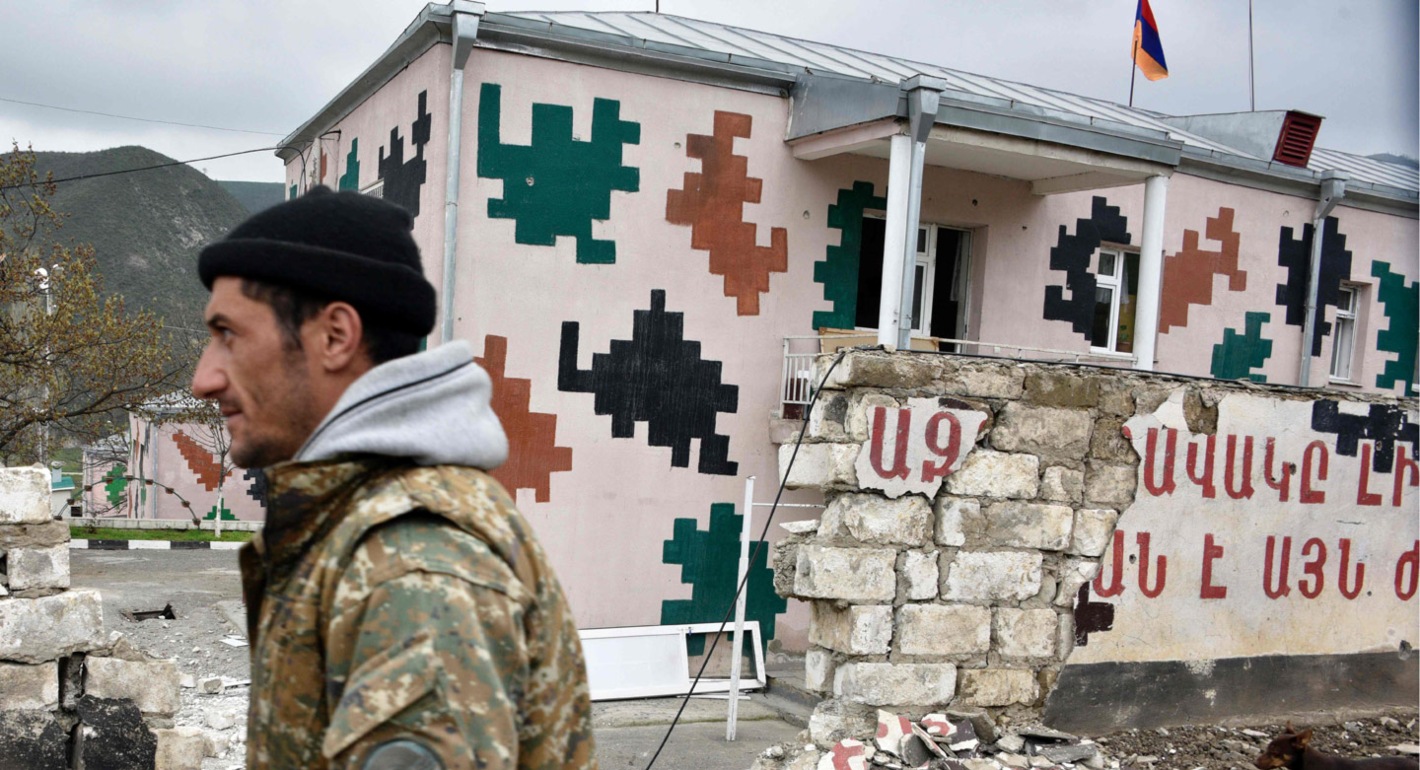
The dispute between Armenia and Azerbaijan remains the most dangerous conflict in the post-Soviet space. Even if political tensions have eased since 2018, the region remains dangerously militarized.
Source: CENTRE FOR EUROPEAN POLICY STUDIES
The Nagorny Karabakh conflict is the longest-running unresolved dispute in the former Soviet Union, dating back to the middle of the Gorbachev era in 1988. It is also potentially the most dangerous, as Armenia and Azerbaijan are in a perpetual state of military readiness to go to war again over the disputed territory they fought over in 1991-94. At the end of that conflict, the Armenian side prevailed at great cost. Around 20,000 people died and one million people were displaced on both sides, the majority of them Azerbaijanis. A brief upsurge of fighting in 2016 cost around 200 lives.This publication was prepared within the framework of the CEPS-led 3DCFTAs project, enabled by financial support from Sweden. To download the publication, please consult the following link.

Senior Fellow, Carnegie Europe
Thomas de Waal is a senior fellow at Carnegie Europe, specializing in Eastern Europe and the Caucasus.
Recent Work
Thomas de Waal
Thomas de Waal
Carnegie India does not take institutional positions on public policy issues; the views represented herein are those of the author(s) and do not necessarily reflect the views of Carnegie, its staff, or its trustees.

In any defense establishment, change is an ongoing process. However, despite the best of intentions, existing bureaucracies, bound by habit and years of socialization, have their limits in implementing transformative change.

Anit Mukherjee

After the chill in ties between 2020 and 2024 that brought India–China relations to their lowest point in several decades, the two countries have engaged each other afresh. This paper argues that there are predominantly four imperatives guiding India’s approach to China, and they exist in an order of priority.

Saheb Singh Chadha

This piece argues that India’s central challenge is not managing a single flashpoint but resolving the underlying tension between expansion and institutional coherency of the BRICS grouping.

Vrinda Sahai

This piece argues that the present Indian strategy, based on opportunistic diversification and utilization of limited strategic reserves, remains inadequate when confronting supply disruptions. It evaluates India’s options in the short, medium, and long terms.
Vrinda Sahai

This piece examines India’s response to U.S. sanctions and tariffs, specifically assessing the immediate market consequences, such as alterations in import costs, and the broader strategic implications for India’s energy security and foreign policy orientation.
Vrinda Sahai