

Commentary
H. A. Hellyer
{
  "authors": [
    "H. A. Hellyer"
  ],
  "type": "legacyinthemedia",
  "centerAffiliationAll": "dc",
  "centers": [
    "Carnegie Endowment for International Peace"
  ],
  "collections": [],
  "englishNewsletterAll": "menaTransitions",
  "nonEnglishNewsletterAll": "",
  "primaryCenter": "Carnegie Endowment for International Peace",
  "programAffiliation": "MEP",
  "programs": [
    "Middle East"
  ],
  "projects": [],
  "regions": [
    "North America",
    "United States",
    "Middle East",
    "Iran",
    "Syria"
  ],
  "topics": [
    "Political Reform",
    "Democracy",
    "Security",
    "Foreign Policy"
  ]
}
Source: Getty
Despite some historical tensions, ties between Palestinian factions and Iran never fully ceased.
Source: Middle East Eye
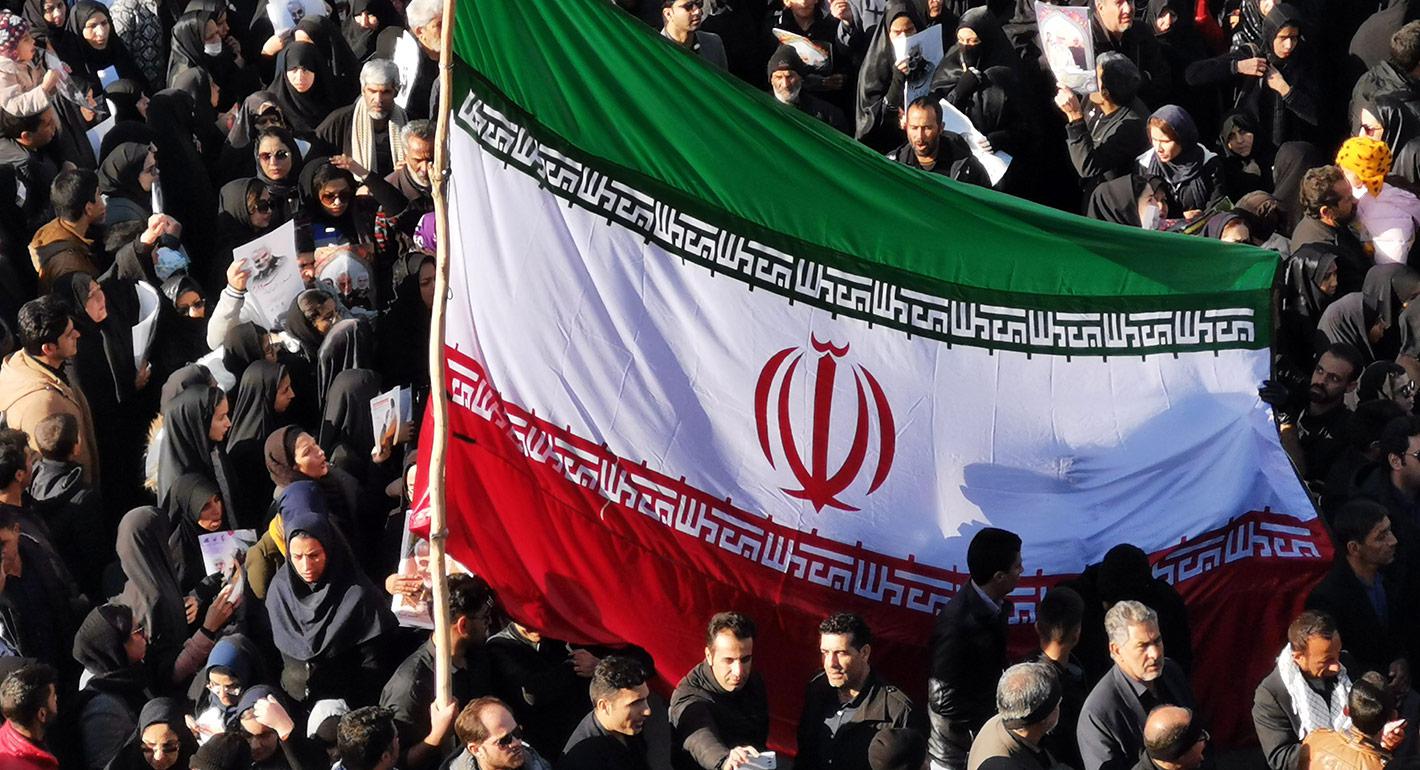
The leaders of a number of Palestinian factions travelled to the Iranian capital of Tehran on Monday to attend the funeral of Qassem Soleimani, the leader of the Islamic Revolutionary Guard Corps' (IRGC) Quds Forces, and Abu Mahdi al-Muhandis, the deputy head of Hashd al-Shaabi Iraqi paramilitary group, who were assassinated by a US drone strike on Friday in Baghdad.
Hamas politburo head Ismail Haniyeh travelled outside the besieged Gaza Strip for the first time since 2017 for the occasion.
In a speech in Tehran, Haniyeh called Soleimani “the martyr of Jerusalem”.
“We came from Palestine to offer condolences to Mr [Ali] Khamenei [Iran supreme leader] and the Islamic Republic of Iran,” he added. “The resistance project in Palestine against the Zionist American project will not be weakened - it will continue, it will not backtrack, and these assassinations will make us stronger to liberate Jerusalem.”
He described Soleimani as having spent his life "defending and supporting the Palestinian resistance" while he was the leader of the Quds Forces.
Ziad Nakhleh, the secretary-general of the Palestinian Islamic Jihad, also attended the funeral.
Nakhleh told Iranian Minister of Foreign Affairs Mohammed Javad Zarif that “Soleimani’s martyrdom is a big loss, but he set an example for Muslims and free men of the world of how to confront America and the Zionist entity,” referring to Israel.
“This assassination will not break the resistance, but will make it more conscious of the enmity of the United States against the Palestinians and people of the region,” Nakhleh said.
In November, Israel assassinated Islamic Jihad leader Bahaa Abu al-Atta in an air strike in the Gaza Strip, as well as trying to kill the group's deputy leader, Akram al-Ajouri, in Damascus.
A source close to Palestinian resistance factions told Lebanese newspaper Al-Akhbar that “there are barely any rockets or rifles in Palestine without Soleimani’s fingerprint on it”.
Other Palestinian factions' representatives, including the Popular Front for the Liberation of Palestine (PFLP), offered condolences at the Iranian embassy in Damascus.
Abbas Zaki, a member of the Fatah executive committee, told Al-Mayadeen TV channel that Soleimani was the “Che Guevara of the Middle East”.
“Assassinating Soleimani will have dangerous ramifications in the region and could be expensive for the United States," Zaki said.
In 1979, the Islamic revolution toppled US-backed Shah Mohammad Reza Pahlavi. Iran then closed the Israeli embassy in Tehran and handed over the building to become the offices of the Palestine Liberation Organisation.
After protests began in Syria in 2011 - which would be brutally repressed, leading to the outbreak of a devastating civil war - Hamas was the only Palestinian movement to close its offices in the Syrian capital of Damascus. As a result, the Palestinian movement's ties with Iran took a hit, as Tehran has been a major backer of Syrian President Bashar al-Assad.
Meanwhile, Islamic Jihad, the PFLP and the Democratic Front for the Liberation of Palestine (DFLP) kept their offices in Damascus and maintained ties with Iran.
In 2017, Hamas leader in the Gaza Strip Yahya al-Sinwar revealed in a rare speech that Qassem Soleimani contacted Hamas's armed wing, the Qassam Brigades, after US President Donald Trump unilaterally recognised Jerusalem as Israel's capital in December 2017. Sinwar added that ties between Palestinian factions and Iran never ceased.
In June 2019, Sinwar thanked Iran again and called for Arab and Muslim countries to follow Tehran's example and support the Palestinian resistance with money, weapons and skills.
Hamas and Iran's relationship warmed in the wake of Trump's announcement, and in October 2018, Hamas used "condolences diplomacy" to send representatives to visit Iran and offer condolences to Iranian victims of a deadly attack that took place in the eastern region of Ahvaz.
This article was originally published by the Middle East Eye.
Former Nonresident Scholar, Middle East Program
Dr. H.A. Hellyer was a nonresident scholar at the Carnegie Endowment for International Peace. He serves as a senior associate fellow at the Royal United Services Institute for Defence and Security Studies in London, and as a Cambridge University fellow.
Recent Work
H. A. Hellyer
H. A. Hellyer
Carnegie India does not take institutional positions on public policy issues; the views represented herein are those of the author(s) and do not necessarily reflect the views of Carnegie, its staff, or its trustees.

In any defense establishment, change is an ongoing process. However, despite the best of intentions, existing bureaucracies, bound by habit and years of socialization, have their limits in implementing transformative change.

Anit Mukherjee

How is AI reshaping space security, creating governance challenges, and where does international diplomacy stand today?


Tejas Bharadwaj, Almudena Azcárate Ortega

After the chill in ties between 2020 and 2024 that brought India–China relations to their lowest point in several decades, the two countries have engaged each other afresh. This paper argues that there are predominantly four imperatives guiding India’s approach to China, and they exist in an order of priority.

Saheb Singh Chadha

This piece argues that India’s central challenge is not managing a single flashpoint but resolving the underlying tension between expansion and institutional coherency of the BRICS grouping.

Vrinda Sahai

A partnership between India, a country of subcontinental size, and Africa, a continent of fifty-four countries, may seem asymmetric until one notes that both are home to nearly the same number of people—1.4 billion. This essay spells out the existing challenges to the partnership, its optimal potential, and the possible pathways to realize it over the next quarter-century.

Rajiv Bhatia