

Research
- +8
William J. Burns, Michael Chertoff, Catherine Ashton, …
{
  "authors": [
    "William J. Burns"
  ],
  "type": "legacyinthemedia",
  "centerAffiliationAll": "",
  "centers": [
    "Carnegie Endowment for International Peace"
  ],
  "collections": [],
  "englishNewsletterAll": "",
  "nonEnglishNewsletterAll": "",
  "primaryCenter": "Carnegie Endowment for International Peace",
  "programAffiliation": "",
  "programs": [],
  "projects": [],
  "regions": [
    "North America",
    "United States"
  ],
  "topics": [
    "Political Reform",
    "Democracy",
    "Economy",
    "Trade",
    "Foreign Policy"
  ]
}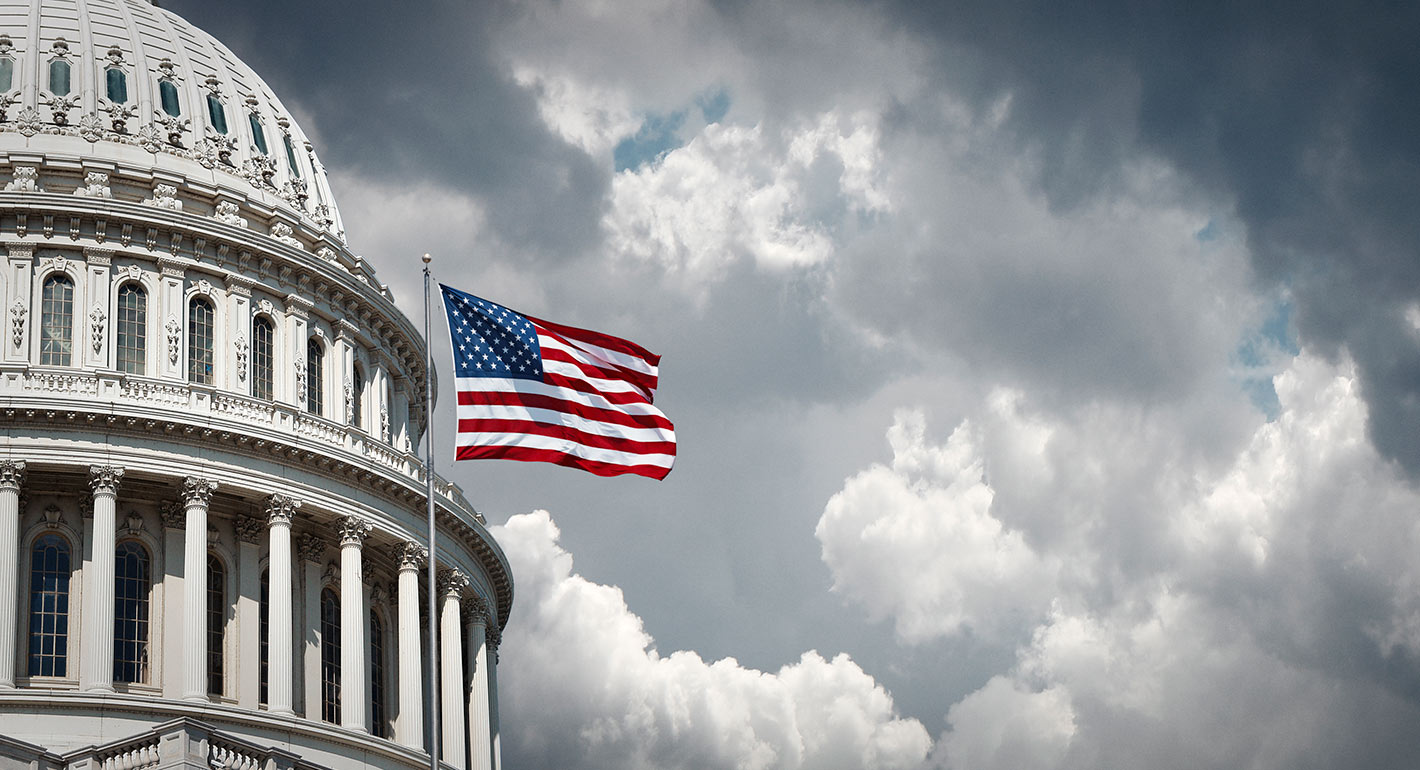
Source: Getty
The coronavirus pandemic will most likely prove to be a painful accelerant of global trends—exposing vulnerabilities and magnifying the challenge of navigating a crowded, complicated, and competitive international landscape.
Source: Wall Street Journal
In the spring of 1919, as the world’s major powers descended on Versailles to negotiate peace after World War I, President Woodrow Wilson was in bed with the flu. At a moment when, as Wilson’s doctor put it, “the whole of civilization seemed to be in the balance,” a horrific influenza pandemic cast a shadow over the prospect of a new order.
A century later, we find ourselves again crippled by a pandemic during another of those rare plastic moments in world affairs—a perfect storm of major shifts in the balance of power and massive political, economic, technological and environmental transformations. Great-power rivalry is back; China has risen, and America’s old dominance has been spent. The world’s economic and military center of gravity is shifting from West to East. A technological revolution is upending how we live, work and fight. Tensions are growing between open and closed societies, with nationalism and authoritarianism resurgent and democracy seemingly in reverse. The tailwinds of globalization have transformed into powerful headwinds, even as climate change looms as an existential threat.
The storm has been gathering for some time, and America’s post-Cold War missteps quickened the landfall. Today’s coronavirus pandemic will further intensify the storm’s severity, with terrible human and economic costs. It will be a painful accelerant—exposing our vulnerabilities and magnifying the challenge of navigating a crowded, complicated and competitive international landscape.
The crisis will reinforce cocky convictions—from Moscow to Beijing—about the demise of a “liberal international order.” It will spur strongmen to grip even tighter, bolstered by new surveillance technologies. Narrow-minded nationalists will fan the flames of xenophobia. Key Western democracies, already infected by paralytic politics and constipated governance, will see their crisis of self-confidence deepen.
Connectivity will be seen as a weakness, not a strength, dealing another blow to the fragile European project. The Middle East and Africa, already burdened by conflicts and pathologies, will be exposed to even more troubles. The U.N. and other international institutions, long groaning and creaking, will start to crack, as will the alliances that have bolstered American security. Global humanitarian crises will worsen, their toll compounded by the virus and an increasingly under-resourced and distracted global response.
But shocks like this awful pandemic can clarify as well as accelerate. With brutal impact, they give us a chance to diagnose our challenges with clear eyes. The test for American statesmanship will be to resist the temptation to pull up the drawbridges and retreat, as well as the illusion that we can restore the easy dominance we once enjoyed.
The test for American statesmanship will be to resist the temptation to pull up the drawbridges and retreat.
We cannot resurrect the uniquely commanding positions that helped American statesmen in the administrations led by Harry Truman and George H.W. Bush shape similar plastic moments over the past century. But we can revive their model of character, vision and discipline in applying American power. We can rebuild America’s democratic example and rekindle the confidence of our allies and the respect of our rivals. Even in this most difficult of moments, we have a rare opening to recover a sense of national purpose and enlightened self-interest and to help Americans—and the world—find shelter from the storm.
This article was originally published by the Wall Street Journal.
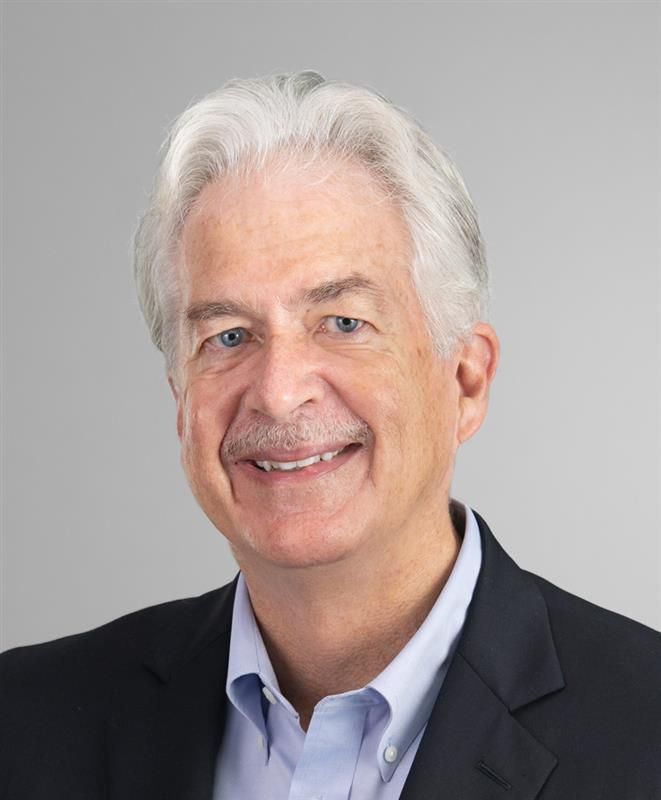
Former Carnegie President (2015-2021)
A former career diplomat, William J. Burns served as director of the CIA, deputy secretary of State, and ambassador to Russia and Jordan. Burns was also president of the Carnegie Endowment for International Peace from 2015 to 2021.
Recent Work
William J. Burns, Michael Chertoff, Catherine Ashton, …
William J. Burns
Carnegie India does not take institutional positions on public policy issues; the views represented herein are those of the author(s) and do not necessarily reflect the views of Carnegie, its staff, or its trustees.

How is AI reshaping space security, creating governance challenges, and where does international diplomacy stand today?


Tejas Bharadwaj, Almudena Azcárate Ortega

After the chill in ties between 2020 and 2024 that brought India–China relations to their lowest point in several decades, the two countries have engaged each other afresh. This paper argues that there are predominantly four imperatives guiding India’s approach to China, and they exist in an order of priority.

Saheb Singh Chadha

This piece argues that India’s central challenge is not managing a single flashpoint but resolving the underlying tension between expansion and institutional coherency of the BRICS grouping.

Vrinda Sahai

A partnership between India, a country of subcontinental size, and Africa, a continent of fifty-four countries, may seem asymmetric until one notes that both are home to nearly the same number of people—1.4 billion. This essay spells out the existing challenges to the partnership, its optimal potential, and the possible pathways to realize it over the next quarter-century.

Rajiv Bhatia

The U.S.–India semiconductor cooperation story is well-stocked with top-level strategic intent. What remains unresolved, however, are some underlying challenges that will determine whether the cooperation actually functions. Three such friction points stand out.

Shruti Mittal