

Research
- +8
William J. Burns, Michael Chertoff, Catherine Ashton, …
{
  "authors": [
    "William J. Burns"
  ],
  "type": "other",
  "centerAffiliationAll": "",
  "centers": [
    "Carnegie Endowment for International Peace",
    "Carnegie China"
  ],
  "collections": [],
  "englishNewsletterAll": "",
  "nonEnglishNewsletterAll": "",
  "primaryCenter": "Carnegie China",
  "programAffiliation": "",
  "programs": [],
  "projects": [],
  "regions": [
    "North America",
    "United States"
  ],
  "topics": [
    "Political Reform",
    "Democracy"
  ]
}
Source: Getty
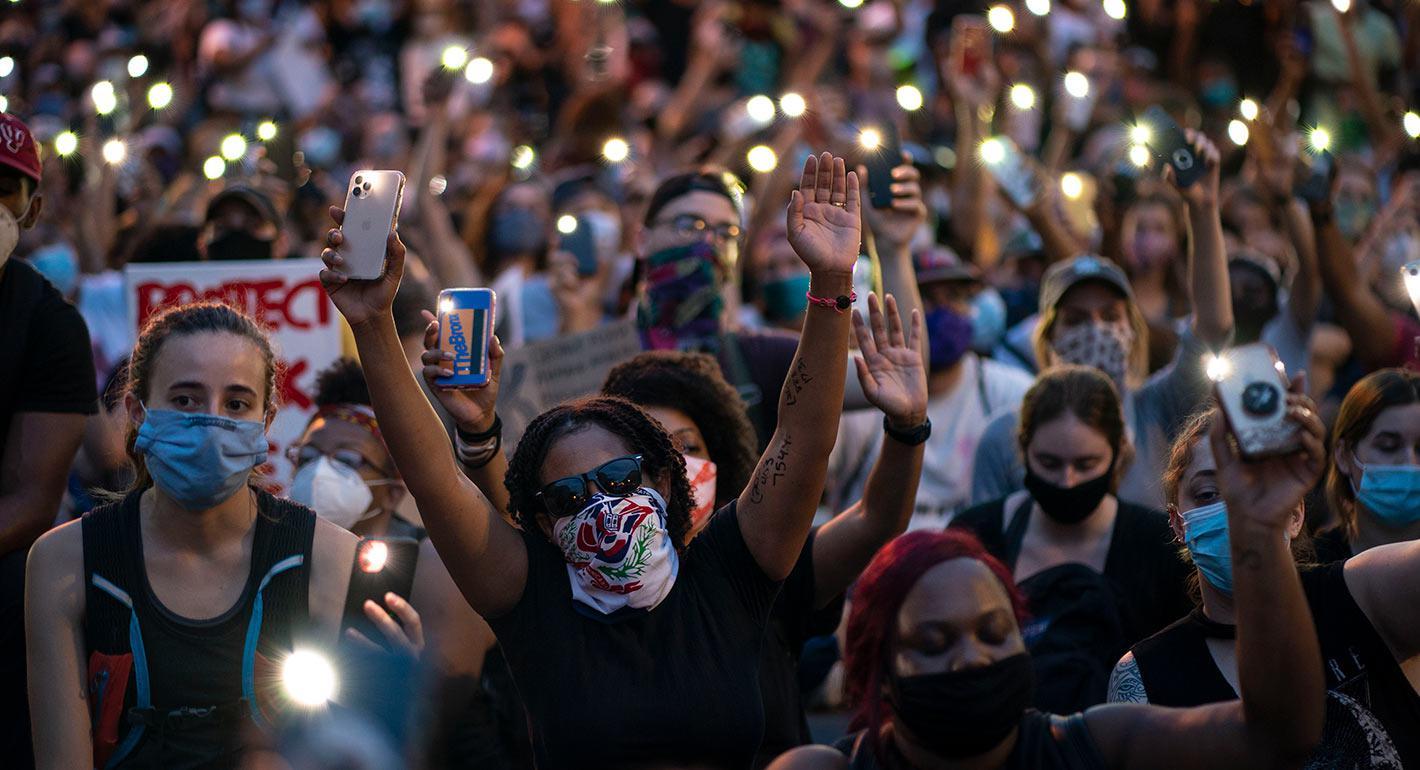
The murder of George Floyd has underscored the deep inequities that have long plagued American society. In a note to the Carnegie community, Bill Burns reflects on Carnegie’s commitment to build a more just future here at home and around the world, without which peace will remain beyond our grasp.
Dear Carnegie Endowment Community,
The murder of George Floyd, and the pain and anger Americans rightly have expressed in response, has once again underscored the deep inequities, systemic racism, and polarization that have long plagued American society. Sadly, this is not an isolated incident or an aberration. It is yet another profoundly important reminder of how far we have to go in this country, of how much hard work we have to do to end the injustice and inequality that eats away at human dignity.
Like all of you, I remain committed to doing all we can as an institution, and as individual citizens, to build a better and fairer society. I spent many years as an American diplomat, and I know that the power of our example always matters more than the power of our preaching. Today, that example is badly damaged, and the failures of our system have been laid bare.
Across our global platform, with six centers and more than 140 scholars in twenty countries, we will continue to offer honest analysis and practical prescriptions on issues of democracy, governance, civic activism, and political violence. We can do even more to help societies better understand and overcome patterns of civil conflict and exclusion—and we can certainly do more to address the inexcusable under-representation of women and minority voices in our profession and lift up the next generation.
International peace, toward which Andrew Carnegie dedicated this proud institution, is an elusive goal. Its pursuit requires not only the classic work of diplomats and mediators, but a sharp focus on the underlying pathologies of violence and intolerance. Even at this terrible moment, we hear the voices of decent people, here and around the world, raised in shared commitment to a more just future, without which peace will remain beyond our grasp. The Carnegie Endowment will remain dedicated to that crucial cause.
Sincerely,
Bill Burns
Former Carnegie President (2015-2021)
A former career diplomat, William J. Burns served as director of the CIA, deputy secretary of State, and ambassador to Russia and Jordan. Burns was also president of the Carnegie Endowment for International Peace from 2015 to 2021.
Recent Work
William J. Burns, Michael Chertoff, Catherine Ashton, …
William J. Burns
Carnegie India does not take institutional positions on public policy issues; the views represented herein are those of the author(s) and do not necessarily reflect the views of Carnegie, its staff, or its trustees.

How is AI reshaping space security, creating governance challenges, and where does international diplomacy stand today?


Tejas Bharadwaj, Almudena Azcárate Ortega

The U.S.–India semiconductor cooperation story is well-stocked with top-level strategic intent. What remains unresolved, however, are some underlying challenges that will determine whether the cooperation actually functions. Three such friction points stand out.

Shruti Mittal

India and the United States are close to concluding a Reciprocal Defense Procurement Agreement (RDPA) that will allow firms from the two countries to sell to each other’s defense establishments more easily. While this may not remedy the specific grievances both sides may have regarding larger bilateral issues, an RDPA could restore some momentum, following the trade deal announcement.

Konark Bhandari

On the last day of the India AI Impact Summit, India signed Pax Silica, a U.S.-led declaration seemingly focused on semiconductors. While India’s accession to the same was not entirely unforeseen, becoming a signatory nation this quickly was not on the cards either.
Konark Bhandari

This piece examines India’s response to U.S. sanctions and tariffs, specifically assessing the immediate market consequences, such as alterations in import costs, and the broader strategic implications for India’s energy security and foreign policy orientation.

Vrinda Sahai