

Article
Tong Zhao
{
  "authors": [
    "Tong Zhao"
  ],
  "type": "other",
  "centerAffiliationAll": "dc",
  "centers": [
    "Carnegie Endowment for International Peace",
    "Carnegie China"
  ],
  "collections": [],
  "englishNewsletterAll": "ctw",
  "nonEnglishNewsletterAll": "",
  "primaryCenter": "Carnegie China",
  "programAffiliation": "NPP",
  "programs": [
    "Nuclear Policy"
  ],
  "projects": [],
  "regions": [
    "East Asia",
    "China"
  ],
  "topics": [
    "Security",
    "Military",
    "Nuclear Policy"
  ]
}
Source: Getty
Conventional long-range strike weapons of US allies may exacerbate Chinese concerns about the survivability of its small nuclear arsenal against a precision pre-emptive strike from the US-led coalition, although the degree of the new threat depends on various factors including the numbers and types of such weapons to be deployed.
Source: The Nonproliferation Review
Conventional long-range strike weapons of US allies may exacerbate Chinese concerns about the survivability of its small nuclear arsenal against a precision pre-emptive strike from the US-led coalition, although the degree of the new threat depends on various factors including the numbers and types of such weapons to be deployed. Conventional hypersonic missiles, in particular, may generate acute threat perception, as they can play the role of “door kicker” against China’s so-called anti-access, area-denial capabilities and pave the way for subsequent massive strikes with more traditional weapons. The development of conventional long-range-strike weapons by US allies also affects the risk of conventional conflicts escalating inadvertently to the nuclear level. Such risks are particularly salient in the Asia–Pacific region because of at least two factors: the ambiguous role of Chinese theater nuclear weapons and significant entanglement of conventional and nuclear capabilities at the theater level. Such conventional capabilities of US allies also help shape the region’s overall military balance—something China treats as part of its broader understanding of the term “strategic stability.” Regional players, however, have competing visions about what constitutes a stable military balance. They also have conflicting interpretations of why other parties are pursuing conventional long-range-strike weapons. The development of such capabilities will pose growing challenges to regional strategic stability in the future.

Senior Fellow with the Nuclear Policy Program and Carnegie China
Tong Zhao is a senior fellow with the Nuclear Policy Program and Carnegie China, Carnegie’s East Asia-based research center on contemporary China. Formerly based in Beijing, he now conducts research in Washington on strategic security issues.
Recent Work



Sheena Chestnut Greitens, Oriana Skylar Mastro, Yukon Huang, …
Carnegie India does not take institutional positions on public policy issues; the views represented herein are those of the author(s) and do not necessarily reflect the views of Carnegie, its staff, or its trustees.

In any defense establishment, change is an ongoing process. However, despite the best of intentions, existing bureaucracies, bound by habit and years of socialization, have their limits in implementing transformative change.

Anit Mukherjee

After the chill in ties between 2020 and 2024 that brought India–China relations to their lowest point in several decades, the two countries have engaged each other afresh. This paper argues that there are predominantly four imperatives guiding India’s approach to China, and they exist in an order of priority.

Saheb Singh Chadha

This piece argues that India’s central challenge is not managing a single flashpoint but resolving the underlying tension between expansion and institutional coherency of the BRICS grouping.

Vrinda Sahai
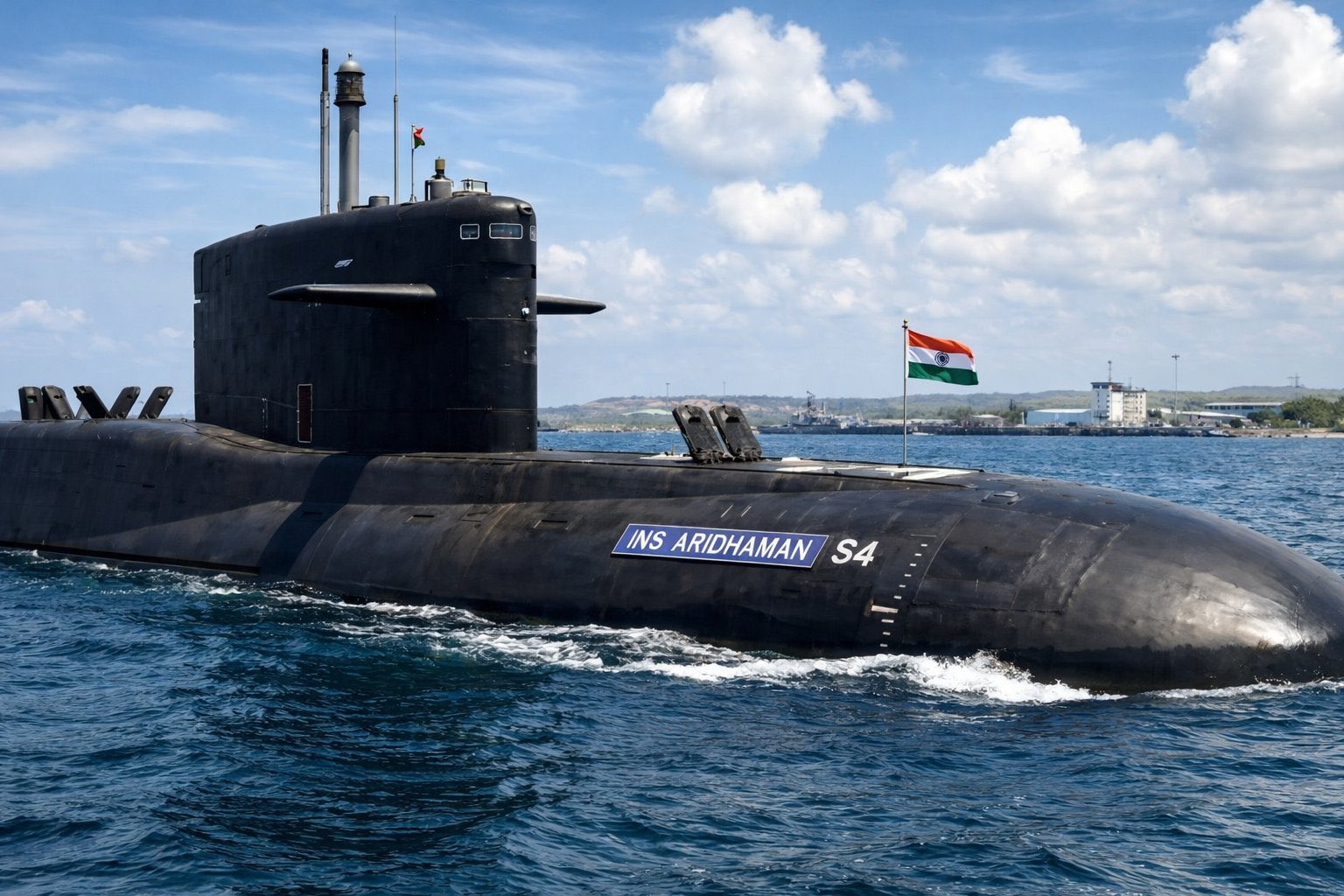
The induction of INS Aridhaman, which features several technological enhancements, now gives India the third nuclear ballistic missile submarine to ensure continuous at-sea deterrent.

Dinakar Peri

This piece argues that the present Indian strategy, based on opportunistic diversification and utilization of limited strategic reserves, remains inadequate when confronting supply disruptions. It evaluates India’s options in the short, medium, and long terms.
Vrinda Sahai