

Commentary
Stefan Lehne
{
  "authors": [
    "Stefan Lehne"
  ],
  "type": "other",
  "centerAffiliationAll": "dc",
  "centers": [
    "Carnegie Endowment for International Peace",
    "Carnegie Europe"
  ],
  "collections": [
    "EU Integration and Enlargement"
  ],
  "englishNewsletterAll": "ctw",
  "nonEnglishNewsletterAll": "",
  "primaryCenter": "Carnegie Europe",
  "programAffiliation": "EP",
  "programs": [
    "Europe"
  ],
  "projects": [],
  "regions": [
    "Europe",
    "Eastern Europe",
    "Western Europe",
    "Iran"
  ],
  "topics": [
    "Foreign Policy",
    "EU",
    "Security"
  ]
}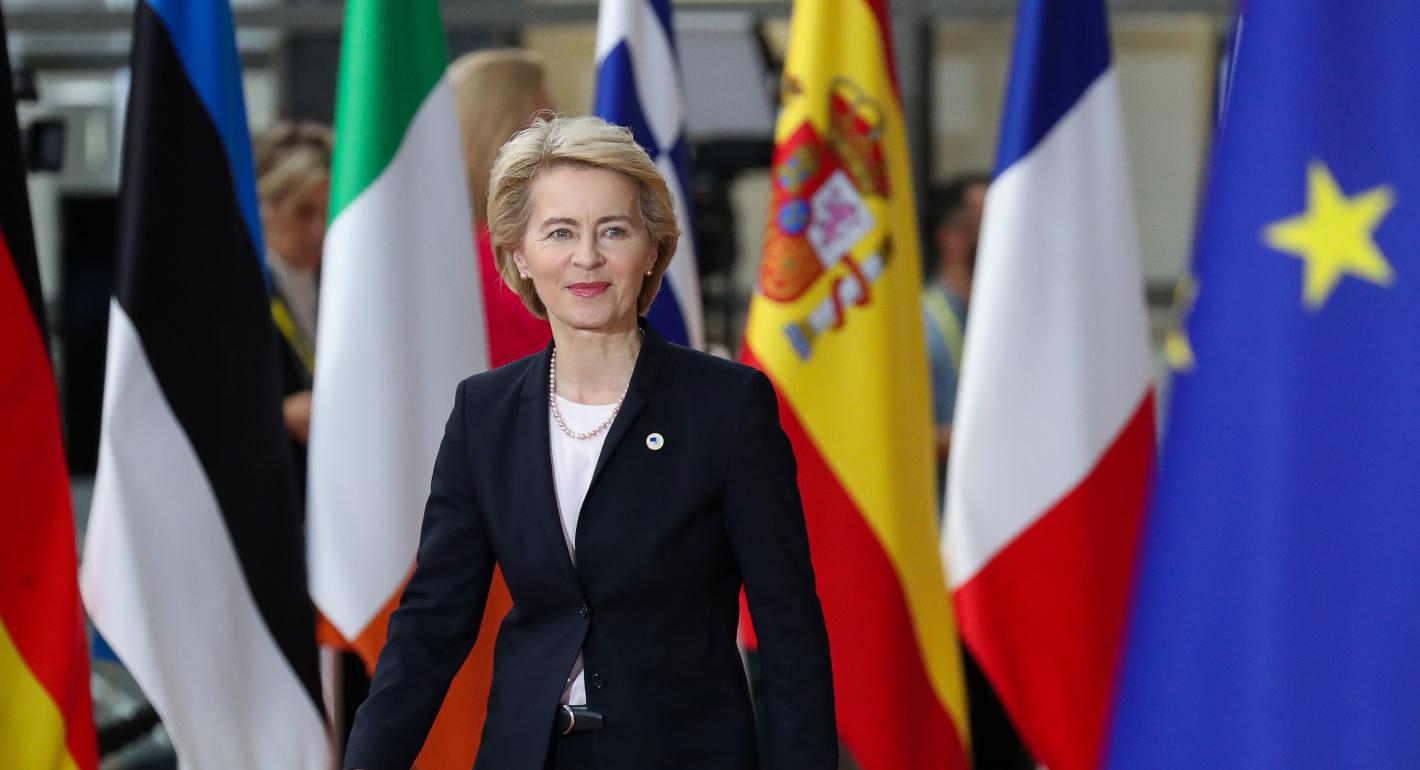
Source: Getty
The EU’s foreign policy principles were envisioned for a more benign international environment. But growing great-power tensions are forcing the EU to adapt its policies to the new international reality.
Source: Institute for Democracy “Societas Civilis”
The change in the EU’s institutional cycle in late 2019 came with an unfamiliar type of rhetoric. The new European Commission president, Ursula von der Leyen, spoke of establishing a “geopolitical commission.” Both she and the EU’s new foreign policy chief, Josep Borrell, insisted that the union must now “learn the language of power.”
This new language of power and geopolitics jars in many European ears because it runs counter to the EU’s long-held understanding of its place in the world. From the very beginning in the 1950s, European integration was conceived to overcome the legacy of power politics that had brought war and conflict to Europe.
That this concept succeeded over several decades was to considerable extent due to a particular geopolitical context. European integration developed in an international system shaped and dominated by the United States. It was mostly the U.S. security guarantee and its global leadership role that afforded the Europeans the luxury of leaving geopolitics behind.
After the end of the Cold War, the U.S. position at first remained preeminent. EU leaders now considered themselves Washington’s principal partners in constructing a rules-based liberal global order based on democracy and the market economy. But this dream began to fall apart about fifteen years ago. It had become clear that Russia would not transition to a liberal democracy, as many in the West had hoped in the 1990s. Rather, it would consolidate as an authoritarian state committed to securing an extensive zone of influence. It also became evident that the rise of hundreds of millions of Chinese out of poverty would not be accompanied by progress toward liberalization and pluralism. China would combine economic success with one-party rule, disproving the West’s dogma that economic development and democracy were intrinsically linked.

Senior Fellow, Carnegie Europe
Stefan Lehne is a senior fellow at Carnegie Europe in Brussels, where his research focuses on the post–Lisbon Treaty development of the European Union’s foreign policy, with a specific focus on relations between the EU and member states.
Recent Work
Stefan Lehne
Stefan Lehne
Carnegie India does not take institutional positions on public policy issues; the views represented herein are those of the author(s) and do not necessarily reflect the views of Carnegie, its staff, or its trustees.

This piece argues that the present Indian strategy, based on opportunistic diversification and utilization of limited strategic reserves, remains inadequate when confronting supply disruptions. It evaluates India’s options in the short, medium, and long terms.

Vrinda Sahai

This piece examines India’s response to U.S. sanctions and tariffs, specifically assessing the immediate market consequences, such as alterations in import costs, and the broader strategic implications for India’s energy security and foreign policy orientation.
Vrinda Sahai
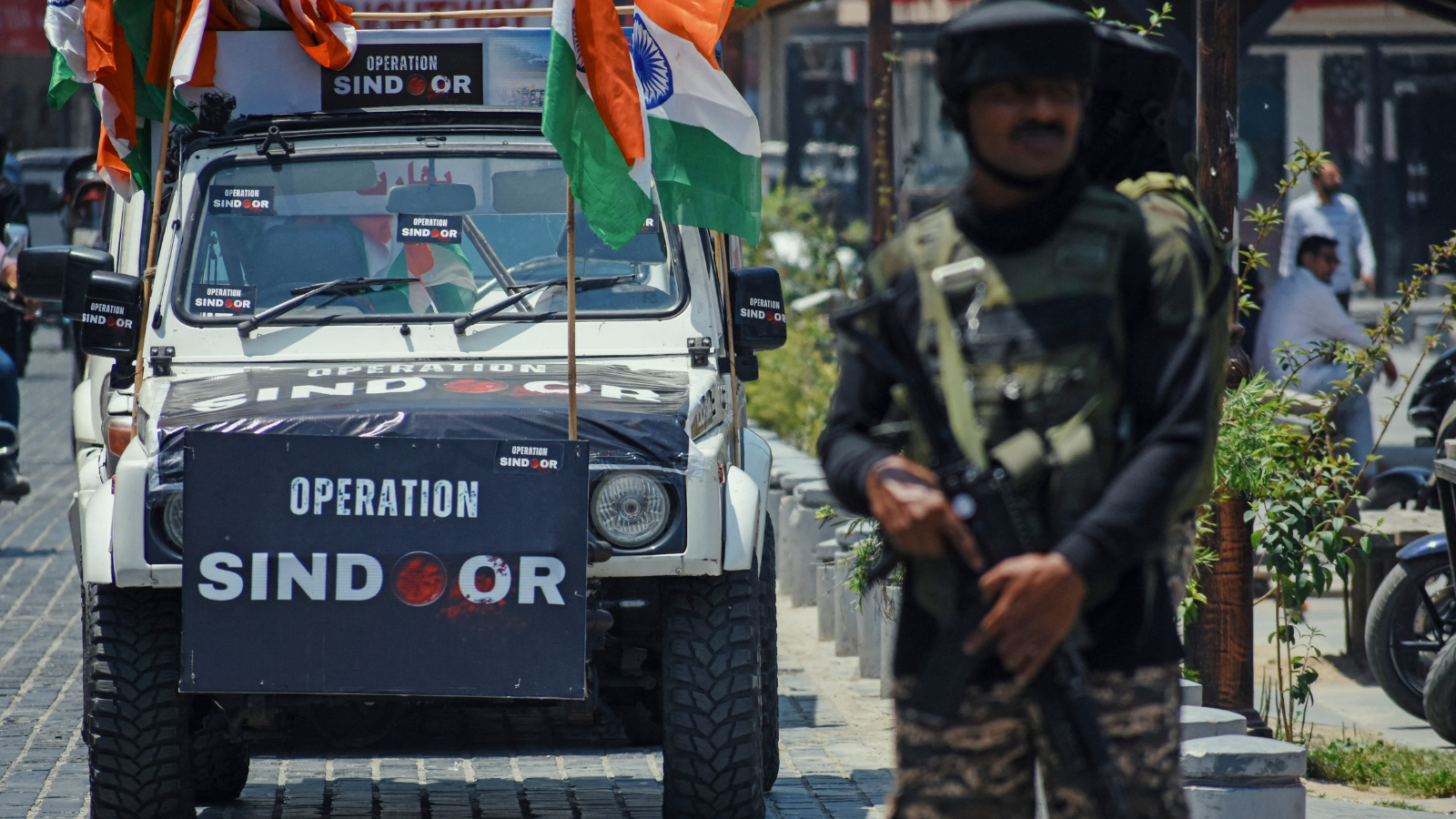
The India-Pakistan conflict that played out between May 6 and May 10, 2025, offers several military lessons. This article presents key takeaways from Operation Sindoor and breaks down how India’s preparations shaped the outcome and what more is needed to strengthen future readiness.

Dinakar Peri
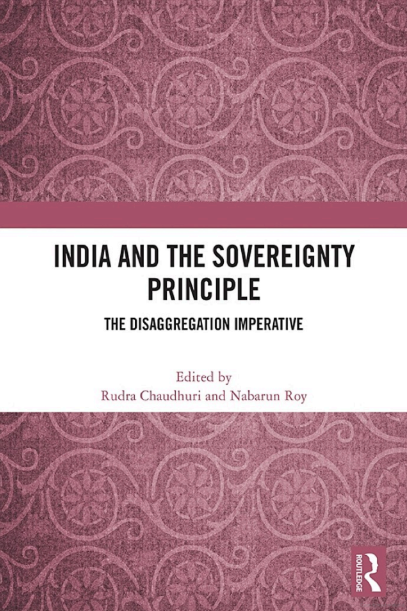
This book offers a comprehensive analysis of India's evolving relationship with sovereignty in a complex global order. Moving beyond conventional narratives, it examines how the sovereignty principle shapes India's behavior across four critical domains—from traditional military power to contemporary data governance.
Rudra Chaudhuri, Nabarun Roy
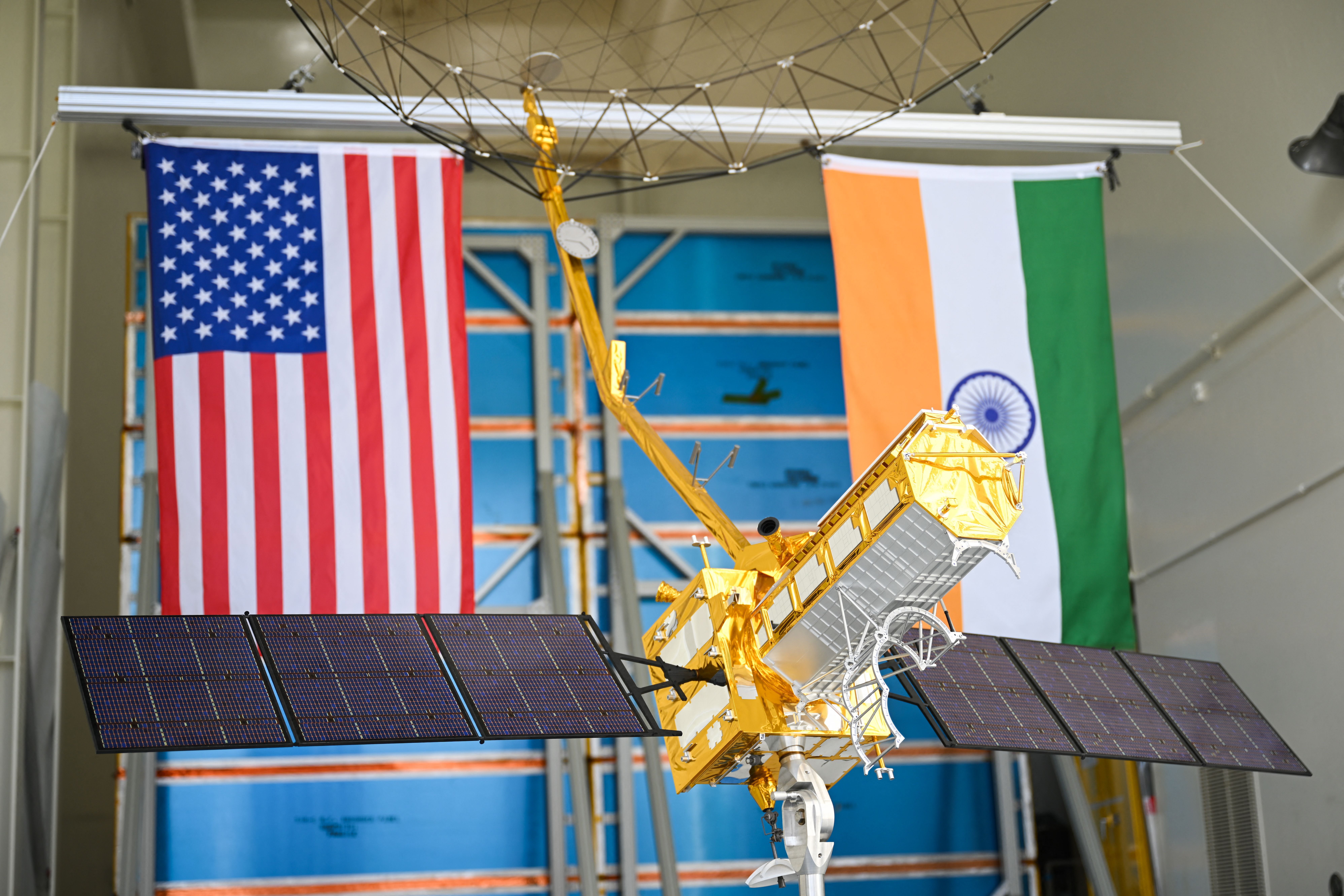
On July 30, 2025, the United States announced 25 percent tariffs on Indian goods. While diplomatic tensions simmered on the trade front, a cosmic calm prevailed at the Sriharikota launch range. Officials from NASA and ISRO were preparing to launch an engineering marvel into space—the NASA-ISRO Synthetic Aperture Radar (NISAR), marking a significant milestone in the India-U.S. bilateral partnership.

Tejas Bharadwaj