

Q&A
Alper Coşkun, Amr Hamzawy
{
  "authors": [
    "Alper Coşkun"
  ],
  "type": "commentary",
  "centerAffiliationAll": "dc",
  "centers": [
    "Carnegie Endowment for International Peace"
  ],
  "collections": [
    "Türkiye and the World"
  ],
  "englishNewsletterAll": "ctw",
  "nonEnglishNewsletterAll": "",
  "primaryCenter": "Carnegie Endowment for International Peace",
  "programAffiliation": "EP",
  "programs": [
    "Europe"
  ],
  "projects": [],
  "regions": [
    "North America",
    "United States",
    "Middle East",
    "Türkiye",
    "Iran"
  ],
  "topics": [
    "Security",
    "Foreign Policy"
  ]
}
Source: Getty
After Turkey’s request to purchase F-16 fighter jets from the United States, the Biden administration and U.S. Congress have a decision to make. By choosing to sell the jets, the United States could inject new energy into the Turkey-U.S. alliance.
The strained bilateral relationship between Turkey and the United States has come into the limelight once again. At the end of September, Turkey sent a letter of request to the United States, expressing its desire to purchase forty state-of-the-art F-16 fighter jets as well as modernization kits for eighty of its aging planes.
Turkish officials, including President Recep Tayyip Erdoğan, have insisted that the request was initially suggested by the United States—but the U.S. State Department spokesperson declined to comment.
This incident was a good reminder of the fragility of Turkey’s relations with its friends. On the U.S. side, bipartisan discontent in Congress with Turkey’s actions on a number of issues adds to the challenge, and U.S. President Joe Biden’s administration might be reluctant to entertain Ankara’s request. Should the United States oblige Turkey’s request?
An overriding, long-term strategic interest could change U.S. calculations. After Ankara’s decision to purchase the Russian S-400 air defense system, Turkey was pushed out of the fifth generation F-35 stealth fighter jet program by the United States. But the United States has a stake in preventing the Turkish air force from distancing itself from the Western defense industry ecosystem.
As a result, the prospect of reviving long-term defense industry cooperation with Turkey, combined with lucrative U.S. business interests, could well change the tide in favor of the F-16 deal going through.
Turkey’s production of F-16 fighter jets in the late 1980s was the pinnacle of defense cooperation between the two countries. It involved the assembly of over 300 jets for Turkey and forty-six for Egypt, as well as numerous modernization programs. Turkey’s latest request may provide an opportunity to carry this tradition into the future—especially when the bilateral relationship is in desperate need of repair.
By agreeing to the request, the Biden administration could check multiple boxes. It could
By fulfilling Turkey’s F-16 request, the United States could also disincentivize Ankara from pursuing alternate paths, such as deeper defense industry cooperation with Russia. Practical and financial considerations, most notably related to interoperability, maintenance, and training, make it highly unlikely that Turkey would contemplate migrating away from NATO standards for its air force. But Turkey may have political considerations for looking elsewhere.
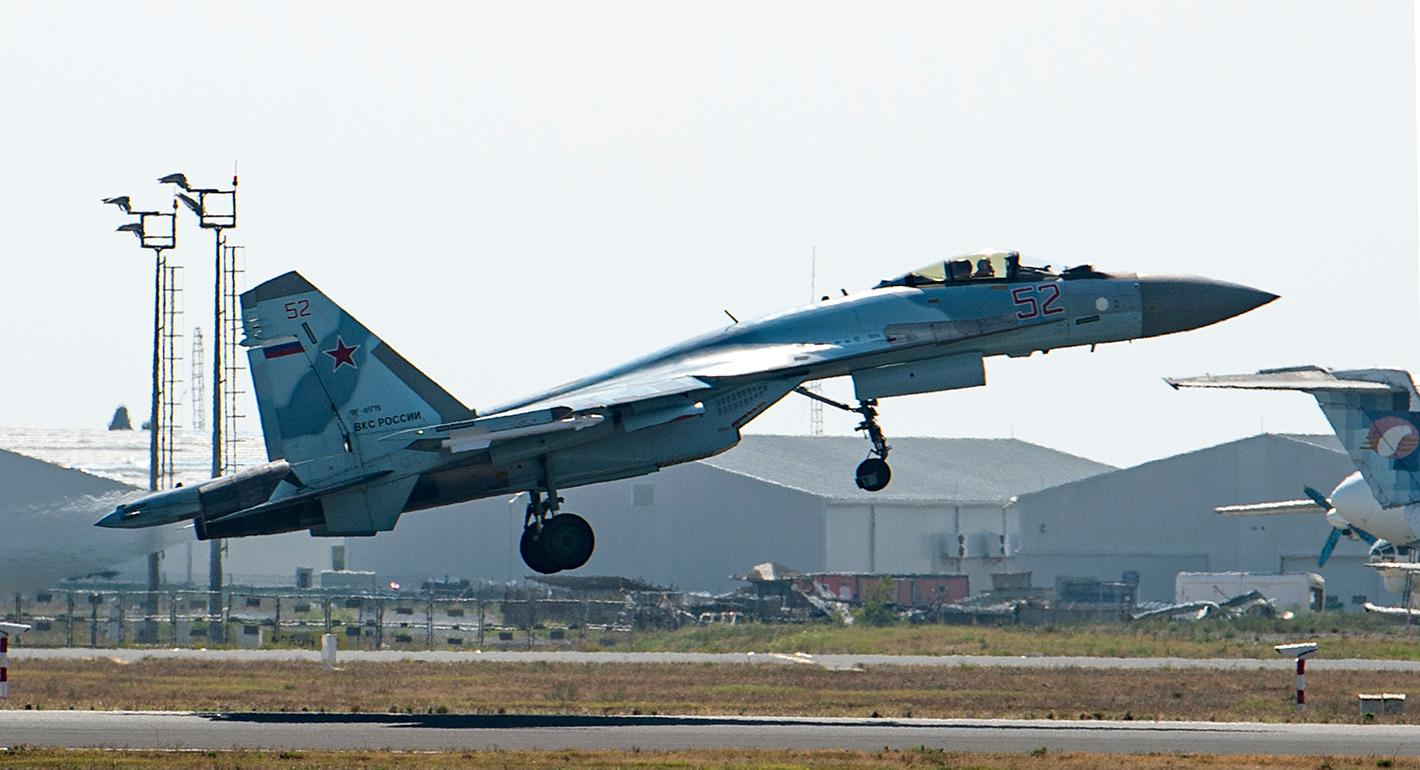
Some analysts argue that defense decoupling in the Turkey-U.S. alliance is already materializing. In fact, the head of Turkey’s Presidency of Defense Industries Ismail Demir, who reports directly to Erdoğan, has pointed out that there are alternatives if Turkey’s request to purchase F-16s were rejected, noting in particular Russian SU-35 or SU-57 fighter jets. This comes after statements by Erdoğan that Turkey may deepen its defense industry cooperation with Russia—and even possibly purchase an additional batch of the S-400 air defense system.
It would be a mistake for the Biden administration to sleepwalk into such an eventuality, which could quickly become difficult to reverse. As the S-400 debacle has proven, NATO adversaries are the only ones that would stand to benefit from such a development.
Turkey’s gambit has put the onus for improving the bilateral relationship on the Biden administration. The F-16 deal has become a litmus test for the future of the relationship.
According to a study conducted in 2021, more than 64 percent of Turks think negatively of the United States’ approach vis-a-vis Turkey, up from 55 percent in 2020. By contrast, slightly over 50 percent of Turks surveyed in 2021 define the relationship with Russia as cooperative. Should Ankara’s request for F-16s be denied, the standing of the United States in Turkey can be expected to get even worse.
The Biden administration has a tough decision ahead. Congress can be expected to put up a stiff fight against the sale, and if Biden wishes to see the deal through, he will be required to expend some precious political capital. But it could well be worth it.
Keeping Turkey in the fold is a matter of strategic importance for NATO and the United States. By making this request, Turkey has signaled its readiness to stay that course.
Washington should seize the opportunity. Who knows? This might kick-start some much-needed positive momentum in Turkey-U.S. engagement—and maybe even create a more widespread ripple effect in the countries’ bilateral relations.

Senior Fellow, Europe Program
Alper Coşkun is a senior fellow in the Europe Program and leads the Türkiye and the World Project at the Carnegie Endowment for International Peace in Washington, DC.
Recent Work

Alper Coşkun, Amr Hamzawy
Alper Coşkun, Fatih Ceylan, Tacan İldem, …
Carnegie India does not take institutional positions on public policy issues; the views represented herein are those of the author(s) and do not necessarily reflect the views of Carnegie, its staff, or its trustees.

In any defense establishment, change is an ongoing process. However, despite the best of intentions, existing bureaucracies, bound by habit and years of socialization, have their limits in implementing transformative change.

Anit Mukherjee

How is AI reshaping space security, creating governance challenges, and where does international diplomacy stand today?


Tejas Bharadwaj, Almudena Azcárate Ortega

After the chill in ties between 2020 and 2024 that brought India–China relations to their lowest point in several decades, the two countries have engaged each other afresh. This paper argues that there are predominantly four imperatives guiding India’s approach to China, and they exist in an order of priority.

Saheb Singh Chadha

This piece argues that India’s central challenge is not managing a single flashpoint but resolving the underlying tension between expansion and institutional coherency of the BRICS grouping.

Vrinda Sahai

A partnership between India, a country of subcontinental size, and Africa, a continent of fifty-four countries, may seem asymmetric until one notes that both are home to nearly the same number of people—1.4 billion. This essay spells out the existing challenges to the partnership, its optimal potential, and the possible pathways to realize it over the next quarter-century.

Rajiv Bhatia