

Paper
Ahmed Nagi
{
  "authors": [
    "Ahmed Nagi"
  ],
  "type": "commentary",
  "centerAffiliationAll": "dc",
  "centers": [
    "Carnegie Endowment for International Peace",
    "Malcolm H. Kerr Carnegie Middle East Center"
  ],
  "collections": [],
  "englishNewsletterAll": "menaTransitions",
  "nonEnglishNewsletterAll": "",
  "primaryCenter": "Malcolm H. Kerr Carnegie Middle East Center",
  "programAffiliation": "MEP",
  "programs": [
    "Middle East"
  ],
  "projects": [],
  "regions": [
    "United States",
    "Middle East",
    "Yemen"
  ],
  "topics": [
    "Security",
    "Foreign Policy"
  ]
}
Source: Getty
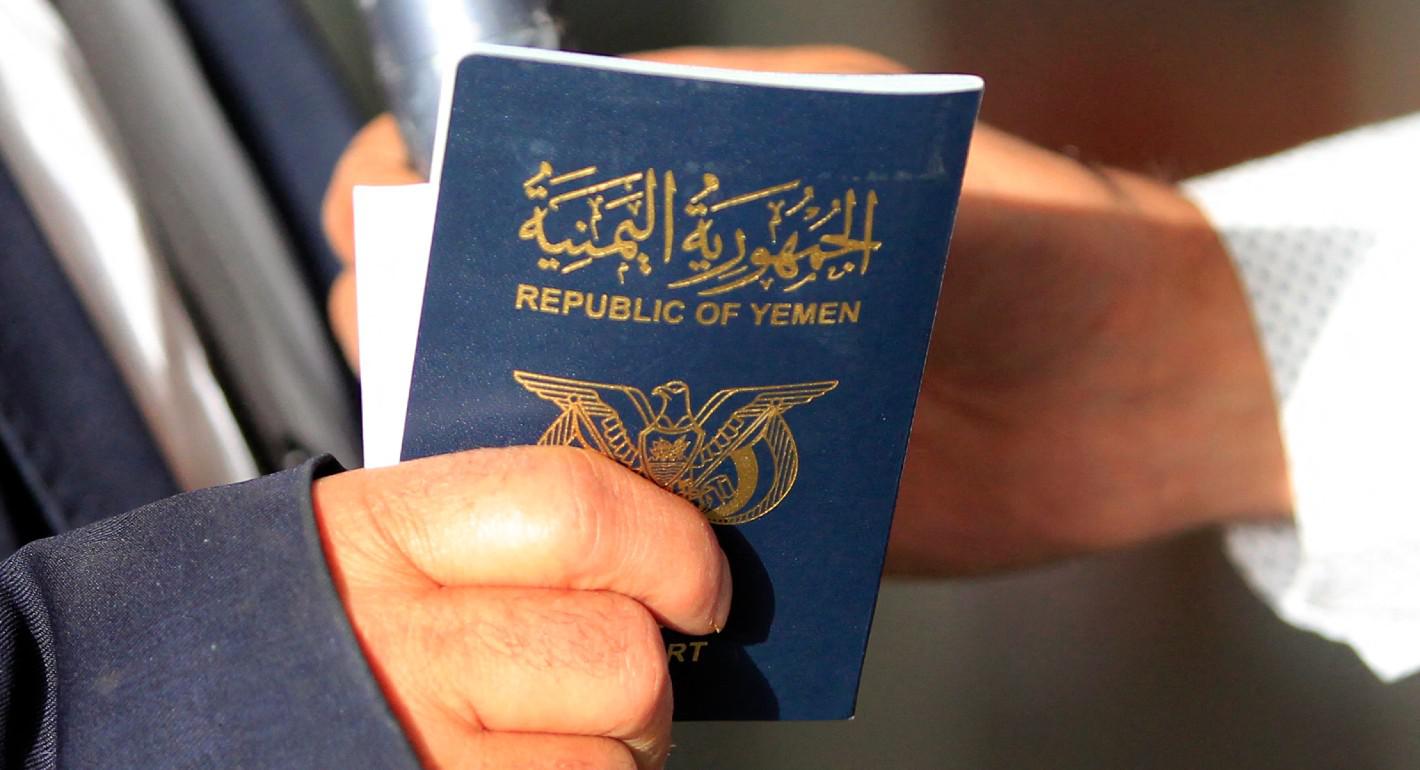
The U.S. president will discuss the country with everyone in the region—except Yemenis.
When U.S. President Joe Biden visits Saudi Arabia this week, the war in Yemen will be among the issues discussed by the countries’ leaders. But it will be a secondary issue, one whose importance will not exceed its security implications. This enshrines the traditional U.S. policy that looks at Yemen through the lens of what Yemen means to its neighbors and to the United States, not to Yemenis—a policy that brings no genuine stability to either Yemen or the region. Biden must adopt a new Yemen-centered strategy, through which the United States and the Gulf states, mainly Saudi Arabia and the United Arab Emirates, work together to reconstruct the war-ravaged Yemen. This is not only their responsibility as partner countries in the war but also the way to achieve lasting stability in Yemen.
The conflict in Yemen began as a consequence of the government’s weakness. The Iranian-backed Ansar Allah, known as the Houthi movement, exploited that vacuum and conducted a series of military expansions in Yemen’s northern areas, ultimately taking over the capital Sanaa in September 2014. The war escalated when a Saudi-led coalition launched a military campaign in March 2015 to defeat the Houthis and restore the government. Instead, the conflict expanded and became a threat for the whole region, especially when the Houthis began targeting Saudi and Emirati territories using ballistic missiles and drone attacks. The failure to resolve the conflict in Yemen at its outset has turned into a major security issue for the whole region, especially after the increasing involvement of Iran and the Saudi-led coalition.
Biden’s visit takes place amid a recent truce in Yemen, as well as several global crises brought about by the Russian invasion of Ukraine—one of which is energy supply. The United States attempted to slow skyrocketing oil prices by persuading Saudi Arabia and other Gulf countries to increase their oil production—a proposal that Riyadh was hesitant to meet. This reaction is accompanied by cold relations between the Biden administration and Saudi Prince Mohammed bin Salman, stemming in part from U.S. indifference for the region’s security, especially after increasing Houthi attacks.
But the consequences of Russia’s war are bringing U.S. interests back to the region, and the main purpose of Biden’s visit is to cement U.S. regional ties in order to pave the way for solutions to the energy crisis. One problem with this strategy is that Biden will discuss Yemen with everyone in the region except Yemenis.
During his Saudi visit, Biden will attend a summit of the Gulf Cooperation Council plus Egypt, Iraq, and Jordan, known as the GCC+3. However, the head of Yemen’s Presidential Leadership Council (PLC)—the internationally recognized government in Yemen whose formation was supported by the U.S. government—will not be among those attending. Saudi Arabia, the host of the summit, seems to be less enthusiastic to include its ally Yemen in the planned meetings. This indicates that, to these players, what matters most about Yemen is its impact on the region rather than its internal stability.
According to the White House, Biden will discuss “support to the UN-mediated truce in Yemen” with the GCC+3. But the benefit of the truce lies in its ability to produce positive, subsequent progress at all levels—not just for international security. One of the main provisions of the truce agreement, the opening of roads in Taiz Governorate, is still faltering, and the Houthis are taking advantage of the absence of air strikes to build up their on-the- ground military. With the increase in reported truce violations, the possibility of collapse is increasing—which threatens stability inside and outside the country’s borders. Therefore, any possible agreement between the Houthis and Saudi Arabia that happens without the Yemeni government’s engagement will not solve issues affecting the local level of the war, but it would plunge the country further into more chaos, in which none of the international or regional voices would be able to calm the expected conflict.
For the United States, the local conflict in Yemen has not been a priority, and the administration has no leverage on the Houthis that could help to address it. Moreover, the United States has been using targeted drone attacks in Yemen for more than a decade as part of the war against terrorist groups such as Al-Qaeda in the Arabian Peninsula (AQAP) and the self-proclaimed Islamic State. This war has been the largest factor in shaping U.S. policies toward Yemen, and the security approach remains the dominating narrative within successive administrations. The problem of this approach is in not only the high number of civilians killed by drones but also the miscalculation of the impact on Yemeni local politics. For example, the United States and the Houthis have long cooperated over the fight against AQAP in some areas, under the pretext of the saying that “the enemy of my enemy is my friend.” This might help in the short term, but what is obvious is that the expansion of the Houthis in some areas, simultaneous with the disintegration of the legitimate government, will boost the AQAP narrative in the long term.
What Yemen needs from the Biden administration is U.S. policies that go beyond the security approach. Returning normalcy to life in the areas outside the conflict zones is an important move at this time, as it will deconstruct the narrative of war and reduce tendencies toward violent acts. Moreover, the United States can help Yemen to revitalize its most productive sectors, including oil and agriculture, and open its closed ports. This will bring fixed revenues to pay the salaries of civil servants as well as make Yemen less dependent on humanitarian assistance. Supporting both central and local authorities can also rebuild accountable and sustainable governance. While Biden’s focus will be on energy prices, he should use the opportunity during his visit to shift U.S. policy, as well as that of the Gulf states, toward helping the country move beyond war. This shift would go a long way to bring stability to the wider region.

Senior Analyst at the International Crisis Group
Ahmed Nagi is a senior Analyst at the International Crisis Group.
Recent Work
Ahmed Nagi
Carnegie India does not take institutional positions on public policy issues; the views represented herein are those of the author(s) and do not necessarily reflect the views of Carnegie, its staff, or its trustees.

On the last day of the India AI Impact Summit, India signed Pax Silica, a U.S.-led declaration seemingly focused on semiconductors. While India’s accession to the same was not entirely unforeseen, becoming a signatory nation this quickly was not on the cards either.

Konark Bhandari

This piece examines India’s response to U.S. sanctions and tariffs, specifically assessing the immediate market consequences, such as alterations in import costs, and the broader strategic implications for India’s energy security and foreign policy orientation.
Vrinda Sahai

The India-Pakistan conflict that played out between May 6 and May 10, 2025, offers several military lessons. This article presents key takeaways from Operation Sindoor and breaks down how India’s preparations shaped the outcome and what more is needed to strengthen future readiness.

Dinakar Peri
This book offers a comprehensive analysis of India's evolving relationship with sovereignty in a complex global order. Moving beyond conventional narratives, it examines how the sovereignty principle shapes India's behavior across four critical domains—from traditional military power to contemporary data governance.

Rudra Chaudhuri, Nabarun Roy
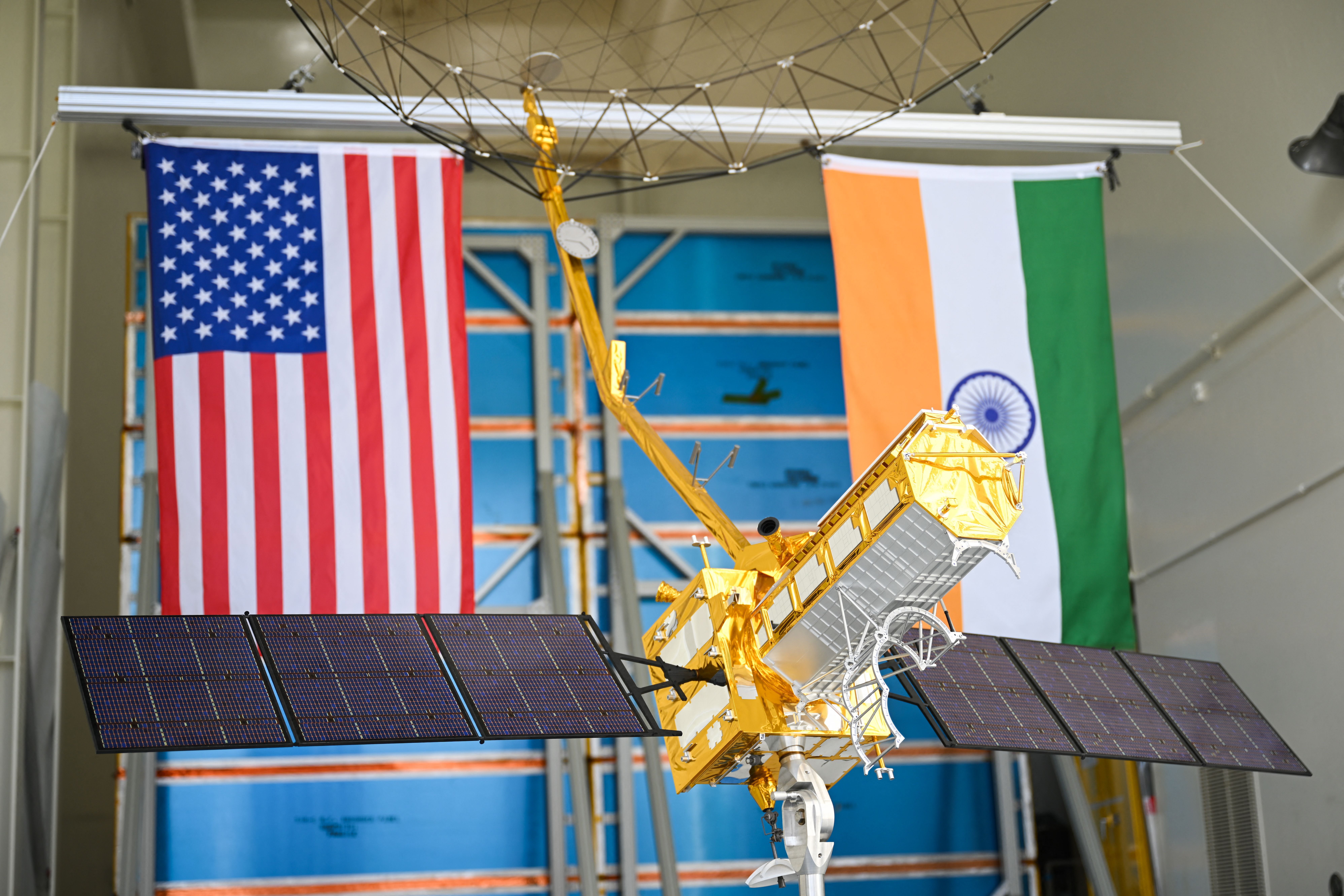
On July 30, 2025, the United States announced 25 percent tariffs on Indian goods. While diplomatic tensions simmered on the trade front, a cosmic calm prevailed at the Sriharikota launch range. Officials from NASA and ISRO were preparing to launch an engineering marvel into space—the NASA-ISRO Synthetic Aperture Radar (NISAR), marking a significant milestone in the India-U.S. bilateral partnership.

Tejas Bharadwaj