

Article
This piece argues that India’s central challenge is not managing a single flashpoint but resolving the underlying tension between expansion and institutional coherency of the BRICS grouping.
Vrinda Sahai
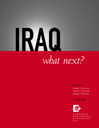
Far from being exhausted, the inspections process has just begun. Inspections should be pursued without ruling out future use of force. Iraq’s lack of full cooperation is a material breach, but not a casus belli.
Source: Carnegie

This new analysis, by the Carnegie team who helped write Iraq: A New Approach, last fall’s groundbreaking report that helped define the current inspections regime, provides a concise outline of the concerns over Iraq’s missile, nuclear, biological, and chemical weapons capabilities that inspectors are investigating. It addresses the effectiveness of intelligence sharing, site visits, the inspectors’ use of advanced technology, and Iraq’s willingness to cooperate. The report argues that a realistic timeframe for inspections is another year for the discovery process, followed by dismantlement and permanent monitoring.
Among its conclusions: Far from being exhausted, the inspections process has just begun. Inspections should be pursued without ruling out future use of force. Iraq’s lack of full cooperation is a material breach, but not a casus belli. As the report argues, "Disarmament achieved without a war would be an enormous—and enormously popular—achievement." In the meantime, "Saddam Hussein is effectively incarcerated and under watch by a force that could respond immediately and devastatingly to his aggression." However, if the aim is not, in fact, disarmament but regime change as a matter of principle, "then the inspection and disarmament processes now underway are largely irrelevant."
About the Authors
Joseph Cirincione is a senior associate and director of the Carnegie Non-Proliferation Project. Jessica T. Mathews is president of the Carnegie Endowment, and George Perkovich is its Vice President for Studies.
Miriam Rajkumar is a project associate and Marshall Breit is a research assistant with the Non-Proliferation Project. Dipali Mukhopadhyay is the project's Junior Fellow.
Former Senior Associate, Director for NonProliferation
Distinguished Fellow
Mathews is a distinguished fellow at the Carnegie Endowment for International Peace. She served as Carnegie’s president for 18 years.

Japan Chair for a World Without Nuclear Weapons, Senior Fellow
George Perkovich is the Japan Chair for a World Without Nuclear Weapons and a senior fellow in the Carnegie Endowment for International Peace’s Nuclear Policy Program. He works primarily on nuclear deterrence, nonproliferation, and disarmament issues, and is leading a study on nuclear signaling in the 21st century.
Carnegie India does not take institutional positions on public policy issues; the views represented herein are those of the author(s) and do not necessarily reflect the views of Carnegie, its staff, or its trustees.

This piece argues that India’s central challenge is not managing a single flashpoint but resolving the underlying tension between expansion and institutional coherency of the BRICS grouping.

Vrinda Sahai

A partnership between India, a country of subcontinental size, and Africa, a continent of fifty-four countries, may seem asymmetric until one notes that both are home to nearly the same number of people—1.4 billion. This essay spells out the existing challenges to the partnership, its optimal potential, and the possible pathways to realize it over the next quarter-century.

Rajiv Bhatia

The U.S.–India semiconductor cooperation story is well-stocked with top-level strategic intent. What remains unresolved, however, are some underlying challenges that will determine whether the cooperation actually functions. Three such friction points stand out.

Shruti Mittal

The India–EU Free Trade Agreement (FTA) is shaping up to be one of the most consequential trade negotiations, both economically and strategically. But, what’s in the agreement, what’s missing, and what will determine its success in the years ahead
Vrinda Sahai, Nicolas Köhler-Suzuki

This piece argues that the present Indian strategy, based on opportunistic diversification and utilization of limited strategic reserves, remains inadequate when confronting supply disruptions. It evaluates India’s options in the short, medium, and long terms.
Vrinda Sahai