• Research
  • About
  • Experts
Carnegie India logoCarnegie lettermark logo
REQUIRED IMAGE

REQUIRED IMAGE

Article

Framing the Issues


In presenting its case for war in Iraq, Bush administration officials carefully framed the issues in ways compatible with its larger goals and forced opponents to debate on its terms. By controlling the questions, the administration could control the answers. Instead of addressing the risks of invading Iraq, officials emphasized the risks of not invading Iraq. Instead of a careful assessment of costs and benefits, they cast the decision to go to war as a test of strength and resolve. This tactic is best illustrated in the way the administration presented its three main points: Iraq was a gathering threat, Saddam Hussein was a madman who could not be deterred, and Iraq was tied to September 11 and the war on terror.


Link Copied
By Ingrid Bruns
Published on Oct 27, 2004

In presenting its case for war in Iraq, Bush administration officials carefully framed the issues in ways compatible with its larger goals and forced opponents to debate on its terms. By controlling the questions, the administration could control the answers. Instead of addressing the risks of invading Iraq, officials emphasized the risks of not invading Iraq. Instead of a careful assessment of costs and benefits, they cast the decision to go to war as a test of strength and resolve. This tactic is best illustrated in the way the administration presented its three main points: Iraq was a gathering threat, Saddam Hussein was a madman who could not be deterred, and Iraq was tied to September 11 and the war on terror.

Instead of giving specifics about Iraq’s current threat to the U.S., the administration focused on the growing nature of that threat, and its future potential. In an October 2002 speech, the president said, "If we know Saddam Hussein has dangerous weapons today—and we do—does it make any sense for the world to wait to confront him as he grows even stronger and develops even more dangerous weapons?" This changed the choice from "should we invade Iraq?" to "should we invade Iraq now or later?" Under these terms, the logical case was for immediate action, since hesitance would only hurt us in the future.

The administration was also ingenious in conflating Saddam’s cruelty with his resistance to deterrence. They argued that since Saddam had used chemical weapons against his own people, invaded Kuwait and attempted to assassinate former President Bush, he obviously was a madman. Thus, deterrence (based on an element of rationality) would not work. By equating cruelty with an inability to be deterred, the question became "is Saddam cruel?"—a simple question with a simple answer—and the complexities of the deterrence argument were pushed aside. This forced opponents to concede that yes, well, Saddam was cruel, thus starting their argument with a caveat that immediately handicapped their case.

The most important technique used was to link Iraq to the attacks of September 11 and the larger war on terror. The president called Iraq and 9/11 "different faces of the same evil," saying that Saddam had supported terrorists and could transfer weapons technology to them. With the horror of that day so near, framing war with Iraq as a response to 9/11 made it very difficult to challenge. Officials effectively portrayed doubters as cowardly and weak on terrorism. Twisting the question into "should we be strong on terror?" forced opponents to defend their patriotism instead of deliberating an invasion.

Before the administration’s public campaign began with Vice-President Cheney’s speech in August 2002, the public was overwhelming against war with Iraq; by the time it concluded, the public was overwhelmingly in favor. Within this well-constructed frame, even diplomatic failure became an American victory. President Bush transformed his failure to win allied support into a failure of the allies to show courage: "Some permanent members of the Security Council have publicly announced they will veto any resolution that compels the disarmament of Iraq," he said, "These governments share our assessment of the danger, but not our resolve to meet it." With superb rhetorical skill and determined repetition of his themes, President Bush left his opponents with little ground on which to stand. It is a model of political manipulation that may not soon be matched.

Ingrid Bruns is a second-year graduate student in the Georgetown University School of Foreign Service.

About the Author

Ingrid Bruns

Ingrid Bruns
United StatesIraqSecurityMilitaryForeign Policy

Carnegie India does not take institutional positions on public policy issues; the views represented herein are those of the author(s) and do not necessarily reflect the views of Carnegie, its staff, or its trustees.

More Work from Carnegie India

  • Commentary
    India Signs the Pax Silica—A Counter to Pax Sinica?

    On the last day of the India AI Impact Summit, India signed Pax Silica, a U.S.-led declaration seemingly focused on semiconductors. While India’s accession to the same was not entirely unforeseen, becoming a signatory nation this quickly was not on the cards either.

      Konark Bhandari

  • Commentary
    The Impact of U.S. Sanctions and Tariffs on India’s Russian Oil Imports

    This piece examines India’s response to U.S. sanctions and tariffs, specifically assessing the immediate market consequences, such as alterations in import costs, and the broader strategic implications for India’s energy security and foreign policy orientation.

      Vrinda Sahai

  • Article
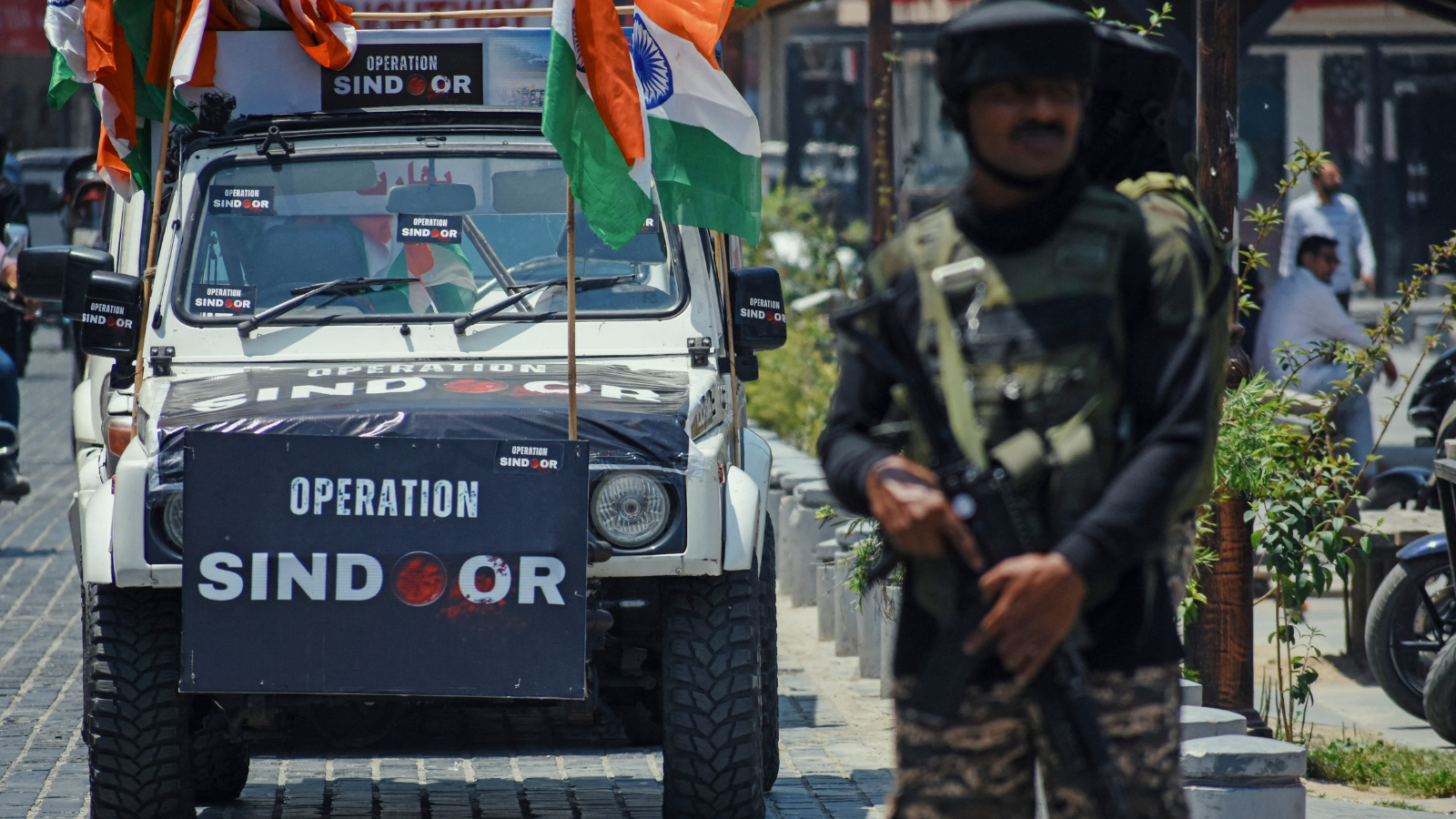
    Military Lessons from Operation Sindoor

    The India-Pakistan conflict that played out between May 6 and May 10, 2025, offers several military lessons. This article presents key takeaways from Operation Sindoor and breaks down how India’s preparations shaped the outcome and what more is needed to strengthen future readiness.

      Dinakar Peri

  • Book
    India and the Sovereignty Principle: The Disaggregation Imperative

    This book offers a comprehensive analysis of India's evolving relationship with sovereignty in a complex global order. Moving beyond conventional narratives, it examines how the sovereignty principle shapes India's behavior across four critical domains—from traditional military power to contemporary data governance.

      Rudra Chaudhuri, Nabarun Roy

  • Commentary
    NISAR Soars While India-U.S. Tariff Tensions Simmer

    On July 30, 2025, the United States announced 25 percent tariffs on Indian goods. While diplomatic tensions simmered on the trade front, a cosmic calm prevailed at the Sriharikota launch range. Officials from NASA and ISRO were preparing to launch an engineering marvel into space—the NASA-ISRO Synthetic Aperture Radar (NISAR), marking a significant milestone in the India-U.S. bilateral partnership.

      Tejas Bharadwaj

Get more news and analysis from
Carnegie India
Carnegie India logo, white
Unit C-4, 5, 6, EdenparkShaheed Jeet Singh MargNew Delhi – 110016, IndiaPhone: 011-40078687
  • Research
  • About
  • Experts
  • Projects
  • Events
  • Contact
  • Careers
  • Privacy
  • For Media
Get more news and analysis from
Carnegie India
© 2026 Carnegie Endowment for International Peace. All rights reserved.