• Research
  • About
  • Experts
Carnegie India logoCarnegie lettermark logo
Technology
Oh Canada!

Source: Getty

Article

Oh Canada!

U.S. President George Bush last week struck a deal with India that directly violates the nuclear Non-Proliferation Treaty, or NPT, as well as several major U.S. laws, setting off waves of criticism in the states and around the world. Canadian officials have not been part of that criticism. Instead, the nation that helped India build its first nuclear weapon may now help India build dozens more.

Link Copied
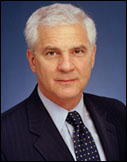
By Joseph Cirincione
Published on Mar 13, 2006
U.S. President George Bush last week struck a deal with India that directly violates the nuclear Non-Proliferation Treaty, or NPT, as well as several major U.S. laws, setting off waves of criticism in the states and around the world. Canadian officials have not been part of that criticism. Instead, the nation that helped India build its first nuclear weapon may now help India build dozens more.

The Bush deal would directly encourage and assist India’s nuclear bomb program, in contradiction to Article 1 of the NPT that prohibits any signatory nation from helping another nation develop nuclear weapons. Fortunately, before President Bush can sell one gram of uranium to India, the U.S. Congress will have to approve changes to U.S. laws. Congress could block or amend the agreement. Senior members of both parties have indicated their deep concerns about the deal and the precedent it sets for other nations, including Iran. The reaction has been so negative that the Indian ambassador to the United States complained, “the nonproliferation ideologues have high jacked the debate.”

Still, other nations, including France, Russia and Canada, are tempted by the profits to be made in nuclear sales to the world’s second most populous nation. The nuclear industries in these countries are salivating at the prospect of billions of dollars in trade and hoping that the construction of dozens of new reactors in India and China could restart their long-stalled industry, launching a new wave of nuclear power around the world. So-called “realists” in the foreign policy establishments dismiss proliferation concerns, focusing instead on the need to forge strong ties with India. Neoconservatives are eager to forge a grand alliance against China. For them, as one architect of the deal told my colleague, the problem is not that India has nuclear weapons; it is that it does not have enough nuclear weapons.

Canada will play a key role in determining whether this deal lives or dies. Canada has a special responsibility in this matter. More than any Indian scientist, Canada can be called the true mother of the Indian nuclear bomb.

Canada began its nuclear cooperation with India fifty years ago. In 1955, Canada agreed to build a 40MW research reactor for India, known as the CIRUS (Canada-India Reactor, US) reactor. India promised that both the reactor and the related fissile materials would only be used for peaceful purposes. Canada supplied half the initial uranium fuel for the reactor and the United States supplied the other half, plus heavy water to moderate the nuclear reactions. Canada signed two cooperation agreements that provided India with designs for the CANDU-type reactor. Many of India’s nuclear reactors, both operational and planned, are based on CANDU technology and designs received from Canada.

All were supposed to be exclusively for peaceful use. But in 1974, India cheated on its commitments. It took out fuel rods from the CIRUS reactor, extracted the plutonium from those rods and detonated its first nuclear test. India called it a “peaceful” nuclear explosion, but the country now admits it was a test of a weapon design. In response, Canada ceased all nuclear cooperation with India.

Now, following the US lead, Canada has begun to revive that cooperation. In September 2005, Canadian Foreign Minister Pettigrew met with Indian External Affairs Minister Singh and agreed to forget this history and let bygones be bygones. Significantly, they agreed to develop a broad bilateral cooperation framework, possibly by mid-2006. Canada agreed to open the supply of nuclear technology to any Indian civilian nuclear facility. This means that Canada, too, will violate the NPT. It will break Canadian laws that now require that a nuclear cooperation agreement only be concluded with a state that has signed the NPT (which India refuses to do) or has accepted full-scope safeguards (which India has not).

Full-scope safeguards means that a country agrees that all its nuclear facilities will be open to thorough inspection by the International Atomic Energy Agency. These inspectors will make sure that no nuclear fuel is diverted to weapons purposes. But the Bush India deal exempts fully one-third of India’s reactors from any inspections. It does not matter that inspectors will be allowed in to the others. If the deal stands, India will use foreign fuel for its power reactors, freeing up Indian uranium for its military reactors. India will be able to double or triple the number of weapons it can make annually. They could go from the 6-10 they could currently produce to 30 a year.

The consequences could be severe. Regionally, it could ignite a new nuclear arms race. Pakistan will not stand idly by, nor will China. What will Japan do, a country that signed the NPT, but now sees India reaping the benefits of standing outside the treaty?

Globally, the deal cripples the main diplomatic and legal barrier to the spread of nuclear weapons. The United States is now trying to restrain the Iranian program by relying on the very treaty it has just weakened with the India deal.

There are ways to fix this deal to minimize the damage, including getting India to promise to cease all further production of nuclear bomb material (the way all other nuclear weapon states have, save Pakistan). Canadian officials can help. But they must now decide if they want to. A bit of reflection on their past history with India wouldn’t hurt.


Related Links:

Canada: 'True Mother of the Indian Bomb'
No BMD, eh?, Canadian blog on anti-missile systems


A version of this brief originally appeared in The Globe and Mail on March 11, 2006.


Joseph Cirincione
Former Senior Associate, Director for NonProliferation
Joseph Cirincione
North AmericaUnited StatesSouth AsiaIndiaForeign PolicyNuclear PolicyNuclear Energy

Carnegie India does not take institutional positions on public policy issues; the views represented herein are those of the author(s) and do not necessarily reflect the views of Carnegie, its staff, or its trustees.

More Work from Carnegie India

  • Commentary
    The PSLV Setback: Restoring India’s Workhorse

    On January 12, 2026, India's "workhorse," the Polar Satellite Launch Vehicle, experienced a consecutive mission failure for the first time in its history. This commentary explores the implications of this incident on India’s space sector and how India can effectively address issues stemming from the incident.

      Tejas Bharadwaj

  • Commentary
    AI Adoption Journey for Population Scale

    Connecting real-world AI use cases across sectors such as health, education, agriculture, and livelihoods can help policymakers, innovators, and institutions align around a shared goal. This article looks at a framework ensuring that AI works for everyone.

      Shalini Kapoor, Tanvi Lall

  • Commentary
    The Impact of U.S. Sanctions and Tariffs on India’s Russian Oil Imports

    This piece examines India’s response to U.S. sanctions and tariffs, specifically assessing the immediate market consequences, such as alterations in import costs, and the broader strategic implications for India’s energy security and foreign policy orientation.

      Vrinda Sahai

  • Article
    Revisiting the Usage of Refurbished Equipment in India’s Semiconductor Ecosystem

    This article looks at the progress of the Semiconductor Laboratory fab modernization plan based on publicly available documents, and potential learnings for future upgrades to government-owned fabs and India’s larger semiconductor ecosystem, especially regarding the use of refurbished equipment.

      Shruti Mittal, Konark Bhandari

  • Article
    Military Lessons from Operation Sindoor

    The India-Pakistan conflict that played out between May 6 and May 10, 2025, offers several military lessons. This article presents key takeaways from Operation Sindoor and breaks down how India’s preparations shaped the outcome and what more is needed to strengthen future readiness.

      Dinakar Peri

Get more news and analysis from
Carnegie India
Carnegie India logo, white
Unit C-4, 5, 6, EdenparkShaheed Jeet Singh MargNew Delhi – 110016, IndiaPhone: 011-40078687
  • Research
  • About
  • Experts
  • Projects
  • Events
  • Contact
  • Careers
  • Privacy
  • For Media
Get more news and analysis from
Carnegie India
© 2026 Carnegie Endowment for International Peace. All rights reserved.