

Article
The final report by the Group of Governmental Experts is a key milestone toward a potential instrument regulating Lethal Autonomous Weapons Systems and has garnered both accolades and criticism.
Charukeshi Bhatt
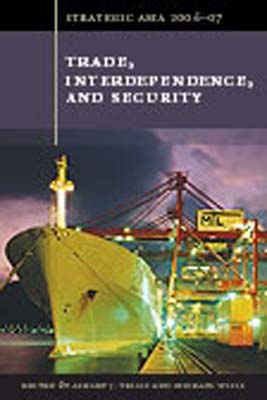
This book examines the strategic balance in Asia and the increasing levels of trade and interdependence in the region, assessing the implications for the United States.
The National Bureau of Asian Research

Strategic Asia 2006–07: Trade, Interdependence, and Security, the sixth volume in NBR’s Strategic Asia series, examines how trade and interdependence fit into the grand strategies of various Asian states and how changing economic relationships could affect regional stability in Asia. Through a combination of country, regional, and topical studies, the book assesses trade and investment dynamics in the region, the rise of new powers, the ongoing processes of globalization, and the impact of economic interdependence on security, and evaluates how these trends are altering Asia's strategic environment.
Order this book, or read the introduction by Ashley J. Tellis for free.
About the Authors
Ashley J. Tellis, Senior Associate at the Carnegie Endowment for International Peace, served in the U.S. Department of State as senior advisor to the Ambassador at the U.S. embassy in India and on the National Security Council staff as special assistant to the president and senior director, strategic planning and Southwest Asia. He is the author of India’s Emerging Nuclear Posture and co-author of Interpreting China’s Grand Strategy. He has co-edited Strategic Asia 2005-06: Military Modernization in an Era of Uncertainty and Strategic Asia 2004-05: Confronting Terrorism in the Pursuit of Power.
Michael Wills is the Strategic Asia program director at the National Bureau of Asian Research.
Former Senior Fellow
Ashley J. Tellis was a senior fellow at the Carnegie Endowment for International Peace.
Michael Wills
Carnegie India does not take institutional positions on public policy issues; the views represented herein are those of the author(s) and do not necessarily reflect the views of Carnegie, its staff, or its trustees.
The final report by the Group of Governmental Experts is a key milestone toward a potential instrument regulating Lethal Autonomous Weapons Systems and has garnered both accolades and criticism.

Charukeshi Bhatt
In any defense establishment, change is an ongoing process. However, despite the best of intentions, existing bureaucracies, bound by habit and years of socialization, have their limits in implementing transformative change.
Anit Mukherjee

As AI grows more sophisticated, as the supply chains that power it become more contested, and as access to frontier models becomes geopolitically charged, India must begin to ask a different set of questions. Not what applications it can build on someone else’s infrastructure but what the world needs.
Konark Bhandari

The Indian Ocean Region hosts one of the densest concentrations of subsea cables in the world. Yet, despite accounting for a significant share of global internet traffic, India’s participation remains limited.
Charukeshi Bhatt

How is AI reshaping space security, creating governance challenges, and where does international diplomacy stand today?

Tejas Bharadwaj, Almudena Azcárate Ortega