

Commentary
Sergei Aleksashenko, Mikhail Krutikhin, Yuval Weber
Source: Getty
Moscow’s unwillingness to trust market forces and continued insistence on top-down economic policies undermines any attempt at a true economic partnership with Europe.
The fact that the EU-Russia summit in Rostov-on-Don brought no tangible results is unsurprising—the large volume of trade between the two sides should not be taken as evidence of close economic ties. In truth, the lion’s share of Russia’s export to Europe is energy and the oil and gas pipelines that carry that trade are inherited from the Soviet Union. There is not a significant flow of direct investment in either direction. What’s more, even before the summit, it was clear that the changing structure of power within the European Union would turn the summit into a “meet and greet” session, while deep disagreements over South Ossetia and Abkhazia made hopes of break-through agreements unrealistic. Indeed, the agenda proposals that the two sides brought to the table hardly overlapped at all.
The Russian government is continuing its rhetoric about the need for a technological modernization of Russia’s economy. The good news is that Moscow recognizes that there can be no qualitative change to the Russian economy without foreign investment. Only six months ago, this idea was taboo in government circles, but Russia’s leaders are now prepared to appeal to investors in Europe, the United States, and Asia.
The bad news, however, is that the government has no faith in market mechanisms and stimuli, relying entirely on administrative methods of economic management. As a result, all of the modernizing projects are born exclusively in the Kremlin or the Russian White House, while the key instruments of their implementation are by decree from the president or prime minister. The proposal to conclude an agreement on “Partnership for Modernization” is based on the same logic: the Russian “vertical” is meant to do a deal with the European “vertical.”
The weakness of such an approach is immediately evident. For one thing, Europe has a long way to go before it constructs a true “power vertical” and it is not at all clear that Europeans even want one. Second, while European structures do have certain administrative resources (they can, for example, find money in the European budget for various projects or agree on guarantees for investment or trade), the real locomotives of the economy are, of course, European companies, both in general and as it pertains to economic cooperation with Russia in particular.
For these companies to work more actively with Russia, they need the same thing as all other investors: rule of law, defense of property rights, and reducing corruption and bureaucratic abuse. These are the conditions (or demands) that were set out by the European leadership. It is likely that President Medvedev was quite offended to hear that, having heard exactly the same demands only a week earlier at a meeting with American venture capitalists, during which he silently ducked addressing questions on when these reforms would take place.
There was little innovation in Europe’s agenda for this summit. The first point—access for European companies to Russian oil and gas fields—fell on deaf ears. Despite all of the declarations about the need to attract foreign investment to Russia, the country still requires that foreigners obtain permission to invest in any of 42 strategic sectors. Additionally, any investment of more than 10 percent in any oil or gas project triggers a government review.
While the European position on investment is clear and understandable, Europe’s silence on visa-free travel (or at least a significant simplification of visa requirements) – a demand issuing more from Russian society than from the government – is surprising. Easing the visa regime would certainly facilitate closer economic and cultural cooperation between ordinary Russian and European companies and citizens, which, in the long term, is of much more importance than cooperation among bureaucrats. The refusal to seriously discuss the issue during the summit delivered a significant blow to those Russian politicians and experts who argue for deeper dialogue and cooperation with Europe, while handing ammunition to their opponents.
Of course, it may be that the latest wave of the financial crisis—emanating, this time, from Europe’s Mediterranean south—doomed this summit to failure by proving too much of a distraction for European leaders. But it seems that the Rostov summit simply proved what we already suspected: the two sides do not share a common agenda on economic cooperation, nor are they willing to do what it would take to bring about a substantive change in the situation.
In the game of chess, the term “zugzwang” describes a situation in which any move you make would worsen your position. In the economic relationship between Europe and Russia, it would seem that both sides are caught in zugzwang.
Former Scholar in Residence, Economic Policy Program, Moscow Center
Aleksashenko, former deputy minister of finance of the Russian Federation and former deputy governor of the Russian central bank, was a scholar-in-residence in the Carnegie Moscow Center’s Economic Policy Program.
Recent Work
Sergei Aleksashenko, Mikhail Krutikhin, Yuval Weber
Sergei Aleksashenko
Carnegie India does not take institutional positions on public policy issues; the views represented herein are those of the author(s) and do not necessarily reflect the views of Carnegie, its staff, or its trustees.

After the chill in ties between 2020 and 2024 that brought India–China relations to their lowest point in several decades, the two countries have engaged each other afresh. This paper argues that there are predominantly four imperatives guiding India’s approach to China, and they exist in an order of priority.

Saheb Singh Chadha

This piece argues that India’s central challenge is not managing a single flashpoint but resolving the underlying tension between expansion and institutional coherency of the BRICS grouping.

Vrinda Sahai
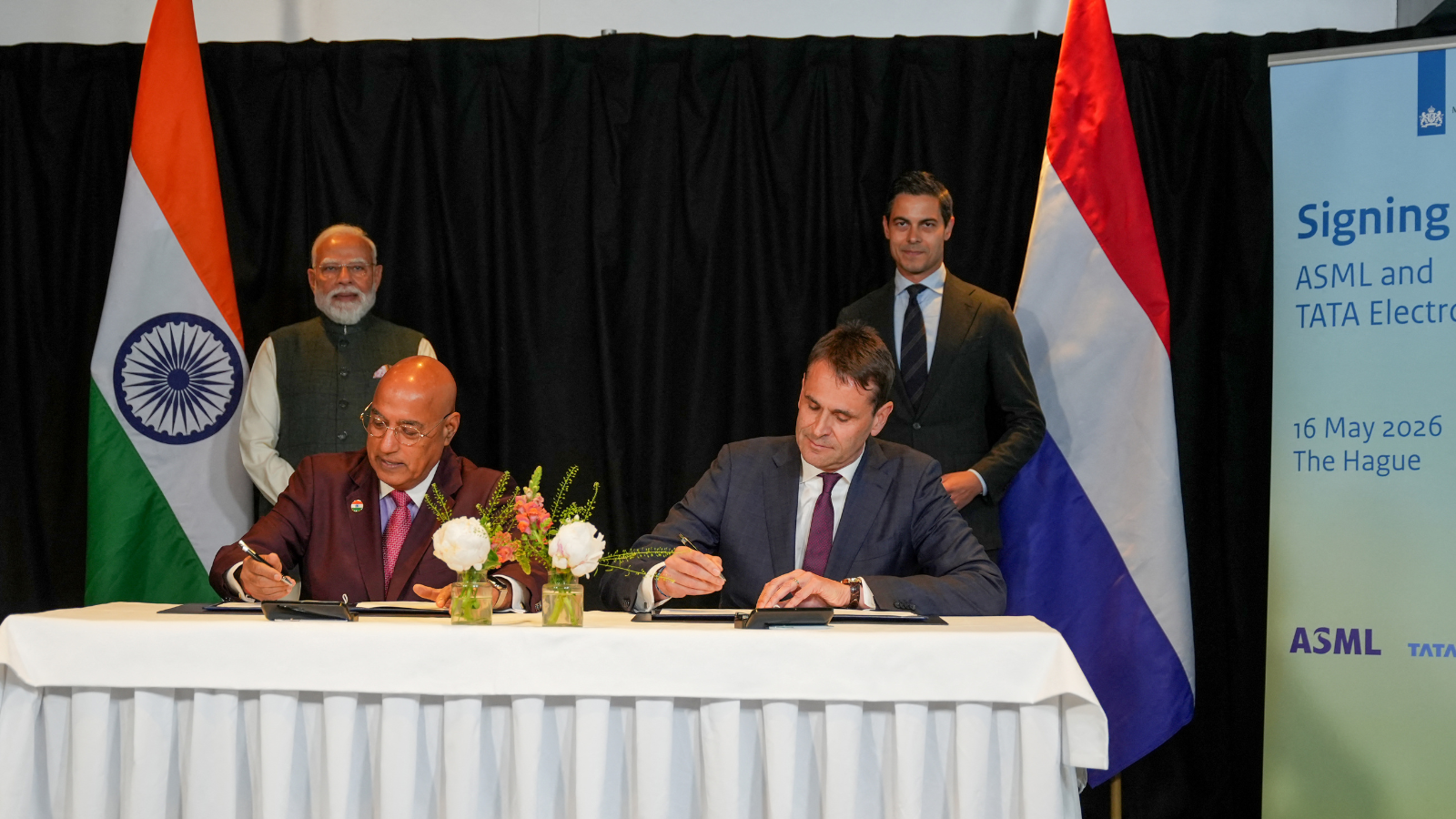
The ASML MoU with Tata Electronics is an indicator of how far the Indian semiconductor ecosystem has come. This ecosystem has been years in the making and represents real commercial logic.

Konark Bhandari

A partnership between India, a country of subcontinental size, and Africa, a continent of fifty-four countries, may seem asymmetric until one notes that both are home to nearly the same number of people—1.4 billion. This essay spells out the existing challenges to the partnership, its optimal potential, and the possible pathways to realize it over the next quarter-century.

Rajiv Bhatia

The India–EU Free Trade Agreement (FTA) is shaping up to be one of the most consequential trade negotiations, both economically and strategically. But, what’s in the agreement, what’s missing, and what will determine its success in the years ahead
Vrinda Sahai, Nicolas Köhler-Suzuki