

Other
- +1
Dmitri Trenin, Sergei Aleksashenko, Sam Greene, …
Source: Getty
Russia needs Europe’s technological resources to maintain its current economic and political system. Europe, however, wants its investment in Russia to lead to long-term institutional reform in Moscow.
In his statement to the press at the closing of the EU-Russia summit in Rostov-on-Don, Russian President Dmitry Medvedev hailed the so-called “Partnership for Modernization” that is meant to underpin further cooperation between Moscow and Brussels. EU President Herman van Rompuy did the same. But looking beyond the headline suggests that they were talking about very different things.
Take a look, for example, at the first five agenda items Medvedev listed after first mentioning the partnership: high technology, innovation, cutting-edge scientific research, energy efficiency, and growth. All are important, all are laudable. But then look at the first five agenda items that van Rompuy listed after he first broached the partnership: democratic values, economic diversification, civil society, trade, and visa-free travel. Again, it’s another well-considered list, but it’s missing one thing: any overlap with the Medvedev’s list. (Interestingly, it was van Rompuy who brought up the issue of visas, not Medvedev; more on that later.)
What Moscow needs from Europe is fairly straightforward: the resources— financial, technical, and managerial—to increase the efficiency of the current, top-down system of political and economic administration and thus to prolong its life. If you take an optimistic view, that means allowing the system to undergo gradual reform, rather than risking more radical change. If you don’t, that means allowing the system to avoid reform altogether.
What Europe needs from Moscow is also relatively clear: access to upstream hydrocarbon resources and various markets, stable terms of trade, and fewer barriers to investment. But that’s not what van Rompuy talked about. The view he took was longer term and is based on a vision not of strategic partnership but of strategic integration in which Russia becomes, if not a member of the EU, then at least a country whose basic political and economic institutions would be indistinguishable from those of any EU state, thus allowing free movement of goods, capital, and labor across borders.
Does Europe really need that degree of integration with Russia? The answer is probably no. Europe has gotten more or less what it needed from Russia over the last 20 years—relatively stable supplies of energy, growing access to markets for finished goods, and general peace and security on the continent—with no meaningful institutional integration and is likely to continue to do so. But the fact that Brussels returns to talk of democracy, rule of law, and institutional development again and again, in the face of tired smiles and polite intransigence from Moscow, indicates that this is what Europe would need to make any real investment in Russia’s modernization pay off.
Clearly, this is not a price that the Russian leadership is yet willing to pay. Institutions, whether domestic or international, make life easier for ordinary people and businesses by placing strict limitations on the autonomy of politicians and bureaucrats, and Russia’s politicians and bureaucrats enjoy almost unparalleled autonomy. As long as Russia can get at least a modicum of investment and assistance from individual European corporations and even a few national governments, Moscow may feel that is enough to get by, and Brussels’ demands can be safely ignored. And, for the time being, that calculation seems to be correct; van Rompuy and Commission President Jose Manuel Barroso can now safely return to worrying about Greece, Hungary, and Eyjafjallajokull. Indeed, these existential threats to Europe’s internal integration must seem refreshingly simple after a weekend of talks about integration with Russia.
Eventually, however, Europe’s leaders will have to make a strategic calculation as to whether the potential benefit of integration with Russia makes political and economic investment worthwhile even despite Moscow’s resistance. It was van Rompuy, not Medvedev, who highlighted the visa issue during the post-summit press conference, and that’s not an accident. Complaining about the visa regime is an easy populist trope for Russian politicians, but the rhetoric lacks fire because the policy lacks resolve: the costly steps on border protection and guarantees of data privacy that would be required for Russia to get visa-free status outweigh the benefits to the Russian elite, who are largely unaccountable to the electorate and in any case already travel to Europe without hassle.
But lifting (or radically simplifying) visa requirements would be the single greatest contribution the EU could make to future integration: by providing instant and easy access to Europe’s economic, cultural, educational, scientific, and, to an extent, political space, it would transform Russians from consumers of European goods and services to stakeholders in European institutions. Once that happens, it will be the backwardness of Russia’s institutions, rather than Brussels’ obstinacy on visas, that imposes barriers to Russians’ European future.
The relative disappointment of the Rostov summit underscores what has long been clear: the kind of integration that is potentially of interest to Russian leaders is of little or no interest to Europe, and vice versa. Russia will, nonetheless, probably extract much of the technology that it wants from European companies seeking to make a profit. The question remains, will Europe get what it wants, in terms of long-term institutional change?
If it continues to rely on the Kremlin as the driver of change in Russia, the answer will be no. But if Europe can find creative ways to open up European spaces to Russian citizens and businesses, integrating these spaces without undermining Europe’s own security and identity, the answer can be yes.
Former Deputy Director for Operations, Moscow Center
Sam Greene was a deputy director for operations at the Moscow Center. He joined the Moscow Center in 2005. Previously, he was senior media program advisor for the New Eurasia Foundation, and a London and Moscow correspondent for FT Business.
Recent Work
Dmitri Trenin, Sergei Aleksashenko, Sam Greene, …
Sam Greene
Carnegie India does not take institutional positions on public policy issues; the views represented herein are those of the author(s) and do not necessarily reflect the views of Carnegie, its staff, or its trustees.

After the chill in ties between 2020 and 2024 that brought India–China relations to their lowest point in several decades, the two countries have engaged each other afresh. This paper argues that there are predominantly four imperatives guiding India’s approach to China, and they exist in an order of priority.

Saheb Singh Chadha

This piece argues that India’s central challenge is not managing a single flashpoint but resolving the underlying tension between expansion and institutional coherency of the BRICS grouping.

Vrinda Sahai
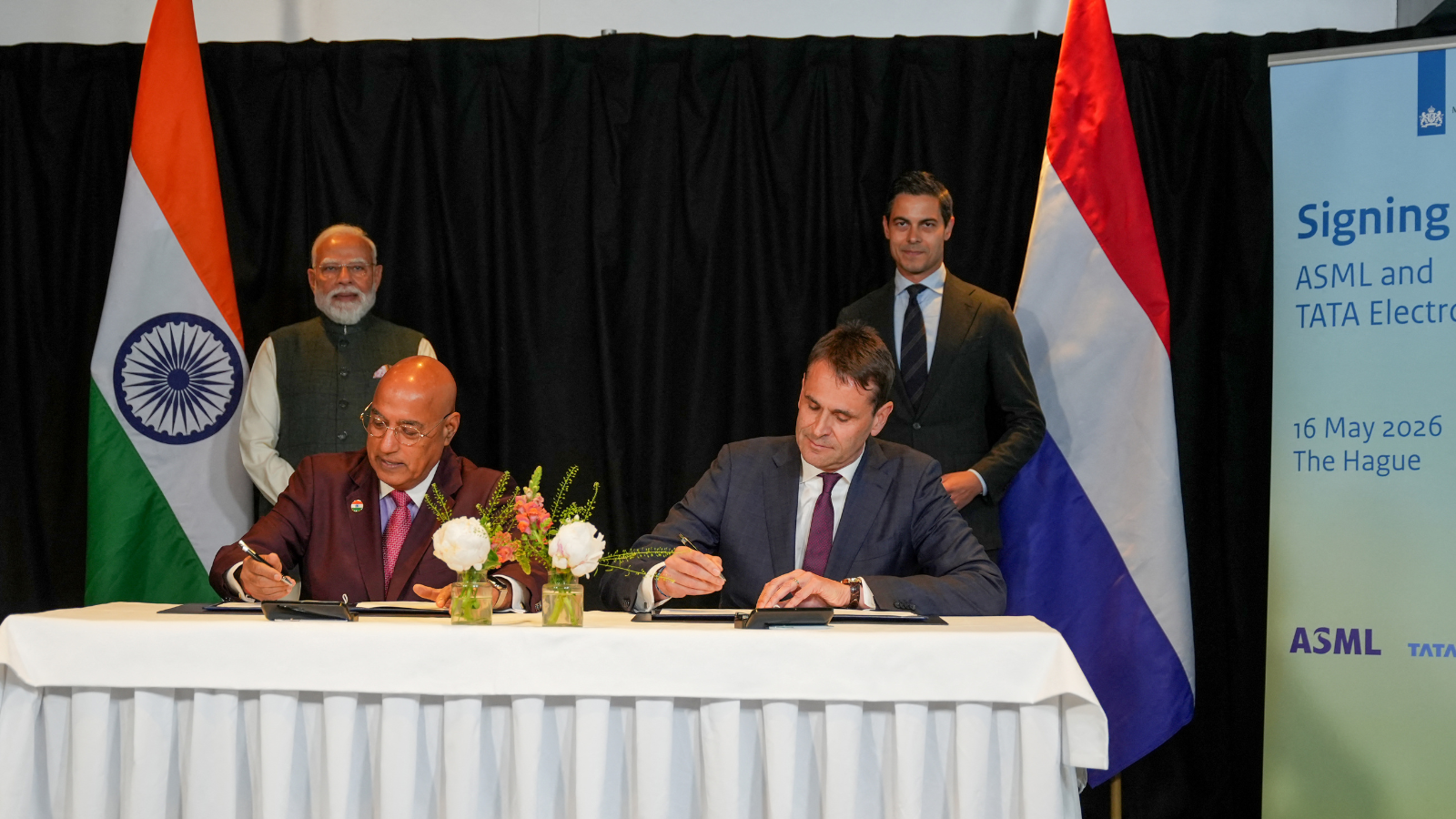
The ASML MoU with Tata Electronics is an indicator of how far the Indian semiconductor ecosystem has come. This ecosystem has been years in the making and represents real commercial logic.

Konark Bhandari

A partnership between India, a country of subcontinental size, and Africa, a continent of fifty-four countries, may seem asymmetric until one notes that both are home to nearly the same number of people—1.4 billion. This essay spells out the existing challenges to the partnership, its optimal potential, and the possible pathways to realize it over the next quarter-century.

Rajiv Bhatia

The India–EU Free Trade Agreement (FTA) is shaping up to be one of the most consequential trade negotiations, both economically and strategically. But, what’s in the agreement, what’s missing, and what will determine its success in the years ahead
Vrinda Sahai, Nicolas Köhler-Suzuki