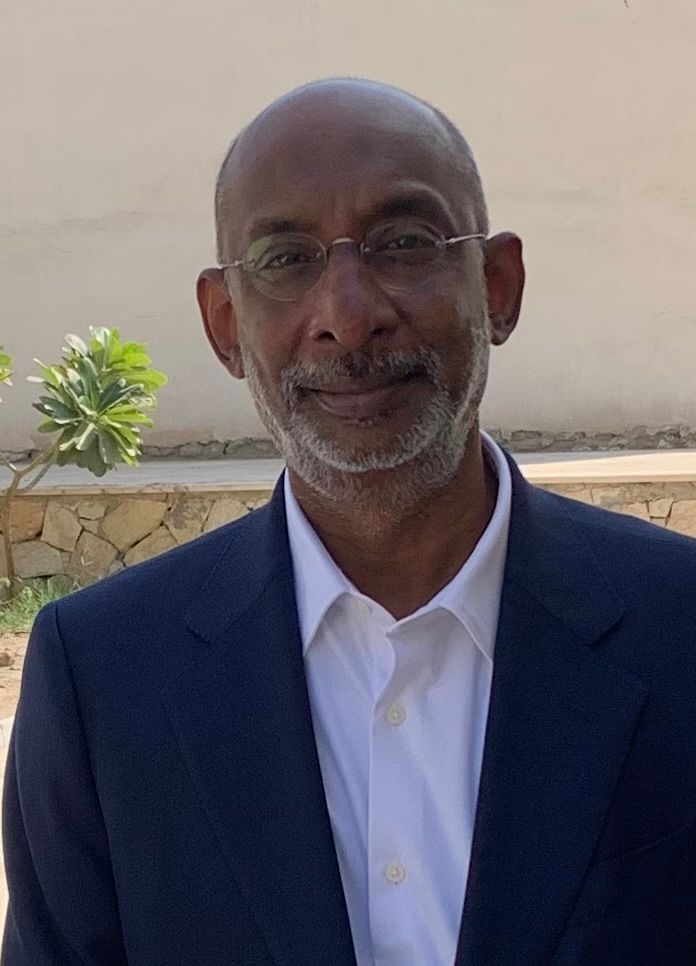
Osama Nujeifi, a leading figure but controversial in the Iraqiya coalition, was elected speaker of the Council of Representatives on November 11 with 227 of 295 votes. His election was a first step in the implementation of an agreement that ended an eight-month deadlock in Iraq. The agreement gave Iraqiya the position of speaker of parliament, the National Alliance the position of prime minister—thereby leaving Nouri al-Maliki in office—and the Kurdish alliance the presidency, ensuring the return of Jalal Talabani.
The choice of Nujeifi as the Iraqiya candidate for the speaker’s position is not surprising: in the April elections, he garnered 275,000 votes—only Maliki and Ayad Allawi received more votes. But the choice is likely to prove controversial among Kurds.
Born in 1956 in Mosul, Nujeifi served as minister of industry and minerals in Ibrahim Jaafari’s government from January to December 2005, when he was elected to the Council of Representatives. In April 2009, he won a seat on the provincial council in the Nineveh province on the slate of the National Hadba’a Gathering, an Arab nationalist coalition that he headed. Later that year, he was elected secretary-general of the Iraqiyoon bloc, which was a part of the Iraqiya alliance and won 20 seats in the 2010 parliamentary elections.
Nujeifi’s election as speaker of parliament will undoubtedly create tensions with the Kurds. He and his brother Atheel Nujeifi, the governor of Nineveh province, are considered Arab nationalists and have long rejected Kurdish claims over Kirkuk and parts of Nineveh. Their outspoken views have created alarm among Kurdish leaders. In fact, the strong stand taken by the Nujeifi brothers—as well as similar stances of other players within Iraqiya—was a key obstacle to the formation of an alliance between Iraqiya and the Kurdish parties that could have created an alternative to a State of Law government.
Nujeifi has made many statements that were bound to anger the Kurds. As a member of parliament, he accused Kurdish militias of driving people out of their residences in some areas in Mosul, a statement that spurred a Kurdish walk-out from parliament and forced Iraqiya to issue an apology and distance itself from Nujeifi’s charges. In December 2009, he also criticized the guarantees given to the Kurds by Americans through Article 140 of the constitution, calling it a violation of Iraq's sovereignty and a source for ethnic strife.
In early 2010, the Kurds even threatened to take Nujeifi to court for stating that Kurds do not belong to the Iraqi entity. While Nujeifi’s statement was ambiguous, some Kurdish members of parliament saw it as a violation of the constitution and a call for ethnic cleansing. Nujeifi also declared in a televised interview that the Kurds were implementing a widespread policy of “Kurdification” in Kirkuk and Dohuk, and that “the population of Kirkuk was originally composed mainly of Turkmen, that of Dohuk, of Christians…we haven't heard in the past of these places having Kurds in them.” He also said that Maliki had shown him documents that proved that the Kurds were taking steps to frighten Christians into leaving Mosul. Maliki’s spokesperson, Ali Dabbagh, promptly denied any such conversation. Similarly, Nujeifi also claimed that the Kurds were attempting to change the demographics in certain parts of Mosul by driving out 30,000 Arabs and Yazidis.
In March 2010, after Iraqiya won the largest number of seats in parliament, Nujeifi expressed his satisfaction that Iraq had returned to its Arab identity after some had tried to distort it. When Allawi traveled to the Kurdish capital Irbil for talks with the Kurds on forming a government later that month, Nujeifi tried to distance himself from the initiative, declaring that Allawi only represented his own National Accord party, not the entire Iraqiya, and adding that “we won't give up an inch of Nineveh, and we won't accept Kirkuk joining Kurdistan, nor any part of Diyala [doing the same].”
Recently, however, Nujeifi has made an attempt to improve his relationship with the Kurdish leadership. He has toned down his rhetoric, called for dialogue, and in late October he visited Irbil—his first ever trip to Kurdistan. However, the outstanding issues that separate his position from the Kurds’ were apparently not discussed, let alone solved. These steps have not been enough to put to rest the Kurds’ concerns about Nujeifi: when the Council of Representatives voted on the speaker, most Kurdish lawmakers reportedly did not give Nujeifi their vote of confidence.
After his election as speaker, Nujeifi has attempted to recast himself as a serious statesman who stands above the political fray and will control the parliament in a professional manner. He has declared that he no longer represents Iraqiya—although the position was given to Iraqiya as part of a power-sharing deal negotiated among the main parties. He has also called for penalties to be imposed on parliamentarians who fail to participate in parliamentary sessions and pressed for the sessions to be completely televised. However, it remains to be seen whether he will be able to live down the controversies surrounding him.