While Iraqi Prime Minister Nouri al-Maliki has succeeded in maintaining political power, the new government still faces significant challenges, including complex political alliances that could undermine much needed legislation.
The formation of the new government of national unity completes a long and often acrimonious process that started over a year ago when parties started preparing for the elections. Marked by battles over forming political alliances, drafting a new election law, and attempting to exclude candidates accused of past ties to the Ba’ath Party, the contentious process concluded with a nine-month government formation battle that essentially centered on whether Nouri al-Maliki would return as prime minister. The end of a power vacuum bodes well for the country but the expanded unity government will have difficulty undertaking initiatives and may prove ineffective.
Maliki prevailed, thanks to the cooperation of Kurdish parties and the support of Iran and the United States, which respectively convinced Moqtada al-Sadr and Iyad Allawi to accept him. Maliki was then able to form a national unity government that includes ministers from all political alliances and major parties, thus from all sectarian and ethnic groups.
To accommodate all of the parties, the number of ministerial posts was increased to 42, with seats allocated on the basis of a point system that gave different numerical values to different positions and ensured that each party would receive a number of points proportionate to the number of parliamentary seats it won.
Despite the supposedly mathematical fairness of the system, there were clearly winners and losers. Maliki and Sadr emerged as the winners and Allawi as the loser, with the Kurdish parties maintaining their status quo.
Predominantly Shia parties, including Maliki’s State of Law and Sadr’s Sadrist Trend, gained control of the prime minister’s post and of 24 ministerial positions. Iraqiya, which won two more parliamentary seats than State of Law in the election but still lost the battle to form the government, was allocated the position of parliamentary speaker. But this position could become meaningless if the parliament continues to defer to the executive, as is generally the case in Arab countries. The absence of an opposition bloc does not bode well in this regard.
Other deviations from the mathematical fairness of post allocation may arise as the ten acting ministers now in the cabinet are replaced by permanent ones. For example, Iraqiya supposedly has the right to nominate the minister of defense, but Maliki has already made it clear that he will only accept an independent technocrat for that position and rejected the first candidate presented to him for being politically too close to Allawi.
Maliki personally has accumulated a lot of power in his own hands. He is prime minister and thus ex-officio commander in chief of the armed forces. During his previous term he had also assumed direct control of one unit, the Baghdad Brigade. And since three crucial ministries—defense, interior, and national security—do not have ministers at present, he directly controls them as well. While this is supposedly only a temporary situation—he is only acting minister in all three positions—he can easily prolong his control by rejecting suggested replacements, as he already did in the case of the defense minister proposed by Iraqiya.
Sadr’s stature has also been enhanced. His decision to back Maliki was the key to forming the government. His triumphal return from self-imposed exile in Iran on January 4 confirmed that he is a power to be reckoned with. Having secured 40 seats in the elections, the Sadrist Trend is well represented in the government, particularly in the service ministries.
But there are also indications that other deals were likely struck. Since Sadr backed Maliki, over 600 individuals believed to be Sadrists who were imprisoned during Maliki’s first term were found innocent of the violent crimes they were charged with and released from prisons. The government denies a deal was made, but many Iraqis believe otherwise. There are also rumors that Maliki promised the Sadrists control over several southern governorates in return for their support; the appointment of Sadrist Trend’s Ali Dwai Lazem as governor of Maysan gave the rumor additional credibility.
After routing the Sadrists from Basra in 2008, Maliki was seen, both in Iraq and in Washington, as a leader capable of keeping the Sadrists in line. The newly formed alliance between Maliki and Sadr is a significant new development that may greatly influence the direction of the country. And while it ensured Maliki’s success in forming a government, it also entails considerable costs for him. Sadr’s new prominence is stirring the resentment of many Sunnis and Shia whose families were victims of violence at the hands of the Sadrist militias in the past.
A Loss for Allawi and Iraqiya
Allawi lost out. He did not succeed in becoming prime minister and was not interested in serving as president or speaker of the parliament. The compromise solution, giving him the leadership of the newly formed National Council for Higher Strategic Policies (NCHSP), will likely turn out to be a sham. Allawi envisaged the NCHSP as a body with executive powers that would act as a counterweight to the prime minister on matters of national interest. But State of Law representatives brush off the NCHSP as merely an advisory body.
Leaked drafts of the law that still needs to be enacted by the Council of Representatives describe the NCHSP as an executive body that includes the prime minister, president, and parliament speaker, along with their deputies and other appointees. But decisions of the NCHSP would not be binding unless approved by 80 percent of the council’s members. Under such a rule, the prime minister and his allies effectively have a veto over the NCHSP’s decisions.
Adding to Allawi’s problems, the Iraqiya coalition is beginning to show small cracks. It was always an incongruous coalition, with Allawi, a Shia (albeit a secular one), speaking for a group that got most of its support from Sunnis. Many of them now believe Allawi handled the negotiations badly and that in the future he will not be able or sufficiently committed to defending their interests in the parliament. As a result, member organizations of Iraqiya have been forming mini-blocs within the parliament.
Securing the post of speaker for Iraqiya did not help Allawi’s position either. Osama Nujeifi, the speaker of the parliament, is not particularly beholden to Allawi, who in fact would have preferred somebody else in that position. Even if Nujeifi succeeds in becoming a powerful speaker, it will be his gain, but not necessarily that of Iraqiya and certainly not of Allawi.
Challenges in Governing
The new government faces formidable challenges going forward. It must prove that it can maintain security without the presence of American troops. It has to address the popular demand for improved services—discontent over electricity shortages, lack of water and sanitation, and poor healthcare and education are pressing concerns; the media constantly highlight the issues. It needs to increase oil production and enact the long-stalled hydrocarbon law. And it has to deal with the problem of Kirkuk or find a way to further postpone a decision, despite the Kurds’ growing impatience.
A government of national unity is an unwieldy instrument for tackling major problems, and even the core coalition of Maliki and Sadr is likely to prove a complex one to handle. The difficulty of managing relations with all parties and ethno-sectarian groups represented in the government of national unity could easily bring policy making to a standstill, to the detriment of addressing the country’s problems. Alternatively, the need to act may encourage Maliki to centralize even more power in his own hand, to the detriment of democracy.
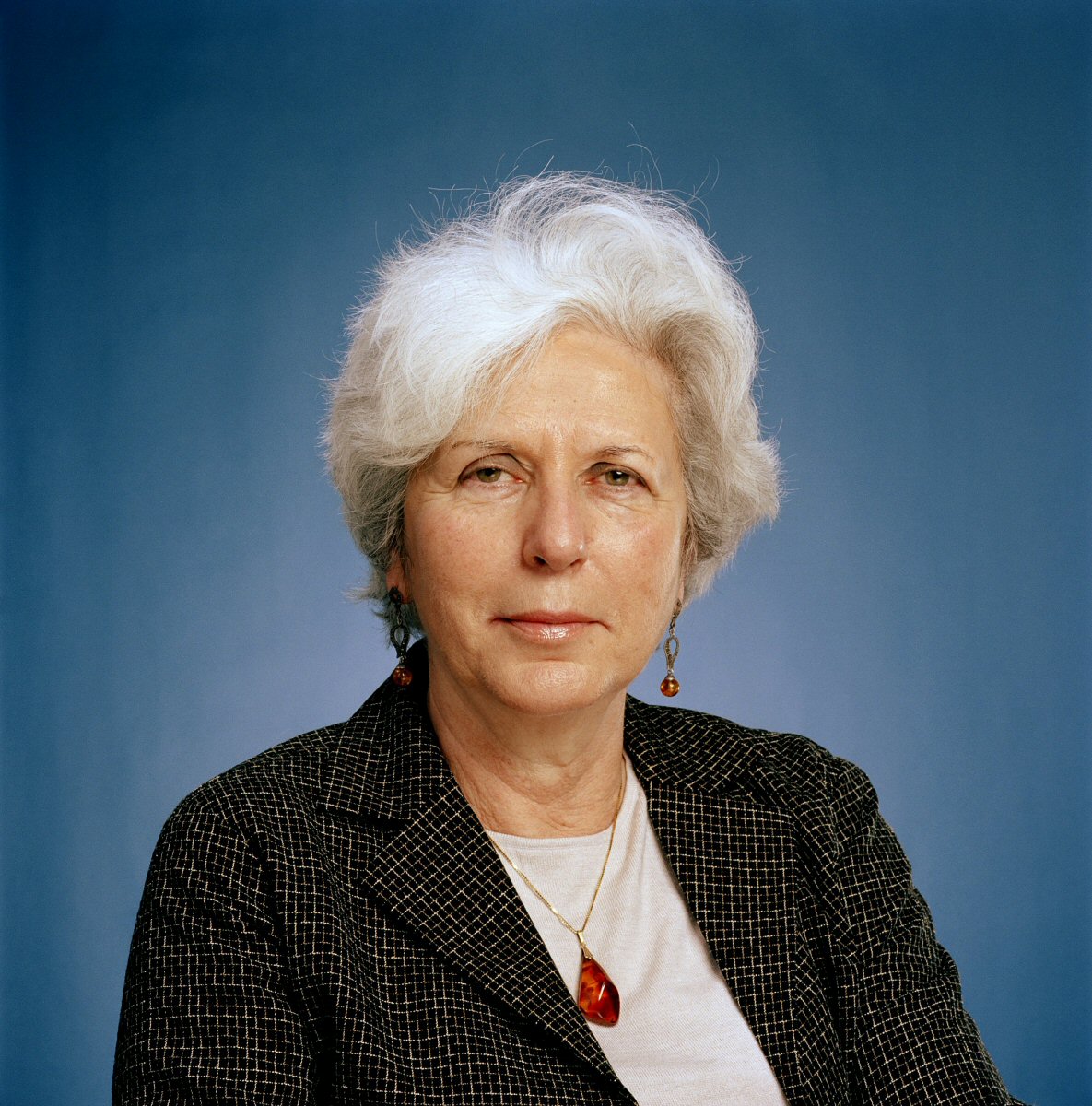
Before joining the Endowment, Ottaway carried out research in Africa and in the Middle East for many years and taught at the University of Addis Ababa, the University of Zambia, the American University in Cairo, and the University of the Witwatersrand in South Africa.
Carnegie India does not take institutional positions on public policy issues; the views represented herein are those of the author(s) and do not necessarily reflect the views of Carnegie, its staff, or its trustees.
An Israeli response to Iran’s October 1 attack is imminent. The key question is of its intensity and potential fallout, both within Iran, in terms of nuclear security policy changes, and across the broader region. The coming days are likely to reshape West Asia irreversibly.
As India’s economy recovers from the coronavirus pandemic, Indian businesses need efficient financial structures to regain their ground. Key reforms to India’s Insolvency and Bankruptcy Code could fill these gaps.
Access to cross-border data is an integral piece of the law enforcement puzzle. India is well placed to lead the discussions on international data agreements subject to undertaking necessary surveillance reforms.
After the coronavirus pandemic wanes, how will China’s reorientation of the Belt and Road Initiative to address global health concerns influence its relationships with South Asian countries?