

In The Media
Petr Topychkanov
Source: Getty
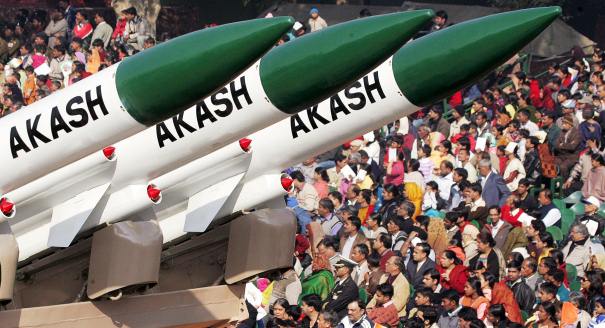
India continues to develop a missile defense system, despite a lack of expert consensus within the country on the value of such a system and despite the fact that uncertainty regarding Indian missile defense adversely affects regional security.
Source: Carnegie Moscow Center Working Paper

Raj Chengappa’s text demonstrates the consequences that could result from further escalation, including large-scale military operations with the use of conventional—and possibly nuclear—forces. For many specialists in India and Pakistan, it is clear that in the event of nuclear war between two powers of such territorial proximity, there cannot be a winner. Significant areas of the South Asian region would be rendered uninhabitable. The entire ecological system of the region would change. The consequences of a nuclear exchange would be felt far beyond South Asia.
According to Raj Chengappa’s scenario, Indian missile defense could save Delhi from a nuclear attack, but it could not prevent a nuclear catastrophe. In fact, for the moment, it is difficult not only to consider Indian missile defense effective, but to see it as a system that really exists. India has not completed a missile defense system by 2012, in part due to its limited resources, scientific and technical difficulties, and obstacles encountered while obtaining the necessary technologies on the international market.
However, an important role was also played by the deficit of expert consensus in India in regard to the expediency of the substantial costs associated with developing missile defense, which, as it seems at the moment, cannot guarantee the country’s protection from missile and nuclear threats. Moreover, it is expected that India’s success in this area will provoke responses on the part of its potential rivals, Pakistan and China, that will require additional spending.
Despite the deficit of consensus, India continues development in the area of missile defense. Prospects for its success are actively discussed in India and abroad. Concerns about the reaction from Pakistan and China are beginning to be substantiated. The persistent uncertainty regarding Indian missile defense continues to adversely affect regional security. As a result, the assessments of missile and nuclear threats in South Asia, the prospects for missile defense in India, and the reactions on the part of its potential adversaries all remain relevant.

Former Fellow, Nonproliferation Program, Moscow Center
Topychkanov was a fellow in the Carnegie Moscow Center’s Nonproliferation Program.
Recent Work
Petr Topychkanov
Petr Topychkanov
Carnegie India does not take institutional positions on public policy issues; the views represented herein are those of the author(s) and do not necessarily reflect the views of Carnegie, its staff, or its trustees.
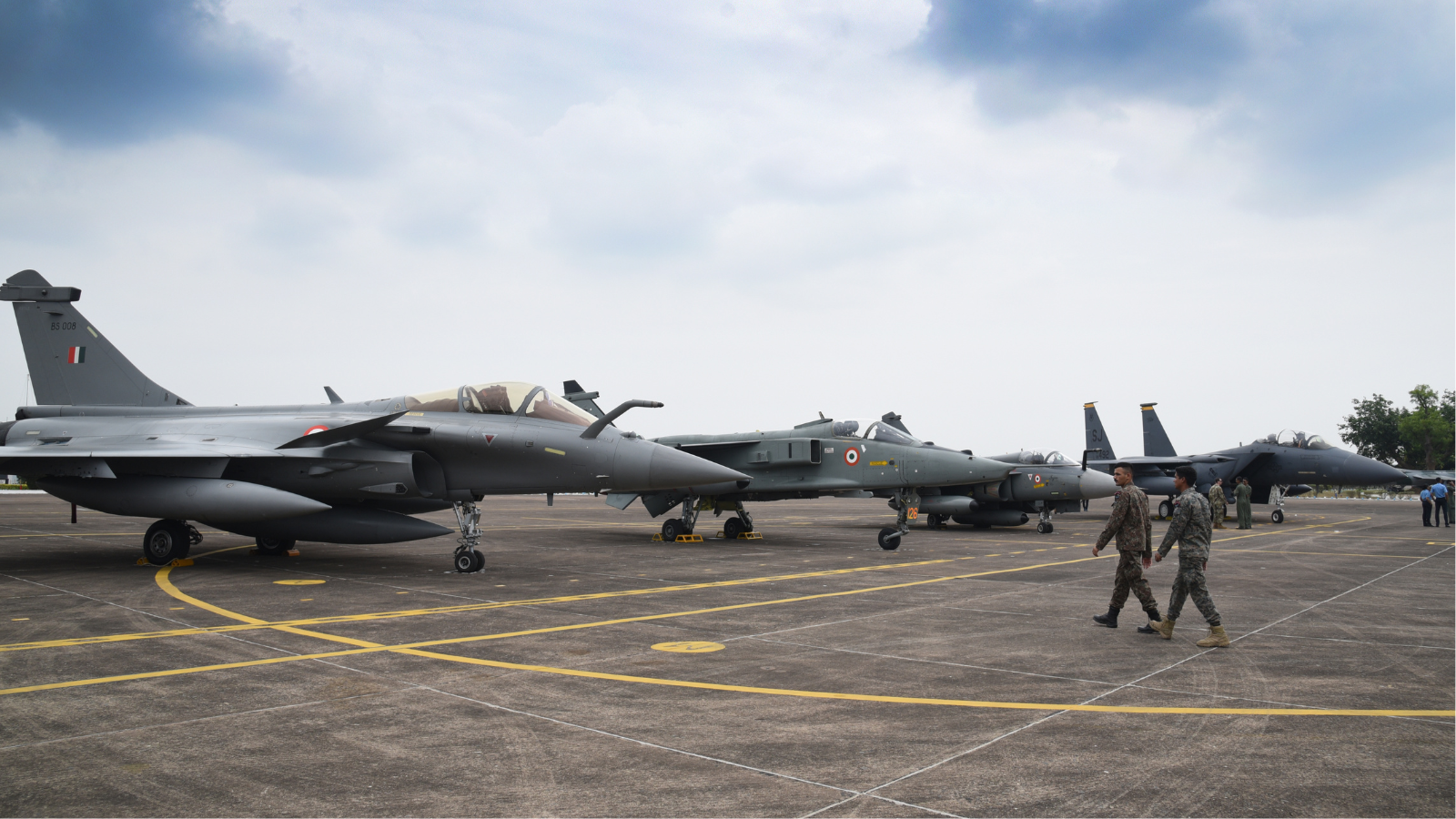
India and the United States are close to concluding a Reciprocal Defense Procurement Agreement (RDPA) that will allow firms from the two countries to sell to each other’s defense establishments more easily. While this may not remedy the specific grievances both sides may have regarding larger bilateral issues, an RDPA could restore some momentum, following the trade deal announcement.

Konark Bhandari

On the last day of the India AI Impact Summit, India signed Pax Silica, a U.S.-led declaration seemingly focused on semiconductors. While India’s accession to the same was not entirely unforeseen, becoming a signatory nation this quickly was not on the cards either.
Konark Bhandari

On January 12, 2026, India's "workhorse," the Polar Satellite Launch Vehicle, experienced a consecutive mission failure for the first time in its history. This commentary explores the implications of this incident on India’s space sector and how India can effectively address issues stemming from the incident.

Tejas Bharadwaj
Connecting real-world AI use cases across sectors such as health, education, agriculture, and livelihoods can help policymakers, innovators, and institutions align around a shared goal. This article looks at a framework ensuring that AI works for everyone.


Shalini Kapoor, Tanvi Lall

This piece examines India’s response to U.S. sanctions and tariffs, specifically assessing the immediate market consequences, such as alterations in import costs, and the broader strategic implications for India’s energy security and foreign policy orientation.

Vrinda Sahai