

Commentary
Sergey Vakulenko
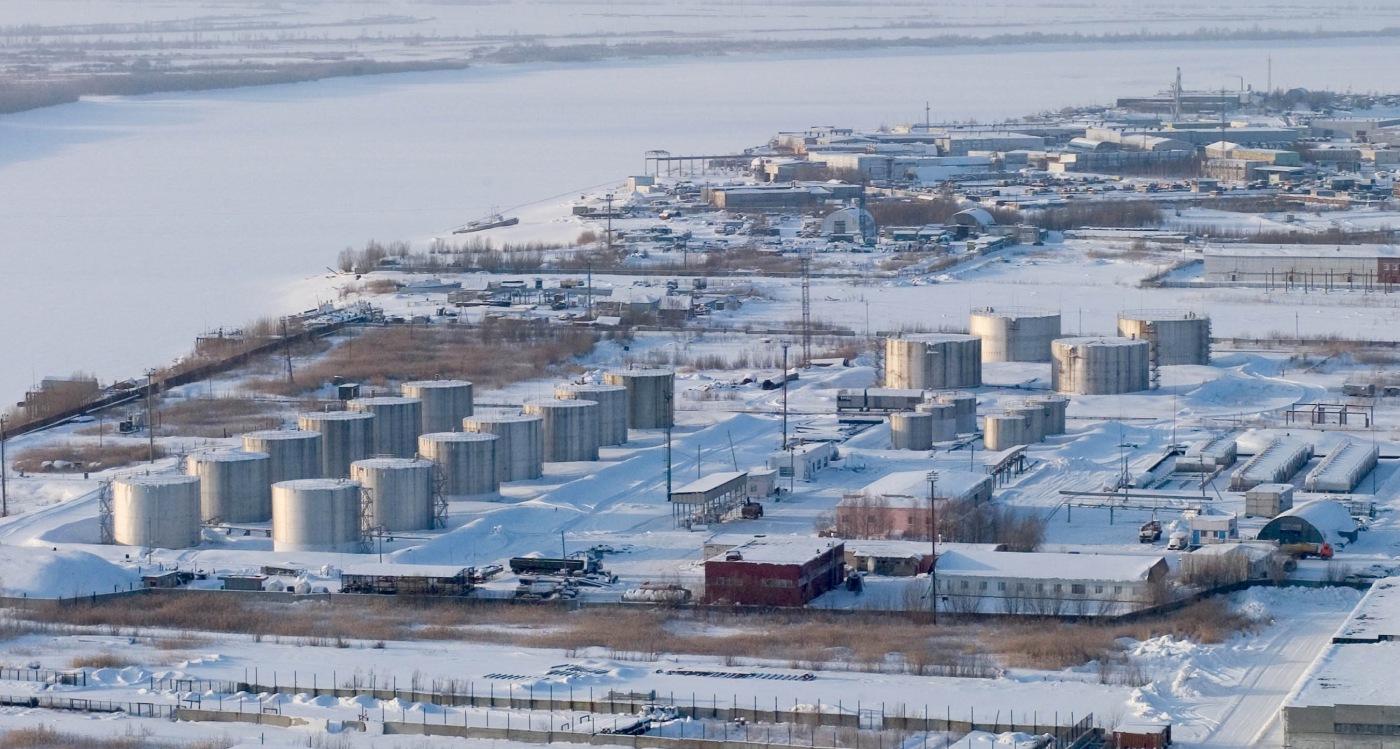
Source: Getty Images
Russian oil production is remarkably resilient to significant price changes, but significant political headwinds may lead to a drop regardless of economics.
Since the beginning of the war in Iran and closure of the Strait of Hormuz, oil prices have soared into triple digits, a state of affairs which will make life easier for Russia’s state finances and oil industry. The duration of this unexpected crisis is, of course, unknowable as of this writing, but the reversal of fortune has also brought to the fore several lingering questions about the outlook for the Russian oil sector that are all too often overlooked.
Russian oil production grew steadily in the wake of the post-Soviet trough from 1996 until 2016, when it joined forces with other leading oil producing countries and created an arrangement that is now known as OPEC+. Production levels following the creation of OPEC+ have not followed a simple linear path, due to the COVID-19 pandemic and other headwinds facing the global economy.1 Russia tracked its quota reasonably closely, except for 2022, when it had troubles placing its volumes in the market, while rearranging its export flows from Europe to Asia as a result of the European embargo imposed for the full-scale invasion of Ukraine.
Notably, Russian production has been declining since late 2025, and the gap between quota and actual output has widened. This has happened against a backdrop of extremely low official prices for Russian crude, which had been approaching the lows of past crisis years: 2009 ($41.27/bbl in January), 2016 ($40.20 annual average), and 2020 ($40.17 annual average).
Is the production decline linked to the fact that a significant proportion of Russian fields have become uneconomic at $40/bbl? In other words, has Russia’s upstream breakeven threshold been reached under economic conditions caused by the war in Ukraine, and if so, where exactly is this threshold? And what are the long-term prospects for Russian oil production under these circumstances?
It is worth noting upfront that the production decline in December 2025 through January 2026 was almost certainly driven by exceptional circumstances rather than a deep systemic crisis. In all likelihood, the production dip was caused by the shutdown of Lukoil’s cluster of offshore fields in the Caspian Sea following Ukrainian drone strikes on three production platforms. Taken together, these three platforms accounted for more than 200,000 barrels per day: a figure that broadly matches the observed production shortfall.
Nevertheless, the questions that this decline has prompted are worth exploring.
In the near term, the abrupt rise of oil prices caused by the Iran war, some of which might persist after the end of hostilities, will bring a windfall both to the Russian oil companies and the state. Some of the windfall might translate into increased drilling expenditure and an associated production spike. But it would not change the long-term outlook and fundamentals of the Russian oil industry.
The focus of this paper, therefore, is on the factors shaping the long-term trends, including: the oil revenue split between the Russian state and Russian oil companies; the cost of oil production in Russia, both operating costs and the cost of sustaining production levels; and the technical capabilities of Russia’s oil industry relative to its global peers.
Both the current state and possible future trajectories of the Russian oil industry are path-dependent. Therefore, this paper will also examine the circumstances that shaped it.
The central conclusion is that Russian oil production will soon begin to decline—slowly but steadily—and that this decline will be relatively insensitive to oil prices, which are likely to decrease as the world transitions to a low-carbon energy system. Russian output is remarkably resilient to significant price reductions; the country has the geological resources, technology, equipment, and expertise to sustain or even increase production. But the decline is driven by state policy, the investment climate, and OPEC+ constraints.
Understanding the economics of Russian oil production—and its long-term prospects—requires an understanding of how the industry is taxed. Taxes, as inevitable as death, are among the most important variables in the economics of any exploration and production (E&P) project. The starting point must be: how many dollars per barrel do oil companies actually retain under today’s wartime conditions after the state has taken its cut?
Russia’s oil revenue has two primary stakeholders: the state, which collects taxes, and the oil companies. The share of total budget revenues from the oil and gas sector has fallen considerably in recent years, but oil money still remains vital to Russian public finances: it represented 50 percent of budget revenues in 2011–2014; around 40 percent in 2019; 30 percent in 2023–2024; and an estimated 23 percent in 2025.
For their part, oil companies require a certain level of cash flow to sustain production. If they slow their rate of capital investment, output will fall. Such is the nature of the oil business: wells deplete. Understanding how oil revenue is divided is therefore essential to assess both the production outlook and the fiscal outlook. Who bears the pain, and to what extent, if the Russian crude price falls further?
The overarching design of Russia’s upstream tax system was—and largely remains—to capture the maximum possible resource rent from the oil sector (that is, the return in excess of a normal return on investment that arises when oil prices rise). The Russian Ministry of Finance has historically distrusted oil companies and sought to build a system resistant to abuse and manipulation. According to the ministry’s approach the tax base is calculated from independently observable market and technical parameters, rather than from companies’ actual profits and losses. Under this philosophy, the ministry was comfortable with some deadweight loss—certain fields and resources that might go undeveloped due to a high tax rate—but was extremely averse to the industry earning too much, and would prefer to err on the side of the first option in any fiscal system design trade-off.
Through the early 2010s, Russia’s upstream tax regime was straightforward, at least for the predominant share of production. Above $25 per barrel, companies paid $2.2/bbl base and 22 percent on every dollar of price growth above $25 as a mineral extraction tax (NDPI), plus $4/bbl base and 60 percent of every dollar as prices rise as export duty. For refined product exports, the duty was 66 percent of the crude duty rate. This tax structure strived to achieve two goals: it kept domestic fuel prices well below international levels (the export duty acts as a wedge between international and domestic prices, effectively channeling a large share of resource rent to Russian consumers as a benefit in kind through a motor fuel subsidy), and it nudged companies to export refined products rather than crude. The marginal tax rate on upstream crude production was thus 82 percent; for barrels exported as refined products, it was 62 percent.
This approach worked as intended so long as the bulk of production came from relatively young fields developed in Soviet times and inherited by oil companies through post-1991 privatization. In those circumstances, virtually all cash flow from production genuinely could be treated as rent available for state capture.
But by the early 2010s, the Soviet legacy base was running thin. Reserve categories that Soviet geologists had booked were largely depleted, and extracting what remained was becoming progressively more expensive. Sustaining production required new capital investment, new technologies, and the development of new fields and new territories. The rigid tax system made many of these projects uneconomic. The Ministry of Finance recognized the need to recalibrate but was unwilling to shift to profits-based taxation and found itself locked in a classic principal-agent asymmetric information problem.
One deputy finance minister from that period described the situation with disarming candor: “The tax system was tuned by ear. We’d raise taxes on various pretexts and by various means until the companies started screaming too loudly, then we’d ease it up a bit, then slowly raise them again until the next round of screaming.”2
As a result, the NDPI formula became a battleground between industry lobbyists and Ministry of Finance officials seeking new revenue sources to plug budget deficits during low oil price periods, accumulating a dense thicket of coefficients, “slap-ons,” deductions, and surcharges, mostly linked to “objective parameters” that supposedly could not be fudged by the oil companies. The relevant chapter of the Tax Code started to resemble—in the words of one Finance Ministry official—a textbook on petroleum geology, oil drilling, and production engineering.
The much-needed modernization of the tax system proceeded along two tracks. First, the export duty was gradually eliminated and replaced entirely by NDPI.3 Second, cautiously and gradually, profit-based taxation began to supplement the revenue-based approach.
By the late 2010s, the government—having become convinced that the old approach was no longer fit for purpose—began introducing and expanding a windfall tax (NDD, or Additional Income Tax), which is in effect a supplemental profits tax on oil production. It is fairly complex, with different formulas applying to different field types at different lifecycle stages. In many respects, the new regime retained some of the baroque complexity of its predecessor. Moreover, fields operating under the NDD regime still pay NDPI, albeit at half the standard rate. The government also introduced a “damper mechanism” designed to stabilize domestic motor fuel prices, which is technically implemented as a monthly rebate or surcharge to the NDPI.
This layered system makes it difficult to model the economics of individual upstream projects and to calculate precisely how revenues are split between state and industry on a project-by-project basis. Data-driven analysis, described in detail in box 1, helps provide a generic formula. In short, the state collects 58.4 percent of all revenue above $13.5/bbl.
Thanks to official publications of the oil and gas revenue breakdown available since 2018, it is possible to derive the relationship between the aggregate tax burden on Russian oil production and the oil price. This period covers substantial variation in production volumes, prices, and the ruble/dollar exchange rate, enabling analysis across a wide value space.
LEARN MORE >Establishing the overall fiscal formula makes it possible to answer the question posed at the outset: how many dollars per barrel do oil companies actually retain after taxes? At the Urals price of $39.20/bbl recorded in December 2025—the lowest in recent years—oil companies retain approximately $24/bbl. If the upstream division does not encroach on the refinery subsidy, it retains $22.65. How the Russian budget is doing with only $15/bbl—compared to the roughly $25/bbl assumed in the 2026 budget—is a separate discussion. The question being addressed here is whether Russian oil production is viable at this level of net revenue.
Media coverage—and the quotes of oil company executives and analysts alike—offer a remarkably wide range of estimates for Russian production costs, from around $2/bbl all the way to $44/bbl and beyond. Many of these figures may be technically accurate but are nonetheless misleading.
A detailed analysis is provided in box 2.
Take $2.70/bbl, or figures close to it that are frequently cited in Rosneft management presentations. This figure is obtained by dividing field-level operating expenditures by the volume of oil delivered to the Transneft inlet valve. It excludes both capital expenditure and the cost of transporting that oil to a buyer. Even at an international oil price of $6/bbl—which in the logic of Rosneft’s official presentations would imply a margin of more than 100 percent—producing that oil would in fact be uneconomic.
LEARN MORE >There are three crucial questions related to the cost of Russian oil:
Reasonable assumption of the costs for the bulk of the Russian brownfield production should be $9/bbl for the full infield operating costs, $4/bbl for transportation to export outlets, and $3/bbl for development drilling.
The answer to the first question is therefore straightforward. Even at a realized price of $20–$25/bbl, with a generic tax rate, companies will retain $15.90–$17.70/bbl after upstream taxes and NDD: enough to cover both current lifting and transport costs and at least some development drilling on existing fields. Production is therefore unlikely to stop; it will simply decline at its natural depletion rate as the mature well stock runs down.
At current tax parameters, state oil revenues at such price levels would be $4–$7 per barrel4—essentially negligible compared to the approximately $25/bbl assumed in the 2026 budget. On one hand, the government is capable—as it has demonstrated during previous downturns—of imposing extraordinary levies that it subsequently retreats from slowly and reluctantly. On the other hand, the oil companies will lobby hard for tax relief in order to maintain investment levels, prevent oilfield service companies’ bankruptcies, and avoid layoffs and socioeconomic disruption in producing regions. There are also precedents for the government responding to such pleas, though under very different economic conditions: when unemployment, rather than a labor shortage, was a problem.
This brings us to the second question: at what crude price might development drilling in Russia’s traditional producing regions slow down materially or halt? For mature western Siberian fields, assuming current tax parameters, that threshold is approximately $27–$30/bbl on a FOB (free on board) basis in Russian ports—providing companies with $18–$19/bbl net of taxes.
The ruble exchange rate is a critically important variable in any assessment of Russian oil production economics. Virtually all costs of developing and operating Russian oil fields are denominated in rubles; the industry’s exposure to imported inputs is limited. All the cost calculations above reflect price levels and the dollar exchange rate up to 2024. As mentioned, in 2025 the ruble strengthened roughly 25 percent against the dollar. Oil companies have managed to contain supplier price inflation. In 2025, the producer price index for oil and gas extraction services rose approximately 5 percent, and cumulatively in 2022–2025 by 35 percent—compared with 5.6 percent and 39.4 percent for the broader Russian economy.
In other words, the oil sector managed to keep its ruble cost base growing slightly below the economy-wide pace. Nevertheless, ruble inflation exceeds dollar inflation, and dollar-denominated production costs are therefore rising materially. The combination of macroeconomic factors that has shaped the Russian economy means that at the same nominal oil price as ten or sixteen years ago, both the oil industry and the state find themselves in a considerably more difficult position.5
The challenge becomes more stark when set against the backdrop of oil price dynamics. Before the oil price drop in 2014, Urals crude was trading at roughly 3,000 rubles per barrel in 2010 constant prices. In January 2025 that figure was 6,793 rubles in nominal terms (2,570 in 2010 prices). In December 2025, it was 3,023 in nominal terms and 1,214 in 2010 prices. In other words, the domestic purchasing power of revenues of the Russian oil sector (state and companies combined) at the beginning of 2026 was just 40 percent of what it was fifteen years ago.
Because both the oil industry and the state budget suffer simultaneously when the ruble is strong and oil is cheap, the oil companies realize that they cannot hope for tax relief in this situation—if anything, they will find themselves fighting off attempts to increase their tax burden.
Before assessing the long-term outlook for Russian production, it is worth taking stock of the industry’s current technical position and how it measures up against global peers.
In most oil-producing countries, geology shapes industry skills and capabilities. Norway leads in offshore production. The deepwater pre-salt reserves off Brazil’s coast compelled Petrobras and the broader Brazilian industry to develop world-class competencies in that domain—and both Norway and Brazil subsequently developed entire ecosystems of offshore-specialist contractors, equipment suppliers, and service companies.
Russia’s principal oil reserves consist of large onshore fields in western Siberia, with its vast distances, harsh winters, and swampy terrain. Such conditions require drilling thousands of wells and managing operations across widely separated seasonal windows. One of the distinguishing strengths of Russian upstream operations is waterflooding: large-scale water injection schemes to maintain reservoir pressure and push residual oil through the reservoir toward producing wells. In the 2000s and 2010s, Russian operators adopted horizontal drilling and hydraulic fracturing—first single-stage, then multi-stage—from the United States. Over the same period, offshore Arctic technologies were introduced to develop fields on Russia’s Arctic coast that were too remote for existing pipeline connections.
Everywhere in the world, resource development follows the same progression: prolific and easy before meager and hard. Until low-cost fields are fully exploited, there is little case for committing capital and human resources to costlier and more technically demanding assets. Russia has substantial geological potential in tight oil formations and in its offshore, but the industry never had a compelling reason to develop the corresponding competencies: doing so would have been an investment in a relatively distant future.
Nevertheless, as the existing resource base matured and operations progressively moved to more challenging reservoirs, technical capabilities evolved accordingly. Skills that were once unique one-off achievements became established industry standards, widely applied in day-to-day operations.
In terms of scale, Russian oil production is comparable only to a handful of global peers: Saudi Arabia, the United States, and Canada. The Saudi comparison has limited utility: the country is endowed with reserves in immediate proximity to an ice-free sea in uniquely exceptional fields, capable of delivering wellhead rates an order of magnitude above those of newly drilled wells in most other oil provinces.
The United States is a more instructive benchmark. After forty years of decline and stagnation in the Lower 48 (1968–2008), the United States more than tripled production in just sixteen years (2009–2025). Thanks to the advent of fracking and related technologies, the United States became the world’s largest producer. It unlocked tight oil resources through industrial-scale drilling and completions—the gold standard of modern upstream operations. According to EIA data, approximately 15,000 wells were drilled in the United States in 2024, using an average rig count of around 460 oil rigs and roughly 100 gas rigs. For comparison, Saudi Arabia’s total average rig count was eighty-seven.
Russia drilled 7,610 production wells in 2024. Average Russian well length grew from 3,473 meters in 2018 to 3,993 meters in 2025, driven primarily by longer horizontal laterals—compared with a U.S. increase from 3,044 to 3,776 meters over the same period. Both countries now hydraulically fracture virtually every well drilled. The United States has a higher proportion of multi-stage fracs (Russia sits at approximately 40 percent) and a higher average fracture stage count. (Russia averages eight to ten frac stages per multi-stage job versus approximately sixteen in the United States. By comparison, the American average for shale operations has grown from 23 to 46 since 2012.)
Peak U.S. oilfield services capability is considerably ahead of Russia’s—horizontal laterals of 3–5 km with thirty to fifty frac stages are not uncommon in the best U.S. basins. But based on average performance metrics the gap is smaller than it appears.
Following the full-scale invasion of Ukraine in early 2022, broad-based sanctions imposed by Western governments were designed, in part, to deny Russia access to a range of advanced technology and equipment, including in the oil/gas sector. In the end, the actual impact was less sweeping than policymakers anticipated. Notwithstanding the departure of Baker Hughes and Halliburton, other major oilfield services (OFS) providers such as SLB (formerly Schlumberger) and Weatherford opted to preserve their Russian operations while asserting that they are in compliance with sanctions against the supply of Western equipment to Russian oilfield service companies. (Russian divisions of the departing Western companies were bought out by their Russian management and stayed in the country with full access to existing equipment and personnel. In addition, independent Russian OFS companies grabbed market share of the departing international groups.) This outcome was a testimony to technology and skills transfer and training by Western OFS companies over the years, and the net result was the failure of Western sanctions to trigger a sharp deterioration in industry technical standards. The number of active frac fleets operating in Russia, for instance, grew from 159 in 2022 to 188 in 2024.
Costs per operation in Russia remain comparatively low. Comprehensive statistics are not publicly available, but revenue data broken down by service segment—drilling and hydraulic fracturing—allow average unit costs to be estimated. In Russia, the average oil and gas well cost 125 million rubles in 2024, or approximately $1.25 million. In the United States, well costs range from $3 million to $10 million depending on the basin, with the major growth plays running around $8–$10 million. In the Permian Basin’s central sub-basin, a well drilled to 1,950 meters with a lateral under 900 meters and an initial production rate of approximately 24 tons per day—parameters broadly comparable to an average Russian well in 2023—cost $3.3 million. The equivalent Russian well cost 98 million rubles, or approximately $1.06 million.
As mentioned above, oil output has dropped since its November 2025 peak. Russian production started to lag behind OPEC+ quota since August 2025, initially by a minuscule amount and later by up to 400,000 barrels per day, even as global prices have reached elevated levels in the face of the U.S.-Israel war with Iran. The fact that Russia’s production levels are diverging from what one might expect is worthy of close examination not least because it can shed light on the industry’s overall direction and the multi-factorial sources of disruption.
Despite low all-in technical costs described in the previous section, Russian companies have faced a sharp increase in the cost of capital since February 2022. An initial wave of Western sanctions imposed after the illegal annexation of Crimea in early 2014 led to the partial closure of access to capital markets subject to U.S. or European jurisdiction, but did not severely impact the Russian energy sector, which was able to tap domestic and Asian capital markets as a substitute.
After several rounds of more stringent sanctions in early 2022, access to Asian debt markets was cut off. While Russian oil companies remain among the most creditworthy domestic borrowers, they cannot compete for capital with the state, which has sharply expanded domestic borrowing to finance the budget deficit. The central bank’s effort to contain inflation in an environment of surging government expenditure has pushed the real cost of capital close to 20 percent, forcing companies to fund virtually all investment from operating cash flow. When that cash flow contracts—whether because of lower oil prices or a stronger ruble—companies must reduce drilling budgets, which echoes as lower production volumes within months, even when the undrilled wells would themselves be profitable.6
Beyond the tax regime and production costs, the future of any country’s oil industry depends critically on the state of its project pipeline: how many projects are mature and producing, how many are in active development, how many are ready for a final investment decision, and how many discoveries are in the exploration inventory. In this respect, Russia’s upstream portfolio does not look particularly strong.
Since the history of any extractive industry is a history of depleting finite mineral resources and continually moving on to new ones, pipeline management is an inherent element of the business model for any oil company—unless it is fortunate enough to hold a single field large enough to sustain decades of production on its own.
There are limited options for replenishing reserves: bringing into production discovered-but-undeveloped fields in traditional regions, tapping new classes of reserves in traditional regions, or moving into frontier areas.
The first category—the Soviet legacy inventory—has been the mainstay of the Russian oil industry. The production base has been radically modernized since Soviet times, but the underlying fields are overwhelmingly the product of discoveries made before 1991, supplemented by near-field exploration following the Soviet geological playbook in proven producing regions.
For the past two decades, Russian oil companies have been able to show net positive reserve replacement dynamics, booking more reserves than they produced each year. This was achieved primarily through further appraisal of known fields, reclassification of reserves into higher confidence categories, and conversion of sub-commercial resources to commercial as improved production technologies made previously marginal formations economic. This is standard practice across the global industry; Russian companies are no different from their Western counterparts in relying heavily on these sources of reserve replacement.
The second category—the fields that underpinned growth in the 2000s and 2010s—consists of assets identified in earlier decades but left undeveloped as less attractive than what was already in production. It also includes the so-called “hard-to-recover” (TRIZ) formations, as classified by Soviet geologists. The term remains in use but has largely lost its meaning: this category now accounts for a majority of Russian production, as oil that was hard to recover by traditional vertical or deviated wells has been brought into routine development with the widespread adoption of horizontal drilling and hydraulic fracturing.
In traditional producing regions, there is a largely untouched resource class running to tens of billions of barrels—the Russian equivalent of U.S. tight oil: the Achimov and Bazhenov formations in western Siberia, and the Domanik in the Volga-Urals. Full-cycle production costs for these resources are broadly comparable to U.S. tight oil, in the range of $40–$60/bbl, several times higher than conventional Russian resources.
Finally, there are genuine frontier areas. Russia has zones in which hydrocarbon exploration has barely been attempted, despite regional geology that makes discoveries plausible. The reasons are straightforward: remoteness, the potentially high cost of development if discoveries were made, and the adequacy of the existing resource base. For a long time, year-round oil evacuation via the Northern Sea Route was considered physically impossible, and then prohibitively expensive. Moreover, connecting these remote zones to the pipeline system was also out of the question. Over time, advances in Arctic technology have progressively reduced estimated development costs for the Gydan Peninsula, the Yenisei estuary, and other central Arctic zones to levels that began to make these areas look commercially interesting. However, the outbreak of full-scale war with Ukraine made foreign-made equipment required for ice-class tankers and ice-resistant loading systems unattainable and forced companies to shelve those plans.
Against this backdrop, the history of Russian upstream in the 21st century falls into three broad chapters. The first, lasting roughly until 2005, was a recovery-led growth cycle restoring production from Soviet-era fields following the collapse of the 1980s and 1990s. The second, from roughly 2006 to 2016, was characterized by the mass development of fields earmarked for development in Soviet times, alongside the commercialization of oil from tighter formations using modern completion technologies. During these two stages, the project pipeline looked sufficiently full that companies did not feel compelled to add to it.
In the second half of the 2010s, when Russian oil companies were just about to start to worry about their long-term future, Russia joined OPEC+ and started to manage its production volumes. This move and the way it was implemented internally fundamentally changed how Russian oil companies thought about portfolio management. The deal constrained Russian production at levels with limited near-term growth potential, and those constraints were cascaded down to individual companies in proportion to their production at the time the agreement took effect.
Each major Russian company received a production quota, with little prospect of dynamic reallocation between companies. The industry quickly concluded that quotas were a permanent feature of the landscape. In this environment, launching a new field offered little value: production growth—at least in the short to medium term—was impossible. New field production could grow only to the extent that the company’s older fields declined. The financial logic of field development—which depends on ramping up production and thus revenue as quickly as possible to recoup upfront capital—was fundamentally undermined.
The Ministry of Finance, for its part, became deeply skeptical of industry promises to increase future state revenues through higher production—promises routinely attached to requests for additional tax incentives. The project pipeline accordingly dried up, and companies redirected capital to sustaining current production from the lowest-cost available source: the existing well stock.
For Russian oil companies and the Ministry of Finance, it has soon become reasonable to assume that OPEC+ membership is there to stay and that Russian political leadership is not willing to defy quotas or to challenge the Saudi-proposed policies too aggressively. Russia’s OPEC+ membership has taken on a significance beyond its purely economic dimension. Given Russia’s international isolation since 2022, OPEC+ has become one of the very few significant multilateral forums in which Russia participates as a respected and influential member. The political value of that status—and of the working relationships it entails with key member states—creates a strong incentive for Russia to remain a constructive and reliable partner, including by forgoing the short-term gains from opportunistic production increases. This assumption solidified the outlook for possible future production volumes, both for the companies and the Ministry of Finance, leading to further reduction of investments in early-stage prospects.
OPEC+ is now under strain, following the outbreak of the Iran war which pits Iran against Saudi Arabia and other Gulf Cooperation Council (GCC) countries. Russia is in a delicate position, having to juggle its loyalties and formal/informal obligations toward Iran with its abiding interest in maintaining productive relations with Riyadh and the rest of the GCC. Common interest helped OPEC to navigate major confrontations in the 1980s and 1990s involving Iran, Iraq, and Kuwait. The chances are that the forces of pragmatism and self-interest will prevail once again.
The COVID-19 pandemic and the full-scale war that began in 2022—with its economic warfare dimension and intense focus on Russian oil—have made long-term planning and capital allocation even more difficult than before.
Nevertheless, in April 2025, Russia adopted its Energy Strategy Through 2050. The document had been in preparation since before the pandemic. Its finalization was repeatedly postponed, and the document was revised to reflect changing circumstances, but ultimately was pushed through the government bureaucracy.
The strategy’s target scenario envisions Russian oil and condensate production remaining essentially flat at around 540 million tons per year—somewhat above the production levels constrained by OPEC+ quotas in recent years. Official data show 2025 production of 512 million tons of oil and condensate, of which crude oil accounted for approximately 460 million tons.
The previous version of the strategy, adopted in 2020, had assumed a peak of 560 million tons in 2024, declining to 490–550 million tons by 2035. That version stated explicitly that holding western Siberian production at 90 percent of the 2024 level by 2035—a managed decline of roughly 2 percent per year in the mature core—would be considered a success, with compensation coming from the development of new resource zones in eastern Siberia, the Far East, and the Arctic, including Arctic offshore.
The new strategy has two principal scenarios: a base case and a target scenario. The base case has a reasonable probability of being realized, assembled largely from production profiles of fields already on stream or near first oil, with modest optimism about new resource class development. The target scenario is normative: constructed top-down from desired outcomes, with the gap between aspiration and demonstrated capability filled by projects of varying degrees of plausibility.
The government officials responsible for drafting the energy strategy—at every level from staff analyst to deputy prime minister—surely understood during the drafting process that they could not put forward a “defeatist” document for approval. Projecting any fall in production resulting in GDP decline or arrested growth, or a dent in state revenues, would have been politically unacceptable. Nonetheless, the authors showed some courage in signaling the challenges that could make the strategic objectives hard to achieve. At the same time, they were obliged to populate the strategy with declaratory measures supposedly sufficient to overcome those challenges, without seriously examining their doubtful plausibility.
The base case projects a modest production decline through 2030 and a more significant one—4–5 percent per year—thereafter. This is partly a mechanical result of aggregating company-provided production profiles, which in standard Russian practice include detailed five-year plans and approximate indicative projections for subsequent years, reflecting only the production extractable from wells already in design at the time of forecasting.
In practice, we should expect a degree of technical progress, making wells cheaper and more productive, and unlocking additional portions of known fields, together with new geological information enabling gradual area expansion. Assuming drilling activity is maintained roughly at 2024–early 2025 rates, the decline rate for currently producing or near-producing reserves and fields should be around 3 percent per year over the next decade.
This trajectory implies output falling to approximately 8 million bbl/d by 2030 and below 7 million bbl/d by 2035.
Sustaining a production plateau—let alone achieving growth—is assumed in the strategy to depend on developing new production hubs. In practice, virtually all new project development appears to be mothballed, with the sole exception of the Vostok Oil project (the actual status and prospects of which are examined by the author in a separate article published in summer 2025). The reasons are all connected to the war. Arctic and offshore projects require unique imported equipment manufactured by only a handful of companies worldwide: equipment that is extremely difficult, slow, and costly to substitute domestically, and which has become inaccessible under comprehensive sanctions. Capital costs have risen sharply—not critical for short-cycle investments such as infill drilling on existing fields, but potentially fatal for large projects requiring heavy upfront commitments and extended payback periods. Labor shortages, both within oil companies and among the contractors needed for construction, earthworks, and large-scale logistics, further limit the ability to execute major projects. As a result, companies are concentrating on sustaining production in existing regions rather than launching new developments.
In the absence of new project volumes, sustaining current output has been increasingly achieved through tighter infill drilling on existing fields. These infill wells drain oil that would eventually have been produced by existing wells anyway—just more slowly and incompletely. The net incremental production from such wells is relatively modest (10–20 percent of total production). This development strategy does improve recovery factors and accelerates revenue—both economically positive—but it reduces cumulative production from existing wells below original expectations and will produce a sharper production decline in the future.
Most of the constraints preventing Russian companies from launching new projects in frontier regions are not primarily about expected project returns, but about resource-side limitations: expensive capital, shortages of basic construction labor, and restricted access to Arctic offshore technology. Only a very substantial oil price increase would meaningfully shift this calculus—and even then, the government might choose to capture the incremental cash flow through tighter taxation rather than allowing it to fund long-dated capital investment.
In a fundamental sense, Russia’s oil industry finds itself in zugzwang—forced to make moves it would rather not make.
The existing production base is adequate for many more years of operation, albeit with a declining output profile. Maintaining it requires extensive routine activity and substantial annual expenditure (approximately $50 billion per year across the sector), but the operations themselves are well-organized and well-understood. There is little prospect of significant production growth or meaningful cost reduction through technology development and efficiency improvement: those gains were largely attained during the 2010s. Russia’s oil and oilfield services industries, at least for onshore operations, are capable of deploying technology at current global standards of practice at remarkably competitive costs. Sustaining this mode of operation can be supported with equipment already in-country and sourced from China.
But large new projects—whether in frontier regions or aimed at the large-scale development of new resource classes, particularly tight oil—are effectively off the table, both because their full-cycle costs and capital intensity are high relative to the existing production base, and because of the constraints imposed by the war.
Managing a controlled decline of approximately 3 percent per year is therefore not particularly difficult for Russia’s oil industry. Full-cycle pre-tax production costs for that declining output base will remain below $25/bbl, potentially below $20/bbl. But sustaining a plateau—let alone growing output—requires bringing on resources with full-cycle costs above $35–40/bbl. The Russian oil industry currently lacks the capital to do so, and the state lacks the willingness to leave that capital in the industry’s hands. Wartime necessities—for example, the need to come up with funds for urgent refinery repairs following repeated drone strikes and the cash flow volatility created by economic warfare that forces companies to hold larger liquidity buffers and to be more conservative about long-term capital commitments—further inhibit major investment decisions.
Finally, while the popular notion in international policy circles that the oil era is about to end has fallen out of fashion, and the idea of complete decarbonization by 2050 have all but evaporated. At the same time, the long-term trend toward reduced hydrocarbon demand in the global economy is beyond serious dispute. This is precisely why projects with long payback periods in the oil sector are attracting diminishing investor enthusiasm, and not just in Russia.
Still less attractive is the concept of moving into a greenfield frontier region, building infrastructure, creating a new production hub, spending tens of billions of dollars up front, and then producing for decades while aggregating progressively smaller satellite assets. That model worked well in the North Sea and in western Siberia, where some 1970s investments are still generating value today. But the odds that something built on similar logic in the 2030s will still be generating value in the 2080s seem poor—and that makes such investments even less attractive.
Russia’s oil industry currently has both the technical capability and the resource base to sustain or even grow production over the coming decades. But the most likely trajectory is precisely what Russia’s own government has described in its strategy as the base case scenario: a slow but steady production decline.
Russia has the competencies and the resource base to allow it to sustain production and even to grow it, similar to what the United States accomplished in the late 2000s and early 2010s.
Yet for this to happen, several conditions would need to be met.
Incremental production would not be cheap. Companies would therefore need to retain at least $45/bbl after taxes from new production sources, with reasonable certainty that this cash flow would be sustained over time. This could happen either through a sustained period of high global oil prices above $90/bbl or through a fundamental reform of Russia’s fiscal regime. An end to the war in Ukraine, a relaxation of the sanctions that complicate Russian crude trade and create uncertainty around revenue volumes, and a reduction or elimination of the discount on Russian crude would all encourage production growth.
The industry would have to be able to expand drilling capacity substantially, which would require proportional increases in rig counts and frac fleet capacity. This equipment can be sourced from China. It would also require proportional growth in the specialist workforce to operate it. Russia has enough experienced personnel to skeleton staff newly assembled crews, and its education system has the capacity to train the required workers, technicians, and field engineers to staff them fully. Workforce training speed may be a limiting factor on the pace of growth, but not a binding constraint.
Production growth would also require reform of the quota allocation system that has effectively locked in market shares based on 2017 production levels. Dynamic redistribution of the quotas to reflect actual and prospective production capacity would incentivize companies to develop their resource base and build genuine incremental production potential.
Access to Western technology and capital and the reopening of Russia to foreign investment—whether through a bilateral arrangement with the United States or a comprehensive settlement with the Western coalition—could unlock development opportunities in the central Arctic. Those projects would not deliver an immediate production surge, but could create an additional source of sustained incremental production from new hubs, around which smaller satellite projects could subsequently be developed. The material impact of such investments would be felt in ten to fifteen years, but would then endure for decades.
As the preceding analysis indicates, Russian oil production has considerable resilience and is well-insulated against catastrophic collapse. That said, a repeat of the 1988–1995 trajectory is not impossible. One low-probability but not implausible scenario that could produce such an outcome would be a prolonged continuation of the war in Ukraine combined with full economic mobilization to support the war effort, involving a sharp further expansion of military spending to generate decisive battlefield advantages.
Regardless of the military outcome, the resource demands for such a gambit would be so extreme that recovery would be very difficult, leaving the country with severe capital, labor, and material deficits, and the broader economy, including key industries, chronically underinvested. The government would seek to extract maximum short-term output from the economy to address its most acute needs. The Ministry of Finance’s effective discount rate in such circumstances might be so high that foregone revenues from a contracting tax base one or two years later would look like an acceptable price to pay for averting an immediate crisis. The result could be a sharp drop in drilling activity, with production declining at 10–12 percent per annum. One might also expect wage arrears in producing regions, mass layoffs among oilfield service contractors, a resurgence of looting of oilfield equipment for scrap metal, as occurred in the early 1990s, and a further contraction of the active well inventory.
In the meantime, however, the Iran war will most likely bring war premium back into the oil prices and make any oil that is not trapped the closure of the Strait of Hormuz or produced outside the conflict zone, more valuable and desirable for buyers. Russia cannot act as a swing producer on short notice, but can increase its production in several quarters if the price is right. These recent developments might provide Russia with tens of billions of dollars of extra oil revenues per annum for the next several years, compared to what was seen as a base case at the end of 2025.
If the war drags on or even escalates further, there will be a strong incentive for Russia to expand its eastbound export capacity and to shift its exports from the Black Sea and Baltic Sea to the Pacific. This export outlet will also help Russia to withstand sanctions pressure and to strengthen its role as a strategic supplier to China and, to a lesser extent, India.
Even under a scenario that halves Russian production, which in this trajectory would take roughly eighteen to twenty years, at 5 million bbl/d of production and approximately 3 million bbl/d of domestic consumption, Russia would remain both one of the world’s largest producers and one of its largest crude exporters. It would still be an important resource supplier to China, particularly as eastbound ESPO pipeline exports could be maintained in full. Russia is currently one of the two dominant players in OPEC+ alongside Saudi Arabia. At 5 million bbl/d, its role would be less central, but broadly comparable to Iraq, Iran, and the UAE who are likely to remain significant global players.
At this scale, a sharp cut in or restriction of Russian exports could be relatively easily offset by increased production from other sources—unlike the situation in 2022, when fears of a price spike led the United States to stop short of imposing full sanctions on Russian oil companies and exports. Russia would thus lose a lever of influence over the global economy: one that would be costly for Russia itself to employ, but potentially usable in a crisis.
A slow, gradual, and predictable decline in Russian output would give other producers time to develop replacement capacity. There will likely be competition over whether those additional barrels come from U.S. tight oil, the Persian Gulf, or frontier regions such as Guyana.
The gradual nature of any decline in Russian production, exports, and oil revenues will give the country and its industry time to adjust. But in the long run, this will add to the challenges facing future Russian governments and future generations of Russians. The long-term prospects for the Russian economy were already rather bleak, even with sustained oil revenues, in the absence of long-postponed structural reforms and diversification of its over-concentration on extractive industries.
Well before the full-scale war, Russia already faced a serious demographic challenge: a shrinking, aging population. The war has substantially aggravated that problem by triggering a large-scale exodus of high-skilled workers, the severing of technological and educational ties with Western industry and institutions, inflicting heavy casualties among men of working age, and the financial drag of reintegration and rehabilitation for returning veterans. Most of the National Wealth Fund, designed to preserve a portion of the country’s oil revenues for the period when they began to decline, has been spent on wartime priorities. After the end of active hostilities, Russia is likely to emerge as a pariah state that remains cut off from Western markets and technology while girding itself for a possible third war with Ukraine and a new, open-ended period of military confrontation with Europe and arms racing with the United States. An alternative scenario would entail substantial reparations payments and reconstruction contributions to Ukraine.
Declining oil revenues will make the difficulties under either scenario harder still.
The oil sector’s proportional contribution to Russian GDP, budget revenues, and export earnings has declined over the past decade but remains substantial. In 2013—the last year of triple-digit oil prices—Russian oil exports amounted to $285 billion (55 percent of total goods exports of $522 billion, with gas contributing another $73 billion). In 2025, total exports were $420 billion, with crude oil and petroleum products accounting for $160 billion (38 percent).
Russia currently has no other potential revenue source capable of replacing declining oil income. Without additional investment or the emergence of an entirely different economic model, and given the array of challenges that Russia faces, the resources for such investment may simply not be available. In such a scenario, Russia will be poorer by several thousand dollars per capita per year. This would not downgrade Russia from the high-income country group to a lower one, but it would further erode the country’s potential and reduce its weight on the world stage. Economic weakness against the likely backdrop of continued confrontation with the West will mean either the need to reduce defense or social spending. Over time, the burdens imposed by a shrinking or stagnating economy will make it hard for the Kremlin to sustain even current levels of military spending and its international ambitions.
That said, this dynamic will unfold very gradually: its effects will be barely perceptible before the end of the current decade, absent a deep systemic crisis of the kind experienced by Iran in 1979, Venezuela in the 2010s, or the USSR/Russia in the late 1980s and early 1990s. Setting aside the potential effects of sharply intensified sanctions that could rapidly reduce revenues from Russian oil exports,7 there is little basis to expect significant Russian economic weakening from oil production decline over the next several years. In the longer term, time may work in favor of Russia’s Western adversaries. But over the next three to five years, a period that is critically important for the Kremlin’s ability to sustain the war in Ukraine, such economic challenges are well within the Kremlin’s and the oil industry’s ability to cope with headwinds and adversity.
The Carnegie Endowment’s project on the Future of Russian Power is a multidisciplinary initiative that seeks to frame, assess, and energize debates on the ways in which Russia’s invasion of Ukraine, intensifying domestic repression, and wider geopolitical disruptions have reshaped Moscow’s long-term power and influence. Building on Carnegie’s rich tradition of policy-relevant research on the region, scholars based in Washington, Berlin, Brussels, Kyiv, and beyond will examine the drivers and implications of Russia’s power across the military, diplomatic, trade, energy, cultural, and technological domains over the next five to ten years and will explore options for Western policy.
The author is grateful to Tatiana Mitrova and Thane Gustafson for their insightful comments on an earlier version of this study. Shura Collinson’s and Helena Jordheim’s masterful editorial work helped make it much more readable, and Jocelyn Soly’s brilliant designs brought it to life. Svetlana Tugan-Baranovskaya’s and Sharmeen Aly’s organizational genius made this publication possible. The author bears full responsibility for the contents of this study.

Senior Fellow, Carnegie Russia Eurasia Center
Sergey Vakulenko is a senior fellow at the Carnegie Russia Eurasia Center.
Recent Work
Sergey Vakulenko
Sergey Vakulenko
Carnegie India does not take institutional positions on public policy issues; the views represented herein are those of the author(s) and do not necessarily reflect the views of Carnegie, its staff, or its trustees.

This piece argues that India’s central challenge is not managing a single flashpoint but resolving the underlying tension between expansion and institutional coherency of the BRICS grouping.

Vrinda Sahai
This paper examines the relationship between India’s evolving space policy and the corresponding growth in private space ventures. It analyzes both the enabling factors created by recent regulatory changes and the persistent challenges facing entrepreneurs in this capital-intensive, highly regulated industry.

Harshan Vazhakunnam

This collection of essays by scholars from Carnegie India’s Technology and Society program traces the evolution of the AI summit series and examines India’s framing around the three sutras of people, planet, and progress. Scholars have catalogued and assessed the concrete deliverables that emerged and assessed what the precedent of a Global South country hosting means for the future of the multilateral conversation.



Nidhi Singh, Tejas Bharadwaj, Shruti Mittal, …

Trump 2.0 has unsettled India’s external environment—but has not overturned its foreign policy strategy, which continues to rely on diversification, hedging, and calibrated partnerships across a fractured order.



Milan Vaishnav, ed., Sameer Lalwani, Tanvi Madan, …

This piece examines India’s response to U.S. sanctions and tariffs, specifically assessing the immediate market consequences, such as alterations in import costs, and the broader strategic implications for India’s energy security and foreign policy orientation.
Vrinda Sahai