

Commentary
Aron Lund
{
  "authors": [
    "Aron Lund"
  ],
  "type": "commentary",
  "blog": "Diwan",
  "centerAffiliationAll": "",
  "centers": [
    "Carnegie Endowment for International Peace"
  ],
  "collections": [],
  "englishNewsletterAll": "",
  "nonEnglishNewsletterAll": "",
  "primaryCenter": "Carnegie Endowment for International Peace",
  "programAffiliation": "",
  "programs": [],
  "projects": [],
  "regions": [
    "Syria"
  ],
  "topics": []
}
Source: Getty
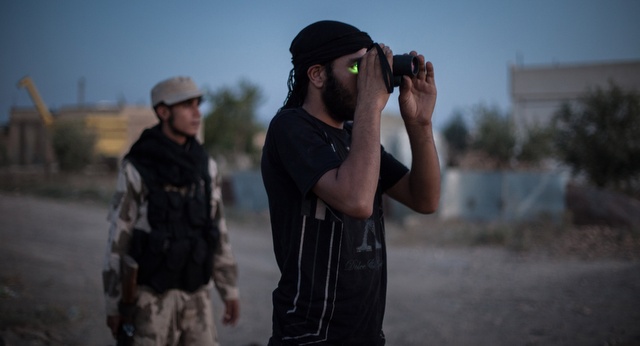
The Syrian Salafi faction known as Ahrar al-Sham has always stressed that it is not subservient to any group outside Syria, including al-Qaeda. Even so, there are connections between Ahrar al-Sham and al-Qaeda members.
To read the first part of this article on Abu Khalid al-Suri and his alleged role as a link between Ahrar al-Sham and al-Qaeda, click here.
The Syrian Salafi faction known as Ahrar al-Sham has always stressed that it is not subservient to any group outside Syria, including al-Qaeda. Even so, there are connections between Ahrar al-Sham and al-Qaeda members.
The bulk of Ahrar al-Sham’s membership consists of locally recruited Syrian Sunni Muslim men, certainly without relation to international jihadism. But the top leadership seems to include quite a few figures with a history of Salafi-jihadi activism. Many of today’s Ahrar al-Sham leaders belong to the “Sednaya generation” of Islamists who spent the latter part of the 2000s in Sednaya Prison, which is north of Damascus. Many were jailed for having fought in Iraq, and they would have had plenty of time to get to know other inmates linked to al-Qaeda.
In addition, certain veteran members of Ahrar al-Sham are part of an older generation of jihadis. At least a few cut their teeth in a 1980s Islamist uprising in Syria, typically within the ranks of the Fighting Vanguard, a now-defunct 1970s Muslim Brotherhood splinter faction that was influenced by the militant ideologue Sayyid Qutb. When the uprising was crushed by the Syrian regime in the Hama massacre of February 1982, many Fighting Vanguard members fled to Jordan, Iraq, Turkey, or Europe. Some then drifted on to Afghanistan and Pakistan, where they connected with the al-Qaeda movement.
A few of these figures can now be found in Ahrar al-Sham, although they are not likely to be very many. Most notable was, of course, the recently deceased Abu Khalid al-Suri, but there are others. They include Abul-Abbas al-Shami (real name Mohamed Ayman Aboul-Tout), a powerful Ahrar al-Sham figure and a graduate of the Fighting Vanguard. He currently serves as the Islamic Front’s top-ranking sharia official. There is also Abu Hamza al-Jughl (Baha Mustafa al-Jughl), who is too young to have links to the Fighting Vanguard but was arrested as a terrorist suspect in Pakistan in the early 2000s.
Having been a jihadi activist in Afghanistan and Pakistan in the 1980s, 1990s, or even 2000s is not necessarily the same as being an al-Qaeda member in 2014. Before slapping the “al-Qaeda” label on any or all of these men, one should understand that the jihadi milieu has always been characterized by fluid associations, loose organizational structures, and shifting personal allegiances.
First of all, the idealized hierarchy of a jihadi group is significantly different from that of a political party or a military group as commonly understood in the West. Duties to the group are ultimately regulated through personal oaths of allegiance and structured by sharia law, which allows for contractual relations that cannot easily be described in terms of “membership.”
Secondly, very few jihadi groups actually measure up to this ideal. Often, their internal hierarchies have been messy affairs, full of personal feuds and interoffice turf wars. It has been partly a problem of big egos (you have to be slightly bullheaded to get into jihadism in the first place), but the chaos is also fueled by pervasive secrecy, cell structures, outside manipulation, and the frequent and untimely deaths of incumbent leaders.
Personal contacts often count for much, and many of the most successful jihadi groups have been made up of overlapping franchise networks rather than a slick top-down hierarchy. For example, Ayman al-Zawahiri, the current leader of al-Qaeda, didn’t formally merge his own Islamic Jihad faction with Osama bin Laden’s al-Qaeda until mid-2001, even though Zawahiri’s Egyptian followers had formed a hard core of the al-Qaeda apparatus since the 1980s. Or consider the fact that the mastermind of the September 11, 2001, terrorist attacks on the United States, Khalid Sheikh Mohammed, was never a full al-Qaeda member. Even though he held leading positions within the group and organized its most lethal terrorist strike to date, he always remained a sort of co-opted consultant, working under a special contract with bin Laden.
The Islamic Front, an alliance that includes Ahrar al-Sham, denies that it has any al-Qaeda members in its ranks. This is of course what the group would say, even if it was littered with them, to avoid being listed as a terrorist faction by the UN. But it could still be true.
Until international intelligence agencies inform us otherwise, al-Suri’s purported dual role remains the only tangible “evidence” of an Ahrar al-Sham–al-Qaeda link. And from what is publicly known about him and about how jihadi networks operate, it seems perfectly plausible that al-Suri was not, in fact, an al-Qaeda member during his time in Ahrar al-Sham, if he ever was.
But whatever his formal standing, al-Suri must have been seen as a trusted contact by the al-Qaeda leadership, since Zawahiri wanted him to serve as mediator in the dispute between two jihadi factions in Syria, the Islamic State in Iraq and the Levant and the Nusra Front. And given how jihadi organizations operate, it may be a moot point anyway.
In the end, al-Suri’s presence in the Ahrar al-Sham leadership adds only mystery to mystery, and until we can gain a better understanding of this issue, both sides in Syria’s war will surely interpret it as they see fit. But it goes to show how shared experiences and personal ties can connect a “local” group like Ahrar al-Sham with “globalist” jihadis like al-Qaeda and how misleading simplistic categorizations can be when analyzing complex political movements.
Former Nonresident Fellow, Middle East Program
Aron Lund was a nonresident fellow in the Middle East Program and the author of several reports and books on the Syrian opposition movement.
Recent Work
Aron Lund
Aron Lund
Carnegie does not take institutional positions on public policy issues; the views represented herein are those of the author(s) and do not necessarily reflect the views of Carnegie, its staff, or its trustees.
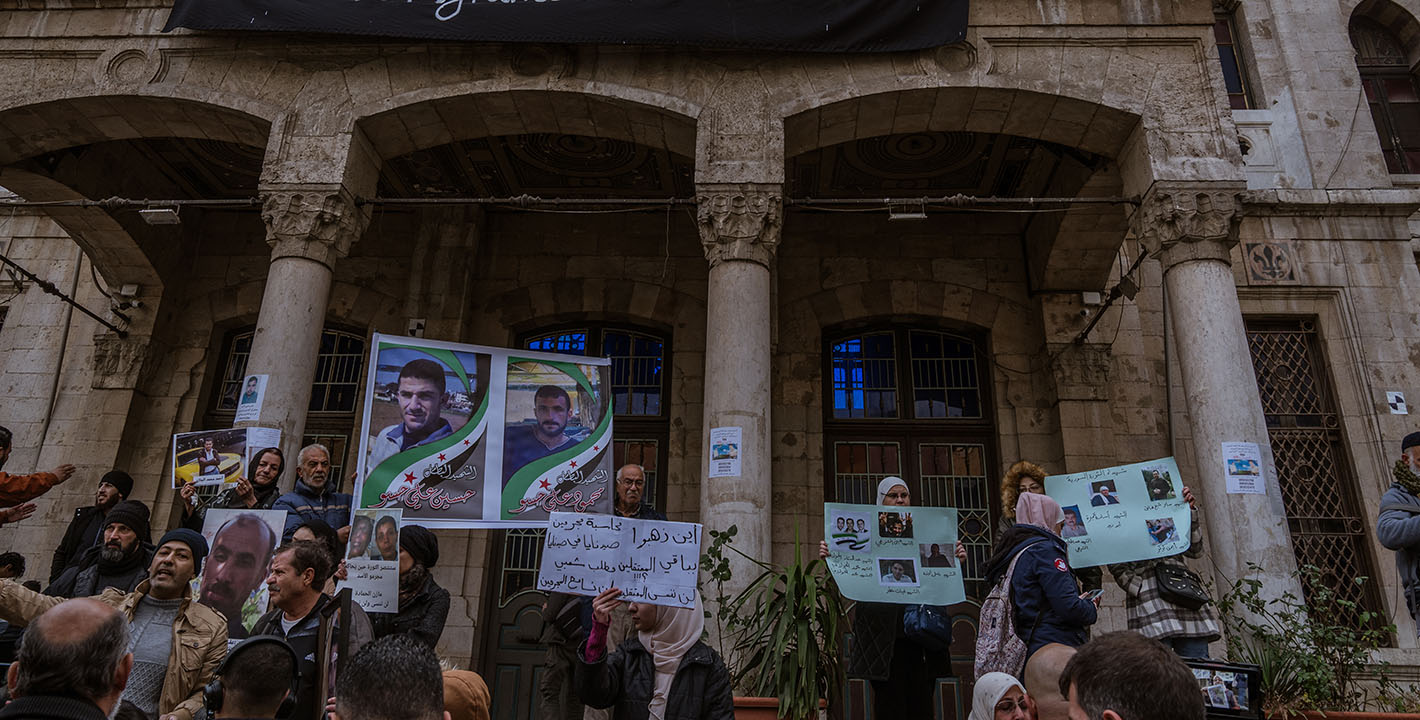
Reconciliation councils are emerging throughout the country to mediate in intracommunal disputes, many from the war years.
Natacha Danon
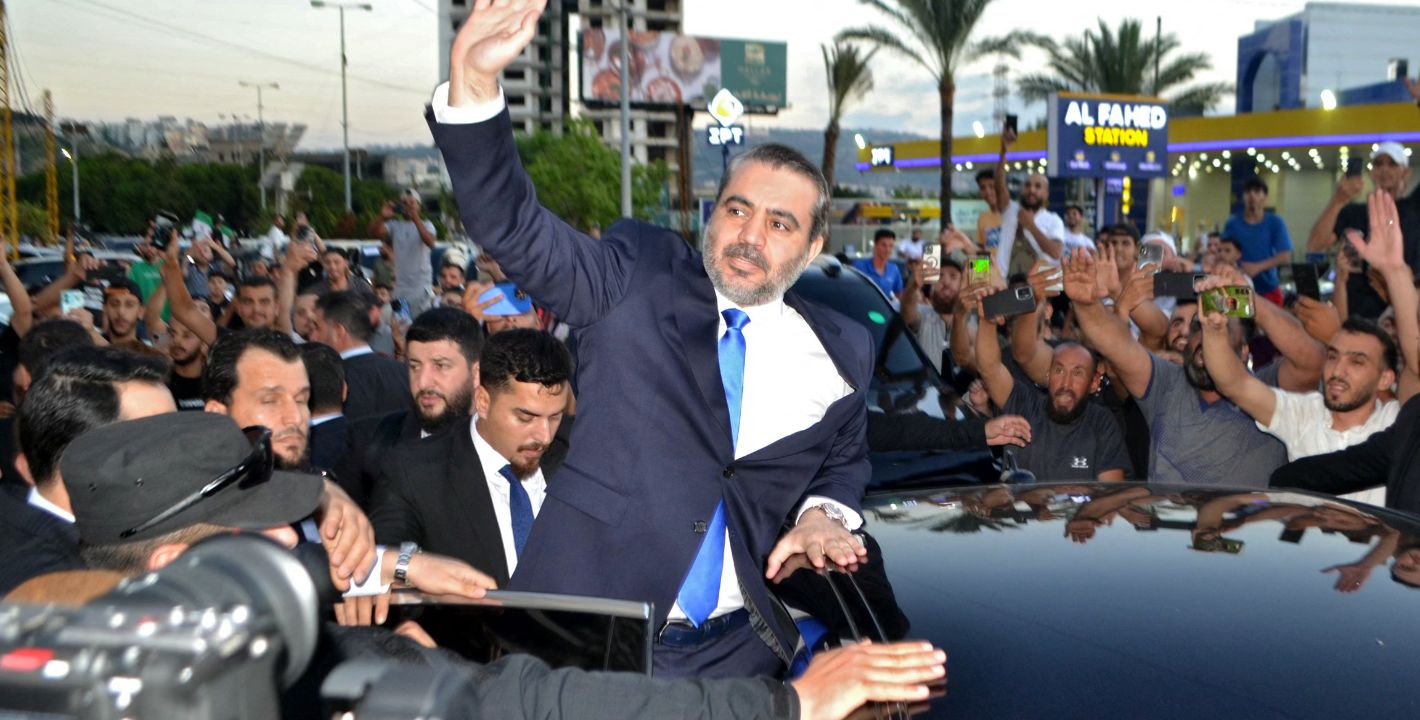
In an interview, Sohaib Jawhar analyzes the profound changes in the ties between the neighboring countries.

Michael Young
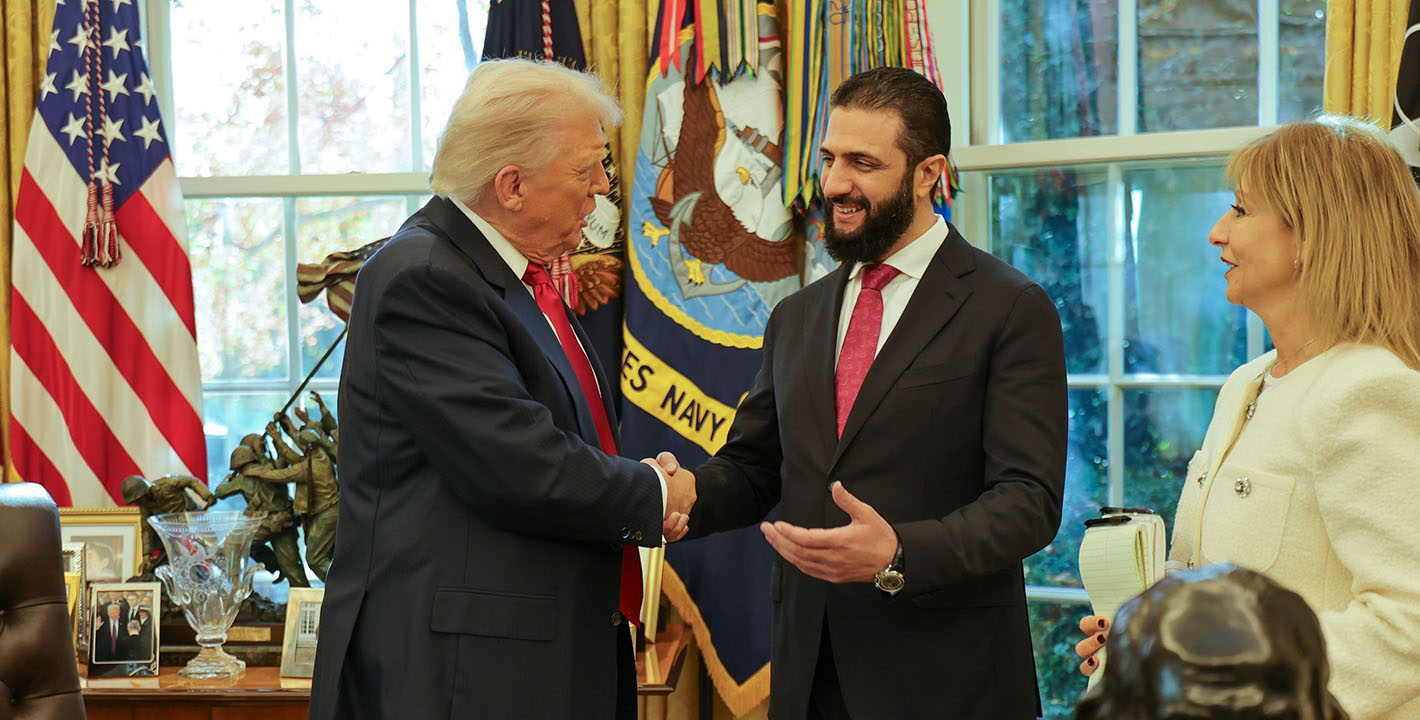
Any move by the United States to make good on Trump’s suggestion that Washington persuade Damascus to confront Hezbollah militarily would have catastrophic consequences.

Kheder Khaddour
In an interview, Elizabeth Thompson recalls how the country formulated a liberal constitution in 1920, before being denied by France and Britain.
Michael Young
Trade statistics show why Amman has more reason than Damascus to welcome the improvement in bilateral commerce.

Armenak Tokmajyan