

Article
Hamza Meddeb, Mohamed Ali Adraoui
{
  "authors": [
    "Hamza Meddeb"
  ],
  "type": "commentary",
  "blog": "Diwan",
  "centerAffiliationAll": "",
  "centers": [
    "Carnegie Endowment for International Peace",
    "Malcolm H. Kerr Carnegie Middle East Center"
  ],
  "collections": [
    "Arab Awakening"
  ],
  "englishNewsletterAll": "",
  "nonEnglishNewsletterAll": "",
  "primaryCenter": "Malcolm H. Kerr Carnegie Middle East Center",
  "programAffiliation": "",
  "programs": [],
  "projects": [
    "Tunisia Monitor"
  ],
  "regions": [
    "North Africa",
    "Tunisia"
  ],
  "topics": [
    "Political Reform",
    "Democracy",
    "Security",
    "Military"
  ]
}
Source: Getty
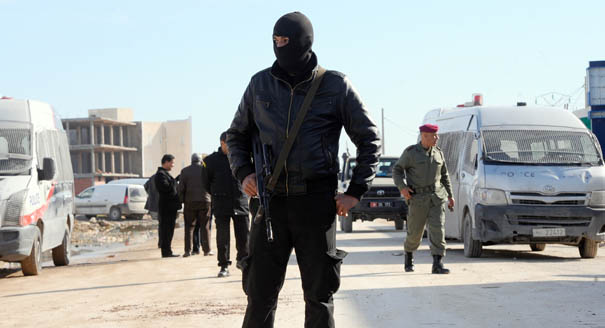
Changes in the post-2011 security environment, combined with a failing conscription system, have begun to transform the relationship of the Tunisian armed forces with society.
Unlike the military's role in Egypt, the Tunisian military has not played a significant political part in the transition initiated on January 14, 2011, when the regime of former Tunisian president Zine el-Abidine Ben Ali came to an end. Instead, the Tunisian army positioned itself as a neutral protector of democracy and security, which contributed greatly to its popularity. In a 2014 survey, four out of five young Tunisians stated that they trust the military more than any other public institution. In fact, they granted the military nearly the same level of trust as their families. Yet in spite of the military’s popularity, most of Tunisia’s young people required to perform military service refuse to do so.
This paradoxical situation causes all the more concern because the military has been saddled with many new responsibilities since the fall of Ben Ali, particularly due to the withdrawal of internal security forces in 2011 and the mounting unrest along Tunisia’s borders. With jihadist attacks multiplying on the Algerian border since 2013, the Tunisian military has been forced to embark on a fight against terrorism for which it now seems both underequipped and undermanned.
To address this situation, Tunisia’s military and political institutions are now negotiating reforms to the conscription system. The Parliamentary Committee for Security and Defense has pledged to organize a national debate in the coming months in order to raise youth awareness about military service and to discuss different reform options. The outcome of this debate could significantly affect the military’s ability to renew ties with society and fulfill its role in safeguarding Tunisia’s independence and stability.
The 2014 constitution confirmed that Tunisia would continue to rely on a conscript army, a system that has been in place since independence in 1956. However, even though all Tunisians, both men and women, are theoretically required to perform military service when they reach twenty years of age, less than 10 percent appear for their service voluntarily. The situation could in fact be even worse than these numbers indicate. Some experts estimate that in the past few years, only some 3,500 conscripts per year appeared for their national service.
Draft dodging has been a major impediment of the military for the past twenty years. In the 1990s, the police used to organize rafles, or raids, which were essentially arbitrary arrests of military-age youth. Anyone who didn’t have a job, didn’t go to university, or couldn't prove that he was the essential breadwinner of his family would be sent to the barracks to serve. By targeting young people from low-income neighborhoods, this tactic transformed military service into a type of discipline and punishment. It was only in the 2000s, when youth discontent over unemployment and the absence of professional opportunities started to grow, that the Ben Ali regime put an end to these coercive methods.
Even though the role played by the military since 2011 has drawn attention to its failure to develop strong ties to society, little has changed in terms of recruitment methods. To this day, the conscription system is unfairly and inefficiently implemented, and it is a major source of the military’s current problems.
The system is unfair because middle-class youth typically succeed in shirking military service. They either break the rules of conscription thanks to the authorities’ leniency or opt for an alternative service known as an “individual assignment,” which consists of paying a fee in exchange for exemption. The military is therefore disproportionately staffed by poor people who come from rural areas and have a low level of education.
The conscription system is also inefficient insofar as it fails to meet the needs of an army torn between its traditional responsibilities, such as the control of borders and securing bases and infrastructure, and the new regional struggle against terrorism. These failings are visible in the aging fighting force and its lack of training as well as in units being kept in the field for the past four years without rotation. To make up for the lack of conscripts, the army has increasingly resorted to hiring contract soldiers on a renewable annual basis. Thus, even though the constitution stresses that it must be a conscript army, the Tunisian military has increasingly come to resemble a professional force; albeit one that desperately lacks equipment and soldiers.
This situation is affecting the military’s connection to Tunisian society. The army can no longer serve as a social melting pot where young rural people meet the urban youth, the poor meet the rich, and university students meet unskilled workers. Instead of helping to develop a sense of shared belonging to a national community, the military has become isolated from society.
The security and defense challenges that Tunisia is facing are forcing the army to consider appropriate ways to make military service more attractive. This implies a rethinking of the social role of the army and finding ways in which military service could be a time to acquire skills that are useful on the job market.
Conscription reform is, however, a high-stakes affair, as Tunisia’s political leadership fears that an expansion of conscription could turn the military into the primary reservoir for absorbing unemployment. Any credible reform to the conscription system would obviously also require additional funds to train recruits, expand facilities, and purchase equipment.
But considering the economic difficulties Tunisia currently faces, boosting defense spending to the required levels is hardly conceivable. In the 2015 national budget, the Ministry of National Defense was granted funds to hire 7,000 new recruits. But according to experts, these recruits will merely allow the army to maintain its current numbers by filling the jobs of soldiers who are about to retire, resign, or finish their contracts.
To circumvent these political and financial problems, some members of the Parliamentary Committee for Security and Defense have begun to call for conscription reform to take place in the context of a complete reorganization of Tunisia’s defense policy. Faced with transnational threats in an extremely volatile regional environment, Tunisia is forced to consider joining some type of regional system of defense, which would in all likelihood be dominated by larger North African and/or European states. This would be a first for historically neutral Tunisia, which has always refused to interfere in the affairs of its neighbors and always abstained from joining alliances.
The changes in the post-2011 security environment, combined with a failing conscription system, have thus begun to transform the relationship of the Tunisian armed forces with society. Military requirements could also drive Tunisia deeper into North Africa’s divisive regional politics, a course long resisted by the political establishment. The outcome of Tunisia’s current negotiations over conscription reform will deeply influence future civil-military relations in the Arab world’s only democracy.
Fellow, Malcolm H. Kerr Carnegie Middle East Center
Hamza Meddeb is a research fellow at the Malcolm H. Kerr Carnegie Middle East Center in Beirut, where he co-leads the Political Economy Program
Recent Work
Hamza Meddeb, Mohamed Ali Adraoui
Carnegie does not take institutional positions on public policy issues; the views represented herein are those of the author(s) and do not necessarily reflect the views of Carnegie, its staff, or its trustees.
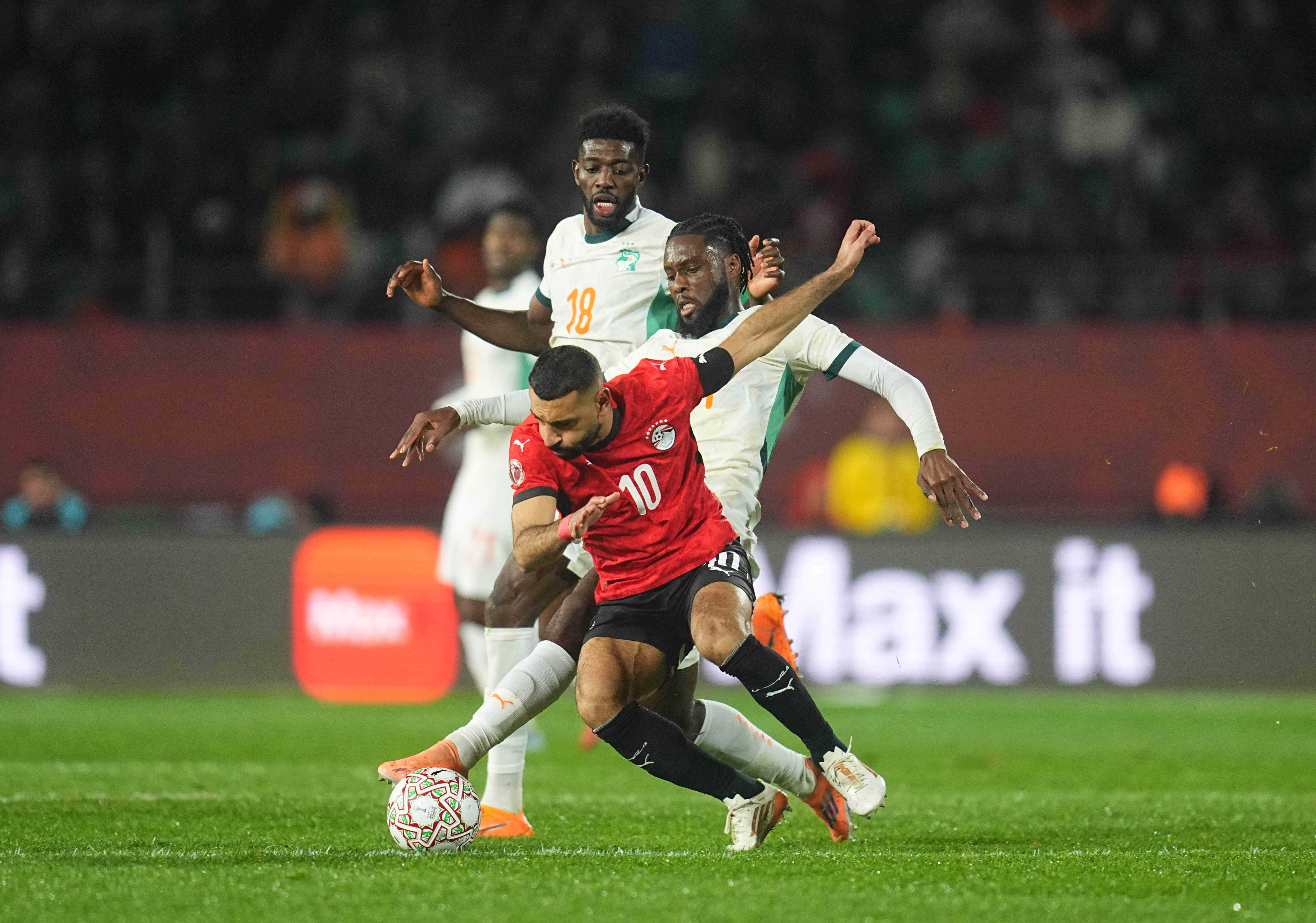
This will be the region’s most representative tournament, amid broad changes in its footballing landscape.
Issam Kayssi
The recent African Cup of Nations tournament in Morocco touched on issues that largely transcended the sport.

Issam Kayssi, Yasmine Zarhloule
Mustaqbal Misr has expanded its portfolio with remarkable speed, but a lack of transparency remains.

Yezid Sayigh
The burden of environmental degradation is felt not only through physical labor but also emotional and social loss.
Yasmine Zarhloule, Ella Williams
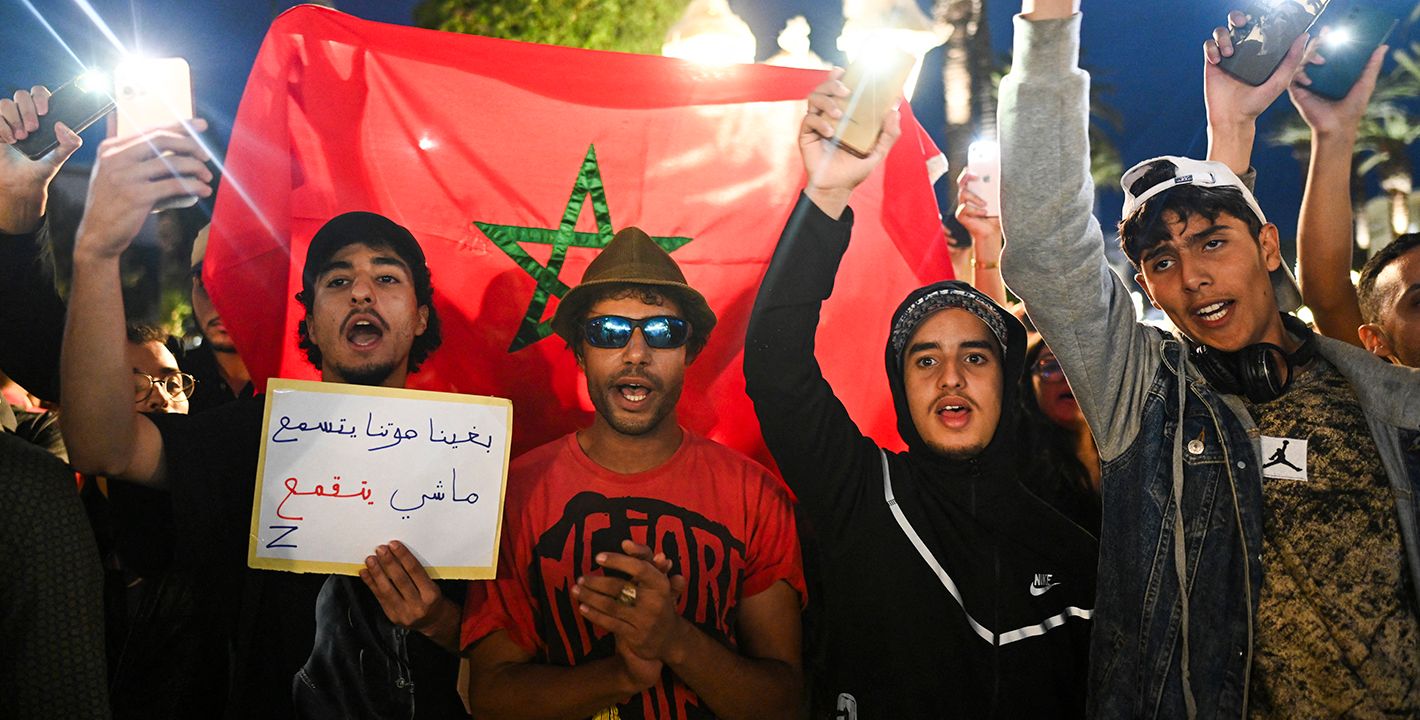
The country’s youthful protest movement is seeking economic improvement, social justice, and just a little hope.
Yasmine Zarhloule