

Commentary
Michael Young
{
  "authors": [
    "Michael Young"
  ],
  "type": "commentary",
  "blog": "Diwan",
  "centerAffiliationAll": "dc",
  "centers": [
    "Carnegie Endowment for International Peace",
    "Malcolm H. Kerr Carnegie Middle East Center"
  ],
  "collections": [
    "Inquiring Minds",
    "Political Islam"
  ],
  "englishNewsletterAll": "menaTransitions",
  "nonEnglishNewsletterAll": "",
  "primaryCenter": "Malcolm H. Kerr Carnegie Middle East Center",
  "programAffiliation": "MEP",
  "programs": [
    "Middle East"
  ],
  "projects": [],
  "regions": [
    "Egypt",
    "North Africa"
  ],
  "topics": [
    "Political Reform"
  ]
}
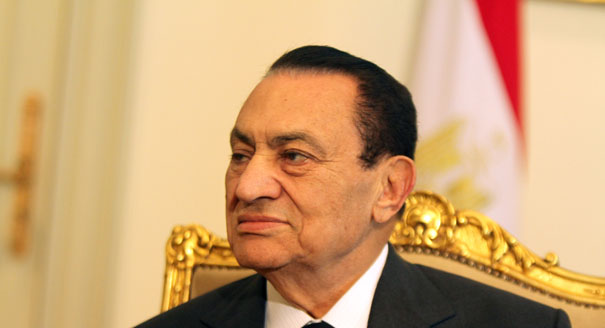
Source: Getty
A regular survey of experts on matters relating to Middle Eastern and North African politics and security.
Mahmoud Salem | Writer, analyst, author of the Sandmonkey blog
The short answer has to be a resounding “yes,” but not for the conventional reasons of oppression and human rights violations. Outside the sub-segment of society that cares for the survival of civil society, human rights, and the democratic process, a majority of the population views such notions as naïve and believes they are ultimately none of its business. The main fuel of public discontent comes from the poor economic conditions for which governments under President Abdel-Fattah al-Sisi are responsible.
Citing necessary austerity measures, the government has cut many of its subsidies, from fuel to electricity to bread. The delay of a year and a half for the national currency to be liberalized took its toll when it came time to float the Egyptian pound. The pound has lost over 60 percent of its value. The inflation rate has skyrocketed and new taxes and tariffs on different private-sector industries are putting small and medium enterprises out of business. The last seven years of Hosni Mubarak’s rule saw the private-sector-led economy achieve 7 percent growth for consecutive years, a much cheaper dollar, and a Mubarak regime that was highly reluctant to touch subsidies or increase taxes. It is hard not to regret that.
Nervana Mahmoud | Egyptian doctor, blogger, and commentator on Middle Eastern issues
Up until 2013, this question would very likely have been considered offensive to the many Egyptians who revolted against former president Hosni Mubarak. Today, there is an element of nostalgia for the calmer pre-2011 revolution days. After turmoil with various types of authoritarianism, it is easy to fall into revisionism about bygone eras.
Current President Abdel-Fattah al-Sisi doesn’t see himself as politician, but as a state builder. He regards semi-authoritarianism, as espoused by Mubarak, as the force behind the gradual decline of the Egyptian state. His uncompromising style has triggered some appreciation for Mubarak’s political flexibility.
Despite such flexibility, Mubarak failed to produce any serious political, economic, and religious reforms that could have prevented subsequent turmoil. This failure has left a deep sourness, unsweetened by even a heavy dose of nostalgia. Seven years after his departure, Egyptians still do not regret Mubarak, but probably have learned not to resent him so much.
Amr Hamzawy | Senior research scholar at the Center on Democracy, Development, and the Rule of Law in the Freeman Spogli Institute for International Studies at Stanford University
Before Abdel-Fattah al-Sisi took power in summer 2013, there were Egyptian citizens opposed to the rule of the Muslim Brotherhood and skeptical of the opening that the 2011 uprising introduced to Egyptian politics. This included mostly Copts, considerable segments of the urban middle class and wealthier population, elite state bureaucrats, high-ranking officers in the security apparatus, and autocracy-loving secular intellectuals. All regretted the days of former president Hosni Mubarak. Those groups feared the loss of that notion of public order, stability, and ultimately the status quo that guaranteed their privileges and of which Mubarak was the guardian. Therefore, they welcomed the end of the political opening and the emergence of a new autocracy, that which Sisi’s seizure of power ushered in. They are regretting Mubarak no more.
However, since summer 2013 other groups have come to wish that the Mubarak days would return. Ironically, they include some of his fiercest opponents in 2011. Many among the pro-democracy activists in civil society and in student and labor movements who were at the forefront of the 2011 protests demanding an end to Mubarak’s 30-year-long rule, are now yearning for the partially pluralist public sphere he nurtured. That partial pluralism has been evaporating under Sisi’s autocracy. Media outlets are either fully controlled by the security apparatus or banned, civil society organizations and political parties are either domesticated or harassed, and opposition leaders are imprisoned, facing possible imprisonment, or in exile.
Georges Fahmi | Research fellow at the Middle East Directions Program of the Robert Schuman Center for Advanced Studies at the European University Institute in Fiesole
Many Egyptians today say that they regret former president Hosni Mubarak. However, when one tries to understand what lies behind this provocative statement, one realizes it reflects more a disappointment with how the post-Mubarak era was managed than a wish to bring Mubarak back to power.
Mubarak ruled Egypt for 30 years and most Egyptians agree that the economic and political difficulties facing the country now are a direct impact of his policies. These same policies were why many Egyptians turned against his rule in January 2011, hoping for a democratic regime that safeguarded human rights and an economic order advancing social justice. However, none of these has been achieved. The transitional period left many Egyptians deeply disappointed not only with politicians, but also with politics itself as a means of change. So what they regret is not so much Hosni Mubarak himself, but, rather, how they missed the chance to build a different Egypt after 2011.

Editor, Diwan, Senior Editor, Malcolm H. Kerr Carnegie Middle East Center
Michael Young is the editor of Diwan and a senior editor at the Malcolm H. Kerr Carnegie Middle East Center.
Recent Work
Michael Young
Michael Young
Carnegie does not take institutional positions on public policy issues; the views represented herein are those of the author(s) and do not necessarily reflect the views of Carnegie, its staff, or its trustees.
In Egypt’s dense cities, the disappearance of foliage has health implications and punishes daily commuters.

Angie Omar

Huawei pushed hard to enter the Egyptian data centers market, until the Americans made a better offer.
Angie Omar
There is a disturbing structural parallel between the old global energy economy and the new green transition.
Angie Omar

This will be the region’s most representative tournament, amid broad changes in its footballing landscape.

Issam Kayssi
Cairo’s efforts send a message to the United States and the region that it still has a place at the diplomatic table.
Angie Omar