• Research
  • Diwan
  • About
  • Experts
Carnegie Middle East logoCarnegie lettermark logo
LebanonIran
{
  "authors": [
    "Ghida Tayara"
  ],
  "type": "commentary",
  "blog": "Diwan",
  "centerAffiliationAll": "dc",
  "centers": [
    "Carnegie Endowment for International Peace",
    "Malcolm H. Kerr Carnegie Middle East Center"
  ],
  "collections": [
    "Three Question Time"
  ],
  "englishNewsletterAll": "menaTransitions",
  "nonEnglishNewsletterAll": "",
  "primaryCenter": "Malcolm H. Kerr Carnegie Middle East Center",
  "programAffiliation": "MEP",
  "programs": [
    "Middle East"
  ],
  "projects": [],
  "regions": [
    "Iran",
    "Middle East"
  ],
  "topics": [
    "Political Reform"
  ]
}
Diwan English logo against white

Source: Getty

Commentary
Diwan

Alive or Still Dying?

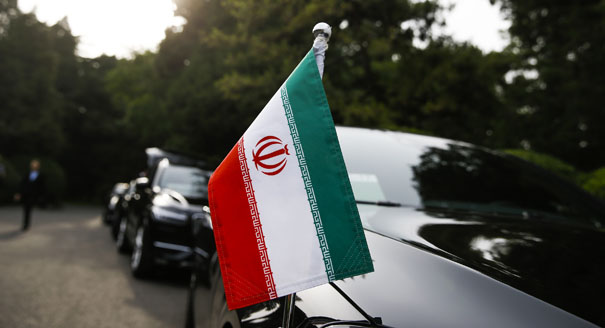
Carnegie’s Jarrett Blanc discusses the future of the nuclear deal with Iran, as Washington reimposes sanctions on the country.

Link Copied
By Ghida Tayara
Published on Aug 7, 2018
Diwan

Blog

Diwan

Diwan, a blog from the Carnegie Endowment for International Peace’s Middle East Program and the Malcolm H. Kerr Carnegie Middle East Center, draws on Carnegie scholars to provide insight into and analysis of the region. 

Learn More

Jarrett Blanc is a senior fellow in the Geoeconomics and Strategy Program at the Carnegie Endowment for International Peace. He was previously the deputy lead coordinator and State Department coordinator for Iran nuclear implementation under president Barack Obama. In that role, he was responsible for the full and effective implementation of the Joint Comprehensive Plan of Action on Iran’s nuclear program, including Iranian and U.S. commitments on sanctions. Diwan interviewed Blanc in early August, before the reimposition of U.S. sanctions on the country following President Donald Trump’s decision last May to withdraw from the nuclear deal, to ask him about how he saw the deal’s future. 

About the Author

Ghida Tayara

Senior Digital and Web Coordinator

Ghida Tayara
Senior Digital and Web Coordinator
Political ReformIranMiddle East

Carnegie does not take institutional positions on public policy issues; the views represented herein are those of the author(s) and do not necessarily reflect the views of Carnegie, its staff, or its trustees.

More Work from Diwan

  • Commentary
    Diwan
    Why Does the Middle East Suffer “Forever Wars”?

    Because perpetual conflict enhances control, offers economic benefits, and allows leaders to ignore popular preferences.

      • Angie Omar

      Angie Omar

  • Commentary
    Diwan
    A Military Balance Sheet in the U.S. and Israeli War With Iran

    In an interview, Jim Lamson discusses the ongoing regional conflict and sees an unclear picture when it comes to winners and losers. 

      Michael Young

  • Commentary
    Diwan
    Egypt’s Discrete Role in the Ceasefire with Iran

    Cairo’s efforts send a message to the United States and the region that it still has a place at the diplomatic table.

      • Angie Omar

      Angie Omar

  • Commentary
    Diwan
    Realism and the Lebanon-Israel Talks

    Beirut’s desire to break free from Iranian hegemony may push it into a situation where it has to accept Israel’s hegemony.  

      Michael Young

  • Commentary
    Diwan
    The United States and Iran Have Agreed to a Two-Week Ceasefire

    Spot analysis from Carnegie scholars on events relating to the Middle East and North Africa.

      Michael Young

Get more news and analysis from
Malcolm H. Kerr Carnegie Middle East Center
Carnegie Middle East logo, white
  • Research
  • Diwan
  • About
  • Experts
  • Projects
  • Events
  • Contact
  • Careers
  • Privacy
  • For Media
Get more news and analysis from
Malcolm H. Kerr Carnegie Middle East Center
© 2026 Carnegie Endowment for International Peace. All rights reserved.