

Commentary
Azeema Cheema, Mohanad Hage Ali
{
  "authors": [
    "Mohanad Hage Ali"
  ],
  "type": "commentary",
  "blog": "Diwan",
  "centerAffiliationAll": "dc",
  "centers": [
    "Carnegie Endowment for International Peace",
    "Malcolm H. Kerr Carnegie Middle East Center"
  ],
  "collections": [
    "Three Question Time"
  ],
  "englishNewsletterAll": "menaTransitions",
  "nonEnglishNewsletterAll": "",
  "primaryCenter": "Malcolm H. Kerr Carnegie Middle East Center",
  "programAffiliation": "MEP",
  "programs": [
    "Middle East"
  ],
  "projects": [],
  "regions": [
    "Iran",
    "Middle East"
  ],
  "topics": [
    "Political Reform"
  ]
}
Source: Getty
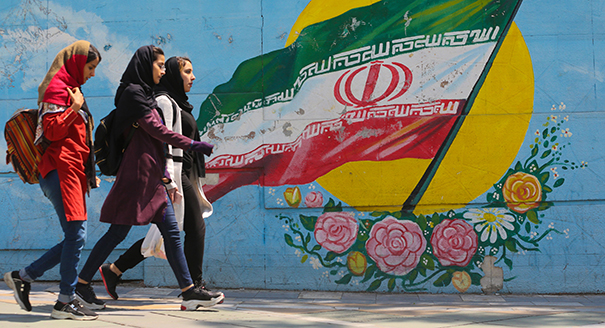
Ali Vaez discusses Iran’s dwindling options as tensions flare with the United States.
A year after the United States withdrew from the Joint Comprehensive Plan Of Action (JCPOA), also known as the Iran Nuclear deal, sanctions have severely impacted Iran’s oil sales, which are expected to decrease to below half a million barrels a day from 2.7 million in June last year. The past two weeks have witnessed drone attacks on oil tankers in Fujairah and the Aramco East-West pipeline, as well as increasing tensions in Iraq, raising fears of military escalation and regional conflict. These developments come after the release of a US intelligence report on the Iranian threat to American interests and personnel.
Many questions now arise on the specter of a wider direct or indirect military confrontation, potentially affecting the region’s security and oil prices. Will the Iranian economy withstand the newly imposed sanctions? Will China see an increase its oil sales to the region? Amid ongoing escalation, what are the prospects for stability and economic recovery in the region?
To answer these questions and more, Diwan spoke to Ali Vaez, Crisis Group's Iran Project Director.

Deputy Director for Research, Malcolm H. Kerr Carnegie Middle East Center
Mohanad Hage Ali is the deputy director for research at the Malcolm H. Kerr Carnegie Middle East Center.
Recent Work

Azeema Cheema, Mohanad Hage Ali
Mohanad Hage Ali
Carnegie does not take institutional positions on public policy issues; the views represented herein are those of the author(s) and do not necessarily reflect the views of Carnegie, its staff, or its trustees.

As the U.S. stumbles in its war with Iran, we are likely to see an acceleration of its disengagement from the region.

Michael Young

Huawei pushed hard to enter the Egyptian data centers market, until the Americans made a better offer.

Angie Omar

Middle Eastern states should welcome an accelerated U.S. disengagement from their region.
Michael Young

In an interview, former ambassador Charles Freeman assesses the Trump administration’s war against Iran.
Michael Young

The accord represents a pivotal moment in the region to avert a security vacuum in the Gulf.
Azeema Cheema, Mohanad Hage Ali