• Research
  • Diwan
  • About
  • Experts
Carnegie Middle East logoCarnegie lettermark logo
LebanonIran
{
  "authors": [
    "Ghida Tayara"
  ],
  "type": "commentary",
  "blog": "Diwan",
  "centerAffiliationAll": "dc",
  "centers": [
    "Carnegie Endowment for International Peace",
    "Malcolm H. Kerr Carnegie Middle East Center"
  ],
  "collections": [
    "Three Question Time"
  ],
  "englishNewsletterAll": "menaTransitions",
  "nonEnglishNewsletterAll": "",
  "primaryCenter": "Malcolm H. Kerr Carnegie Middle East Center",
  "programAffiliation": "MEP",
  "programs": [
    "Middle East"
  ],
  "projects": [],
  "regions": [
    "Levant",
    "Iraq",
    "Middle East"
  ],
  "topics": [
    "Political Reform",
    "Religion"
  ]
}
Diwan English logo against white

Source: Getty

Commentary
Diwan

The Song Remains the Same

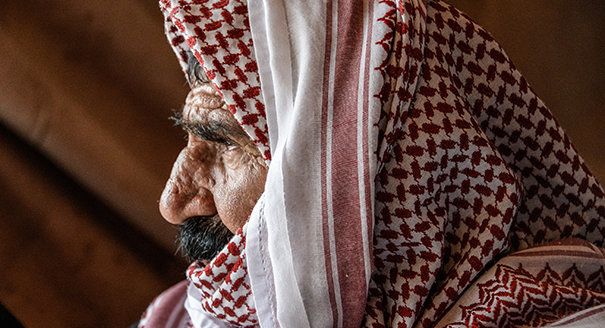
Mélisande Genat discusses the fluid identities in Sinjar, where even the Islamic State’s presence did not greatly alter ties.

Link Copied
By Ghida Tayara
Published on Jun 18, 2019
Diwan

Blog

Diwan

Diwan, a blog from the Carnegie Endowment for International Peace’s Middle East Program and the Malcolm H. Kerr Carnegie Middle East Center, draws on Carnegie scholars to provide insight into and analysis of the region. 

Learn More

Mélisande Genat is a doctoral student in the Stanford University history department. Her current research focuses on interrelations between tribal, political and religious phenomena in Iraq and the Sinjar region between the 19th and the 20th century. Genat has been living and conducting research in Iraq since 2010. Her research interests include Kurdish studies, development economics, rural sociology, collectivization in Iraq, and rural land reform. Diwan interviewed Genat in mid-June to get her perspective on the relationship between the different communities and tribes in Sinjar, northern Iraq, as well as the fluid identities among Arabs, Kurds, and Yezidis.

About the Author

Ghida Tayara

Senior Digital and Web Coordinator

Ghida Tayara
Senior Digital and Web Coordinator
Political ReformReligionLevantIraqMiddle East

Carnegie does not take institutional positions on public policy issues; the views represented herein are those of the author(s) and do not necessarily reflect the views of Carnegie, its staff, or its trustees.

More Work from Diwan

  • Commentary
    Diwan
    The United States and Iran Have Agreed to a Two-Week Ceasefire

    Spot analysis from Carnegie scholars on events relating to the Middle East and North Africa.

      Michael Young

  • Commentary
    Diwan
    Hezbollah’s Wartime Strategy

    The party’s objectives involve tying together the Lebanese and Iranian fronts, while surviving militarily and politically at home. 

      Mohamad Fawaz

  • Commentary
    Diwan
    A Mission for Lebanon’s Army

    While armed forces commander Rudolph Haykal’s caution is understandable, he is in a position to act, and must.

      Michael Young

  • Commentary
    Diwan
    Trump’s Plan for Gaza Is Not Irrelevant. It’s Worse.

    The simple conclusion is that the scheme will bring neither peace nor prosperity, but will institutionalize devastation.

      Nathan J. Brown

  • Commentary
    Diwan
    Israel Strikes Hezbollah’s Muslim Brotherhood-Affiliated Allies

    The Jamaa al-Islamiyya is the local Lebanese dimension of a broader struggle involving rival regional powers.

      Issam Kayssi

Get more news and analysis from
Malcolm H. Kerr Carnegie Middle East Center
Carnegie Middle East logo, white
  • Research
  • Diwan
  • About
  • Experts
  • Projects
  • Events
  • Contact
  • Careers
  • Privacy
  • For Media
Get more news and analysis from
Malcolm H. Kerr Carnegie Middle East Center
© 2026 Carnegie Endowment for International Peace. All rights reserved.