

Commentary
As the U.S. stumbles in its war with Iran, we are likely to see an acceleration of its disengagement from the region.
Michael Young
{
  "authors": [
    "Ghida Tayara"
  ],
  "type": "commentary",
  "blog": "Diwan",
  "centerAffiliationAll": "dc",
  "centers": [
    "Carnegie Endowment for International Peace",
    "Malcolm H. Kerr Carnegie Middle East Center"
  ],
  "collections": [
    "Three Question Time"
  ],
  "englishNewsletterAll": "menaTransitions",
  "nonEnglishNewsletterAll": "",
  "primaryCenter": "Malcolm H. Kerr Carnegie Middle East Center",
  "programAffiliation": "MEP",
  "programs": [
    "Middle East"
  ],
  "projects": [],
  "regions": [
    "Levant",
    "Israel",
    "Palestine",
    "North America",
    "United States",
    "Middle East"
  ],
  "topics": [
    "Political Reform"
  ]
}

Source: Getty
Carnegie’s Marwan Muasher discusses the possible U.S. plan to achieve a Palestinian-Israeli settlement.
Marwan Muasher is the vice president for studies at the Carnegie Endowment for International Peace, where he oversees research on the Middle East. He is a former Jordanian foreign minister and deputy prime minister. Muasher has also authored two books, The Arab Center: The Promise of Moderation (Yale University Press, 2009) and The Second Arab Awakening: And the Battle for Pluralism (Yale University Press, 2015). Diwan met with him in late July to get his views on the Trump administration’s plan for Palestinian-Israeli peace, many of whose aspects are known and have generated controversy as well as widespread rejection in the Arab world.
Ghida Tayara
Senior Digital and Web Coordinator
Carnegie does not take institutional positions on public policy issues; the views represented herein are those of the author(s) and do not necessarily reflect the views of Carnegie, its staff, or its trustees.

As the U.S. stumbles in its war with Iran, we are likely to see an acceleration of its disengagement from the region.

Michael Young
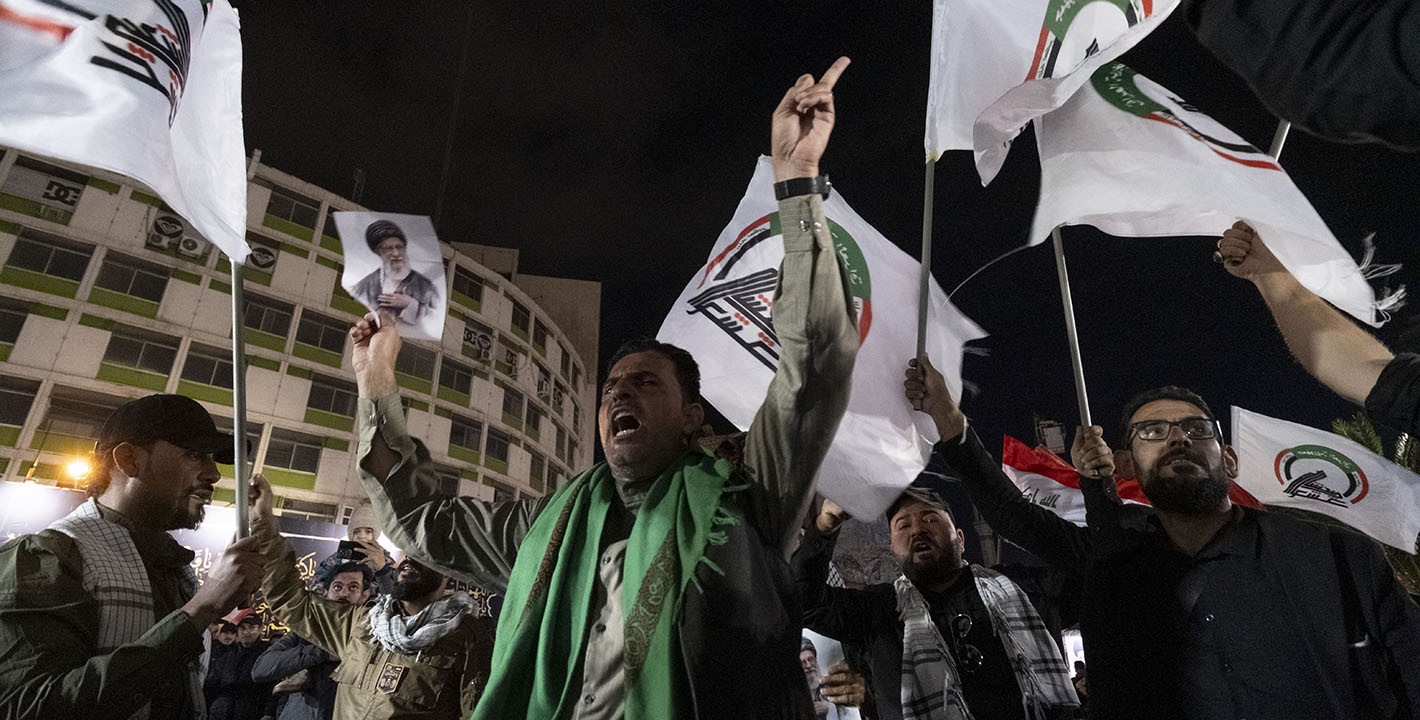
The Zaidi government’s objective to collect weapons is constrained by regional conflict, but it can take certain measures at home.
Ali Al-Mawlawi

It is improbable that Israel’s forthcoming elections will alter much in terms of how the country thinks about security.

Nathan J. Brown

Huawei pushed hard to enter the Egyptian data centers market, until the Americans made a better offer.

Angie Omar

Middle Eastern states should welcome an accelerated U.S. disengagement from their region.
Michael Young