

Commentary
Michael Young
{
  "authors": [
    "Michael Young"
  ],
  "type": "commentary",
  "blog": "Diwan",
  "centerAffiliationAll": "dc",
  "centers": [
    "Carnegie Endowment for International Peace",
    "Malcolm H. Kerr Carnegie Middle East Center"
  ],
  "collections": [
    "Inquiring Minds"
  ],
  "englishNewsletterAll": "menaTransitions",
  "nonEnglishNewsletterAll": "",
  "primaryCenter": "Malcolm H. Kerr Carnegie Middle East Center",
  "programAffiliation": "MEP",
  "programs": [
    "Middle East"
  ],
  "projects": [],
  "regions": [
    "Iran",
    "North America",
    "United States",
    "Middle East"
  ],
  "topics": [
    "Political Reform",
    "Foreign Policy"
  ]
}
Source: Getty
A regular survey of experts on matters relating to Middle Eastern and North African politics and security.
Ellen Laipson | Distinguished fellow and president emeritus of the Stimson Center, former vice chair of the National Intelligence Council (1997–2002), member of former president Barack Obama's Intelligence Advisory Board (2009–2013), and member of the U.S. secretary of state’s Foreign Affairs Policy Board (2011–2014)
President Donald Trump “controls” Iran policy, but that should not be understood as the president leading a coherent, coordinated policy process. Trump sees virtue in surprise and unpredictability, and seems to have a casual response to the threat assessments and options papers presented by the bureaucracy. He trusts his instincts about managing relationships with adversaries, and enjoys the chaos created as he alternately threatens and tries to engage foreign leaders, including the supreme leader of Iran.
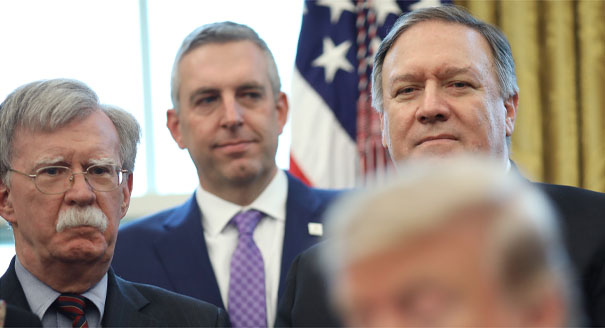
Much has been said about the hardline influences of National Security Advisor John Bolton and Secretary of State Mike Pompeo. They clearly favor a steady, tough message to Iran, and barely disguise a preference for regime change over the behavior modification goals of most American administrations. The Defense Department mostly shares the dark view of Iran’s intentions, but does not seek conflict. Pity poor Brian Hook, the U.S. special representative for Iran, on the road to explain to allies the logic of U.S. Iran policy.
Gary Sick | Executive director of Gulf 2000 at Columbia University, former member of the U.S. National Security Council under president Jimmy Carter
By withdrawing from the Joint Comprehensive Plan of Action (JCPOA), the nuclear deal with Iran, the Trump administration generated a crisis that could lead to military conflict. But the United States lacks a clear objective. Does it intend to overturn the government of Iran or merely to punish it? Does it want a revised JCPOA or something entirely new? Does it wish to separate Iran from its regional allies, or does it merely want to use the Iranian threat to leverage a new alliance with Israel and the Sunni monarchies? Washington’s purpose changes from day to day. President Donald Trump’s authority to make foreign policy is not in question, but his capacity to articulate a coherent strategy is. In 2003, the U.S. invaded and changed the government in Iraq without a plan for the day after. Some of the architects of that catastrophe are at the president’s side today. Who is going to warn him against repeating those same mistakes on Iran?
Danielle Pletka | Senior vice president, foreign and defense policy studies, at the American Enterprise Institute, former senior professional staff member for the Senate Committee on Foreign Relations, where she specialized in the Near East and South Asia
The question of who is controlling Iran policy in the Trump administration should feel a little disingenuous. After all, by definition constitutionally it is the president who controls foreign policy. However, observers can be excused a little confusion. After all, while the president has said repeatedly that his aim in imposing a “maximum pressure” campaign of sanctions on Iran is to get Iran’s supreme leader Ayatollah Ali Khamenei and his team back to the negotiating table for a new and better deal with Iran, his national security advisor, John Bolton, is on record as saying that the regime in Iran must go. And Secretary of State Mike Pompeo, though more reticent than Bolton, has laid out twelve conditions for Iran to meet that together add up to someone else being in power.
So who calls the shots? At the end of the day it will be President Donald Trump. Neither he nor his base wishes that the United States be involved in another Middle Eastern conflict. That said, the Iranians should not be too complacent. There are many things short of war that can damage the regime in Tehran. Khamenei should not count on Trump to be his savior in the event of a serious Iranian miscalculation.
Gary Samore | Director of the Crown Center for Middle East Studies at Brandeis University, former member of the Secretary of Energy Advisory Board (2015–2017) and former White House coordinator for arms control and weapons of mass destruction under president Barack Obama, former special assistant and senior director for nonproliferation and export controls under president Bill Clinton.
For better or worse, President Donald Trump controls Iran policy in his administration. Under the U.S. system, the president is the dominant decisionmaker in foreign policy and the commander-in-chief of the armed forces. Trump has no reservations about ignoring and overruling his senior foreign policy advisors—whether his original decision to withdraw from the Iran nuclear deal or, more recently, his decision not to order military strikes against Iran. In both cases, Trump acted against the advice of his foreign policy team. The Iran policy reflects Trump’s genuine belief that he can force Iran to accept a “better” deal through maximum economic pressure. Unfortunately, Tehran continues to resist Trump’s offer to negotiate, despite severe economic damage. The Iran policy also reflects Trump’s genuine desire to avoid military entanglement in the Middle East. However, Tehran may read Trump’s reluctance to use military force as a green light to break away from the nuclear constraints of the Joint Comprehensive Plan of Action, the nuclear deal agreed with Tehran, and carry out more provocative attacks in the region.
Editor, Diwan, Senior Editor, Malcolm H. Kerr Carnegie Middle East Center
Michael Young is the editor of Diwan and a senior editor at the Malcolm H. Kerr Carnegie Middle East Center.
Recent Work
Michael Young
Michael Young
Carnegie does not take institutional positions on public policy issues; the views represented herein are those of the author(s) and do not necessarily reflect the views of Carnegie, its staff, or its trustees.
In an interview, Rozina Ali discusses her new book on the rise and manifestations of Islamophobia in the United States.
Michael Young
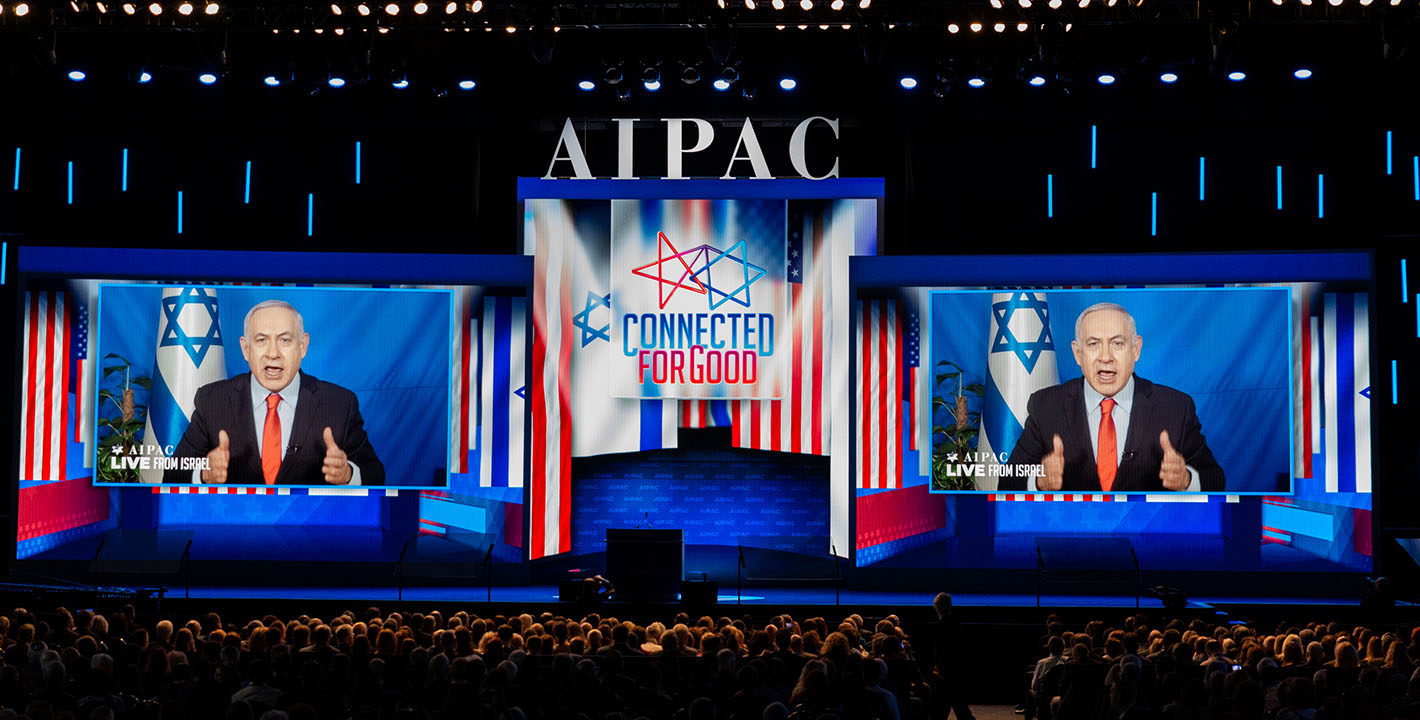
In an interview, Ian Lustick and Eli Clifton discuss their new book on why a prominent ally has so much influence in America.
Michael Young
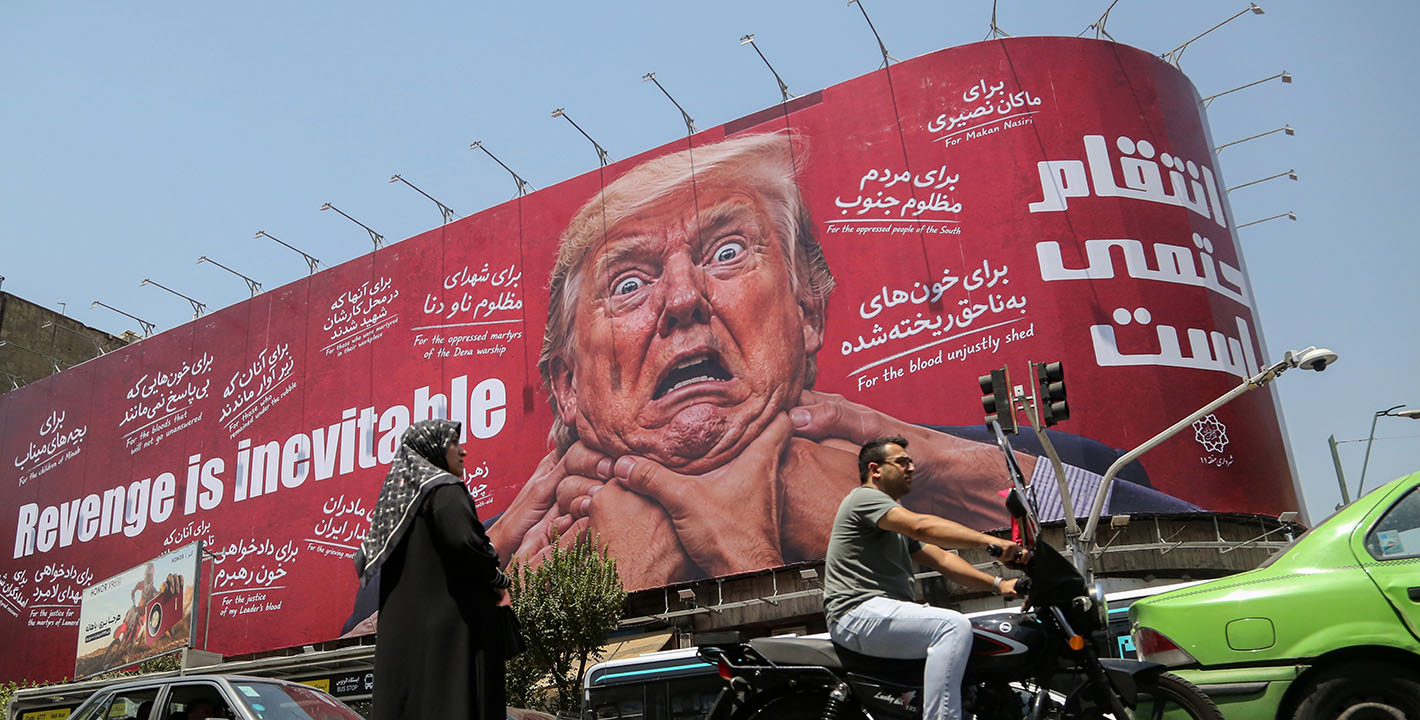
As the U.S. stumbles in its war with Iran, we are likely to see an acceleration of its disengagement from the region.
Michael Young
Middle Eastern states should welcome an accelerated U.S. disengagement from their region.
Michael Young
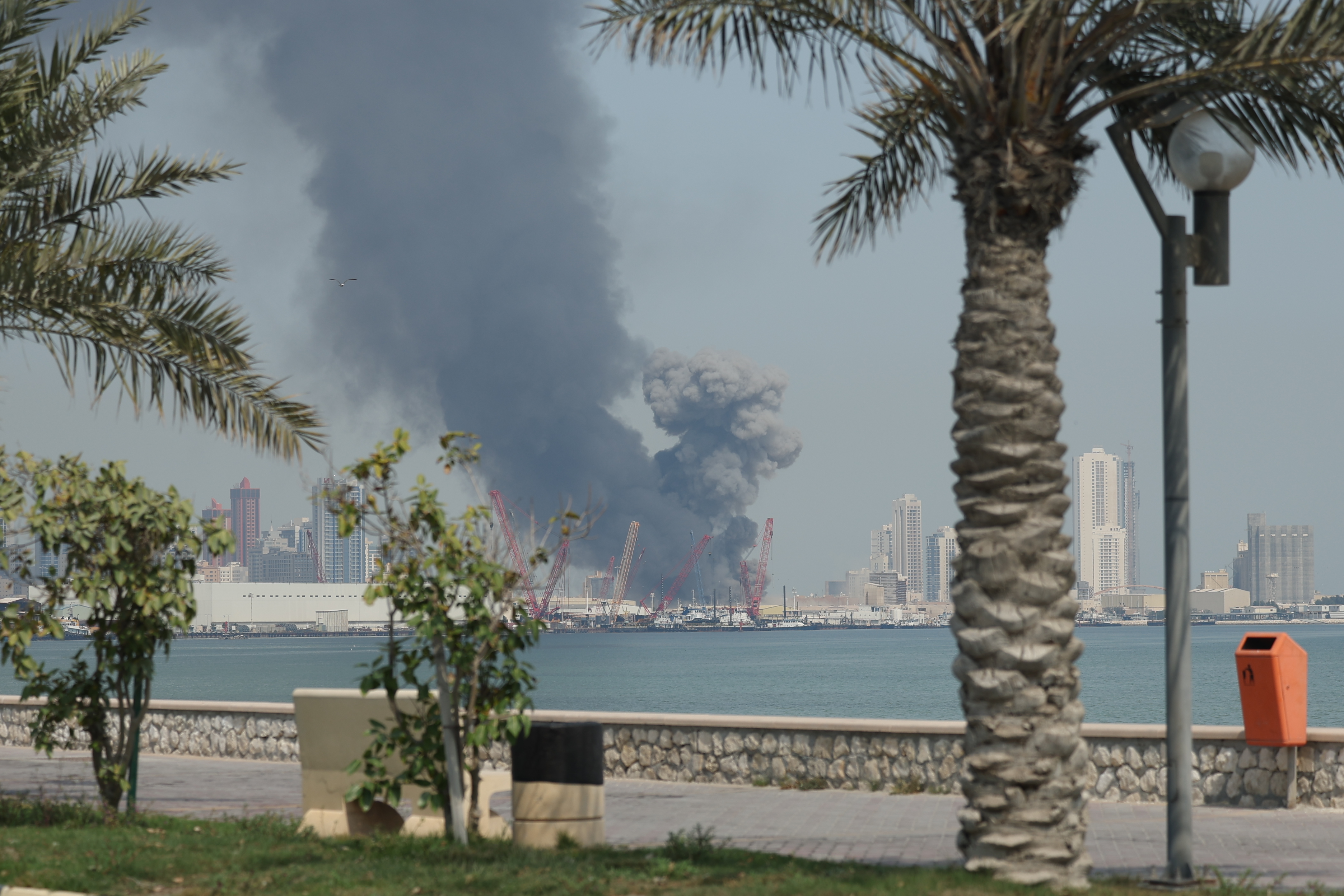
In an interview, former ambassador Charles Freeman assesses the Trump administration’s war against Iran.
Michael Young