

Commentary
Michael Young
{
  "authors": [
    "Michael Young"
  ],
  "type": "commentary",
  "blog": "Diwan",
  "centerAffiliationAll": "",
  "centers": [
    "Carnegie Endowment for International Peace",
    "Malcolm H. Kerr Carnegie Middle East Center"
  ],
  "englishNewsletterAll": "",
  "nonEnglishNewsletterAll": "",
  "primaryCenter": "Malcolm H. Kerr Carnegie Middle East Center",
  "programAffiliation": "",
  "regions": [
    "Lebanon",
    "Levant"
  ],
  "topics": [
    "Military"
  ]
}
Source: Getty
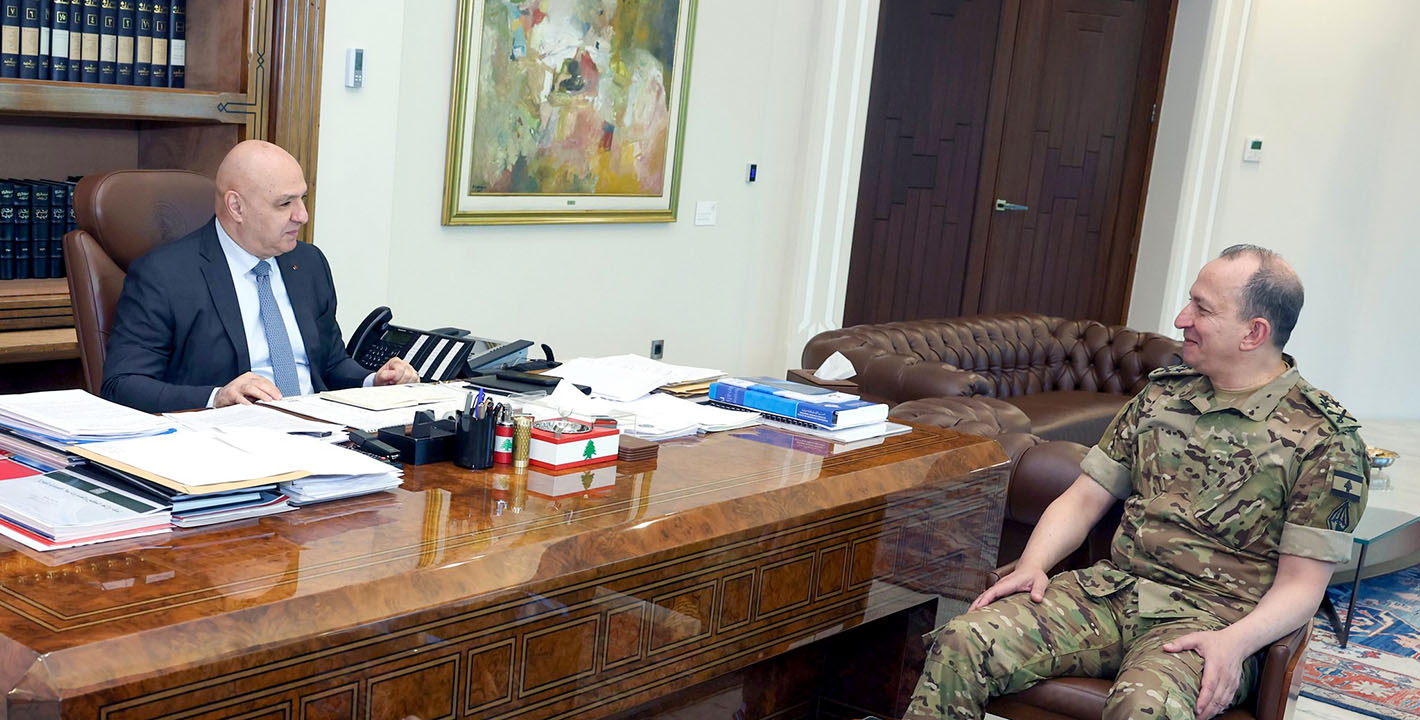
A recent dispute in Lebanon between a politician and the army commander over Hezbollah’s weapons has deeper roots.
Recently in Lebanon, the public disagreement between a prominent politician and the commander of the country’s armed forces sent minor shockwaves through the system. To understand what happened, we need to look back in time and examine the relationship between Lebanon’s political class and the country’s military—a relationship that has always been contentious.
In an interview on June 22, the head of the Lebanese Forces party, Samir Geagea, took the commander, Rudolph Haykal, to task. Geagea said that in a meeting he held with party officials, there had been a discussion about replacing Haykal, because the Lebanese Forces received information of his refusal to implement the government’s orders to disarm Hezbollah. Geagea then added that the commander’s political orientations were those of “the other side.”
Soon thereafter, Haykal, in a speech before senior officers, replied by saying that the army’s policies were “national policies,” and that those who did not connect with these policies were the ones who belonged to “the other side.” The phrase was criticized by members of the political class, who argued it was not up to the army to define what national policies were, let alone to determine who was on which side of the country’s politics.
There is no doubt the commander has been highly resistant to efforts that would push the army into forcibly disarming Hezbollah. In a notable case, he and the prime minister, Nawaf Salam, clashed following a government decision in early March to declare Hezbollah’s weapons illegal, after the party had precipitated Lebanon into a conflict with Israel. At the time, Haykal had reportedly asked Salam how he expected the army to implement such a decision, arguing his institution did not have the means to enter into a military confrontation with Hezbollah, nor the capacity to support the families of servicemen killed in action.
The civilian leadership is correct in saying the commander’s role is to obey the government’s orders. But in reality things are more complicated. The relationship between the civilian leadership and the military has long been marked by antagonism, going back to the time of Fouad Chehab, who commanded the armed forces starting in 1945, shortly after Lebanon gained its independence. In 1958, Chehab was elected president in a deal stitched together by the United States and approved by Egyptian president Gamal Abdel Nasser, ending a short civil war. Chehab was seen as the single national figure who spanned Lebanon’s divides and who had succeeded in maintaining the army’s neutrality during the conflict. Publicly, Chehab was a reluctant president and had no liking for the political class, to which he referred as “fromagistes.” In French, “fromage” means cheese, and for Chehab the politicians were forever trying to secure their slice of cheese at the state’s expense. Upon becoming president, he sought to create a new technocratic elite centered in state institutions, an endeavor the political class eventually succeeded in derailing.
While certain politicians rallied to Chehab’s side, by and large there was, and still is, a structural divide between the political class and the armed forces. Where the politicians are anchored in their sects and build their support primarily through sectarian loyalty, the armed forces are, in theory, a non-sectarian national institution that transcends religious communities. In that way, the military represents an institutionalized counterweight to the politicians, one that is quite popular in Lebanese society, therefore that constantly represents a threat to the sectarian political leadership. Indeed, throughout its modern history Lebanon has fluctuated between the dominant influence of the political class and of the military, though the complexities of the sectarian system have never permitted direct military rule.
A paradox is that Lebanon’s last four presidents have all been armed forces commanders. This is no coincidence. Because the country’s political class has been so deeply divided since the Syrian withdrawal in 2005, invariably at presidential election time all eyes look for a candidate who can pretend to represent a national consensus. The only exception to this was Michel Aoun in October 2016. Hezbollah more or less imposed him after a vacuum of over two years, and he was only voted into office because Saad al-Hariri reversed his opposition to Aoun’s candidacy. Not surprisingly, his volatile mandate was characterized by profound rifts in society and a succession of governments unable to implement coherent programs.
Haykal’s resistance to using military force against Hezbollah is not very different than Fouad Chehab’s refusal to follow the orders of Camille Chamoun, Lebanon’s president in 1958, to repress his political adversaries. Haykal, like Chehab, understands that when the army gets caught up in domestic conflicts, there is a very high likelihood that it will break apart along sectarian lines. He is also aware that it would be insane for the armed forces to launch a military operation against a political party that represents a major Lebanese sectarian community. The effort to disarm Hezbollah could quickly morph into a conflict with a majority of Shiites, in which it would be impossible for the army to prevail militarily. Indeed, a military victory, assuming such an outcome is even remotely possible, would be a pyrrhic one, since it would alienate many Shiites, when the primary purpose of disarming Hezbollah is to bring Shiites into the full embrace of the state.
But there is also another dimension to Haykal’s defiance, and it is rooted in the traditional mistrust the military has of the political class. The commander can sense a trap. If he were to launch an extensive military campaign to seize Hezbollah’s weapons and this quickly bogged down and became a stalemate, as is very likely, he knows the politicians would turn around and blame him and the army in order to protect themselves. Only a fool would forge ahead, Haykal surely must feel.
The commander’s belief, one has to assume, is that the politicians have no idea how to disarm Hezbollah, and prefer to put the onus on the army rather than admit to this. Haykal would be correct. While many people, legitimately, want to see Hezbollah surrender its weapons and the army take over national defense, the party’s refusal to do so, and its backing by Iran, make it all but impossible. Yet the political leadership came to power on a promise that it would confiscate Hezbollah’s weapons, so by admitting it has no clue about how to achieve this, it would only discredit itself.
However, it is better to be discredited than to plunge Lebanon into a destructive civil conflict, especially to satsify the demands of two countries that have pushed the hardest for Hezbollah’s disarmament—the United States and Israel. The Israelis would welcome an internal Lebanese war that ensnares Hezbollah, while the Americans don’t much care about Lebanon one way or the other. Israel’s security doctrine today is based much more on taking unilateral measures to protect its population, so Lebanon’s inability to disarm Hezbollah would reinforce that approach. As for the Americans, they don’t really have a Lebanon policy separate from Israel’s, so there is little to be expected on that front. Haykal knows all this.
The problem of Hezbollah is a significant one, but it won’t be resolved in Beirut. Iran most probably controls the party directly today, therefore the final decision on Hezbollah’s fate will be decided in Tehran, nowhere else. The tensions between the army commander and Lebanese politicians who oppose Hezbollah is more a product of frustration than disagreement over desired ends. It is also being used by politicians to bolster their own popularity. Don’t expect Rudolph Haykal to lead his institution into a lethal quagmire for such a mediocre reason.
Editor, Diwan, Senior Editor, Malcolm H. Kerr Carnegie Middle East Center
Michael Young is the editor of Diwan and a senior editor at the Malcolm H. Kerr Carnegie Middle East Center.
Recent Work
Michael Young
Michael Young
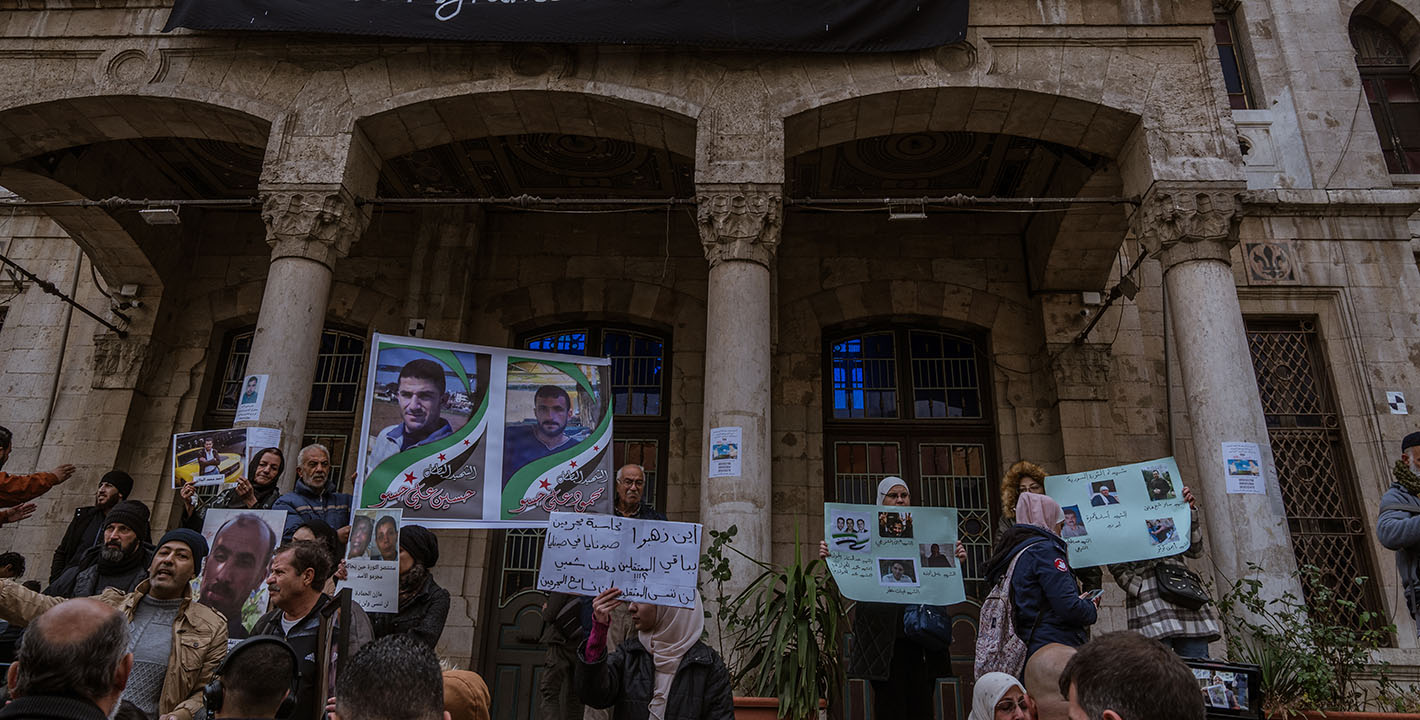
Reconciliation councils are emerging throughout the country to mediate in intracommunal disputes, many from the war years.
Natacha Danon
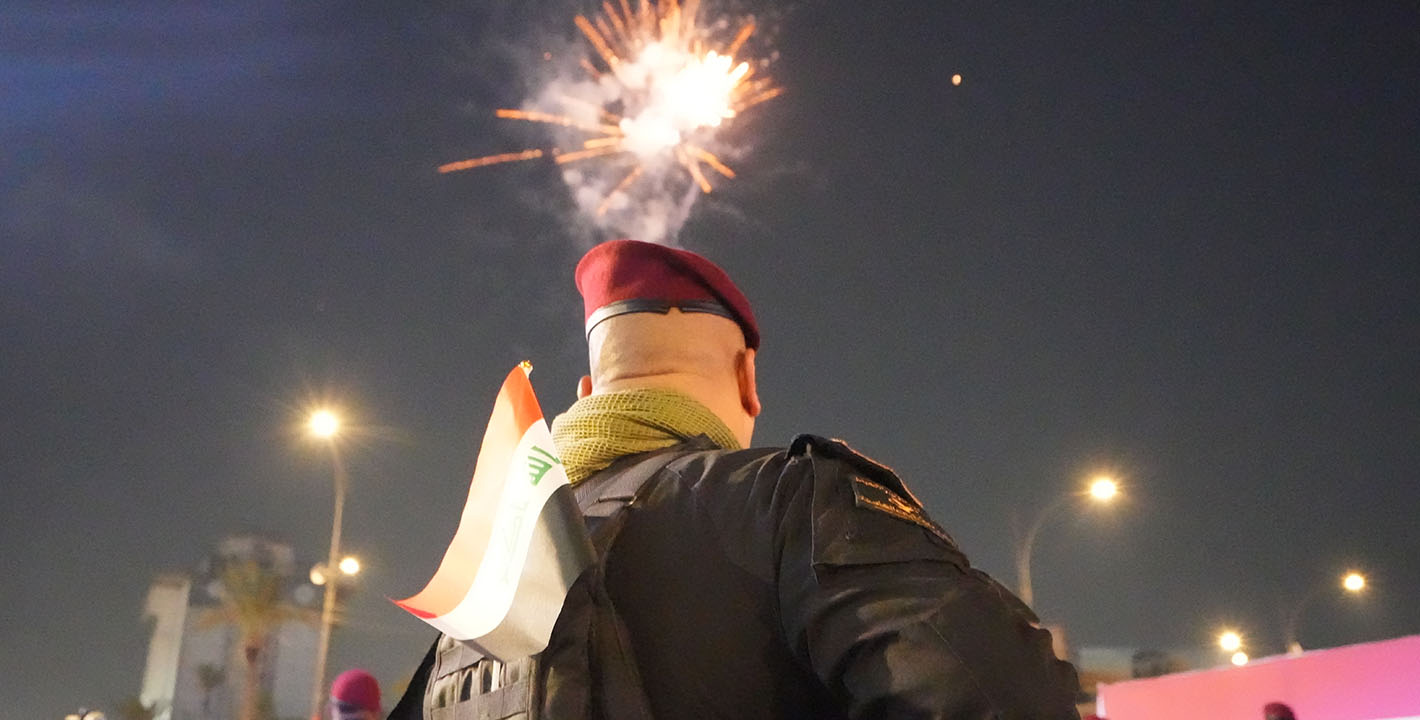
As the U.S.-led Coalition withdraws, the Kurds’ reliance on Baghdad, and on themselves, will only increase.
Wladimir van Wilgenburg
The Zaidi government’s objective to collect weapons is constrained by regional conflict, but it can take certain measures at home.
Ali Al-Mawlawi
Lying at the heart of Lebanon’s dysfunction is an inability to secure accountability and institutional legitimacy.
Maha Yahya
In an interview, Sohaib Jawhar analyzes the profound changes in the ties between the neighboring countries.
Michael Young