

Commentary
Michael Young
{
  "authors": [
    "Michael Young"
  ],
  "type": "commentary",
  "blog": "Diwan",
  "centerAffiliationAll": "dc",
  "centers": [
    "Carnegie Endowment for International Peace",
    "Malcolm H. Kerr Carnegie Middle East Center"
  ],
  "collections": [
    "Inquiring Minds",
    "Coronavirus"
  ],
  "englishNewsletterAll": "menaTransitions",
  "nonEnglishNewsletterAll": "",
  "primaryCenter": "Malcolm H. Kerr Carnegie Middle East Center",
  "programAffiliation": "MEP",
  "programs": [
    "Middle East"
  ],
  "projects": [],
  "regions": [
    "Middle East",
    "North Africa",
    "Jordan",
    "Iraq",
    "Lebanon",
    "Gulf",
    "Egypt",
    "Syria",
    "Levant"
  ],
  "topics": [
    "Political Reform"
  ]
}
Source: Getty
A regular survey of experts on matters relating to Middle Eastern and North African politics and security.
Marwan Muasher | Vice-president for studies at the Carnegie Endowment for International Peace, former Jordanian foreign minister (2002–2004)
If Covid-19 has proven anything, it is that our world is more interdependent than ever. This means that individual countries can no longer be effective in tackling challenges that are more often regional and global. The Arab League’s charter is designed to keep the organization structurally weak by imposing that all decisions need to be unanimous and it adheres to a narrow-minded definition of individual countries’ sovereignty. This has meant that the organization has seldom played a constructive role, whether on political issues such as preventing the 2003 war on Iraq, health issues such as Covid-19, or most other issues.
The Arab League is a remnant of 20th-century thinking. It is unable to address and deal with 21st-century challenges. Most importantly, as many such challenges have become regional or global, it means they need to be dealt with not by nominally regional structures. Therefore, the Arab League’s members need the political will to change the charter and structure of the organization in a fundamental way. Absent that, the Arab League will continue to be mostly focused on issuing communiqués rather than solving real problems.
Hazem Saghieh | Lebanese writer and columnist
The Covid-19 pandemic is just another example that demonstrates the uselessness of the “Arab League.” The organization has never managed to stop a war among Arab states nor a civil war in any Arab country. It has failed to establish any form of tangible economic cooperation among Arab states. It has not bolstered a single Arab endeavor internationally. It has not improved the image of the Arab world globally (though in the eyes of most Arabs, image might sometimes appear more important than reality).
Its structural problem is the sum of four deficiencies. First, Egypt is no longer the “leader” of the Arab world. Second, the degree of fragmentation within many Arab countries makes any pan-Arab effort an extravagant fantasy. Third, inter-Arab conflicts—in Yemen, Syria, Libya, and elsewhere—are much more prominent than the common interests among Arabs. Fourth, Iran has successfully intervened in supposedly Arab affairs and won over some solid and influential allies. Given all of this, it would be foolish to expect that any hope could come from this wretched institution.
Volker Perthes | Executive chairman and director of Stiftung Wissenschaft und Politik, the German Institute for International and Security Affairs, Berlin
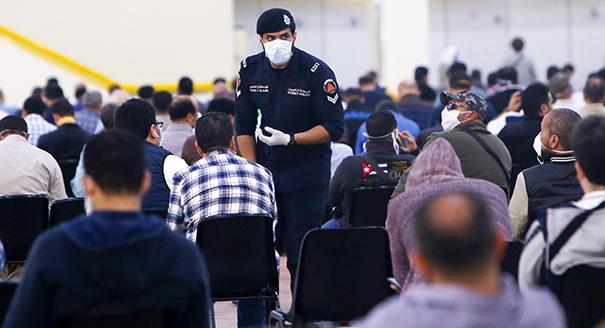
The Arab League’s main contribution so far to limiting the spread of Covid-19 has been to cancel the March 2020 Arab summit. Observers may be forgiven for suspecting other reasons to forego the summit on what is the Arab League’s 75th birthday. There simply isn’t too much to celebrate, both regarding the organization’s general purpose—furthering economic, political, and security cooperation—or its response to crisis situations such as the current pandemic.
Should the Arab League still be maintained? Definitely. It is better to have a regional organization that allows for a modicum of coordination than to have none. At some point, Arab leaders may relaunch the Arab League and establish a more effective institution, such as the African Union. But any reform needs more than an initiative by the general secretariat: Like any regional organization, the Arab League can only be as good as member states allow it to be.

Editor, Diwan, Senior Editor, Malcolm H. Kerr Carnegie Middle East Center
Michael Young is the editor of Diwan and a senior editor at the Malcolm H. Kerr Carnegie Middle East Center.
Recent Work
Michael Young
Michael Young
Carnegie does not take institutional positions on public policy issues; the views represented herein are those of the author(s) and do not necessarily reflect the views of Carnegie, its staff, or its trustees.

As the U.S. stumbles in its war with Iran, we are likely to see an acceleration of its disengagement from the region.
Michael Young

In Egypt’s dense cities, the disappearance of foliage has health implications and punishes daily commuters.

Angie Omar
The Zaidi government’s objective to collect weapons is constrained by regional conflict, but it can take certain measures at home.
Ali Al-Mawlawi

Huawei pushed hard to enter the Egyptian data centers market, until the Americans made a better offer.
Angie Omar

Middle Eastern states should welcome an accelerated U.S. disengagement from their region.
Michael Young