

Commentary
Policy discussion is ignoring that the Palestinian national project is hollowed out and apartheid is a present danger.
Nathan J. Brown
{
  "authors": [
    "Issam Kayssi",
    "Michael Young"
  ],
  "type": "commentary",
  "blog": "Diwan",
  "centerAffiliationAll": "dc",
  "centers": [
    "Carnegie Endowment for International Peace",
    "Malcolm H. Kerr Carnegie Middle East Center"
  ],
  "collections": [],
  "englishNewsletterAll": "menaTransitions",
  "nonEnglishNewsletterAll": "",
  "primaryCenter": "Malcolm H. Kerr Carnegie Middle East Center",
  "programAffiliation": "MEP",
  "programs": [
    "Middle East"
  ],
  "projects": [],
  "regions": [
    "Levant",
    "Lebanon",
    "Palestine",
    "Middle East"
  ],
  "topics": []
}
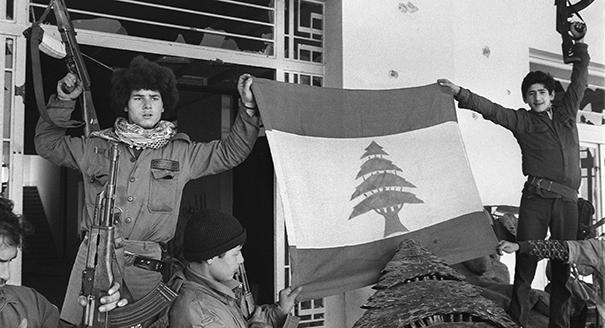
Source: Getty
In an interview, German filmmaker Volker Schlöndorff recalls the movie he shot in Lebanon at the height of its civil war.
In November 1980, filmmaker Volker Schlöndorff came to Beirut to film Circle of Deceit (in German Die Fälschung), based on a novel by the writer Nicolas Born. The film is about a journalist who revolts against the tendency in his profession to focus only on the violence of war in order to satisfy Western audiences, in a way that falsifies reality, hence the film’s title. At the time, Schlöndorff, one of Germany’s most prominent postwar directors and a major figure in the New German Cinema movement, had just won an Oscar for The Tin Drum, as well as the Palme d’Or at the Cannes film festival.
Instead of doing what many directors might have done and leverage this to make commercially successful films in Hollywood (that would come later), he traveled to Lebanon at the height of its civil war to make his next movie. He brought with him several well-known actors—Hanna Schygulla, Bruno Ganz, Jerzy Skolimowski, and Jean Carmet—and spent almost six months in the country. To mark the 40th anniversary of the film’s release, in early February Diwan interviewed Schlöndorff via Zoom at his home in Potsdam, so that he could take us back to that singular experience.
German Trailer of Circle of Deceit

Research Analyst, Malcolm H. Kerr Carnegie Middle East Center
Issam Kayssi is a research analyst at the Malcolm H. Kerr Carnegie Middle East Center.

Editor, Diwan, Senior Editor, Malcolm H. Kerr Carnegie Middle East Center
Michael Young is the editor of Diwan and a senior editor at the Malcolm H. Kerr Carnegie Middle East Center.
Carnegie does not take institutional positions on public policy issues; the views represented herein are those of the author(s) and do not necessarily reflect the views of Carnegie, its staff, or its trustees.
Policy discussion is ignoring that the Palestinian national project is hollowed out and apartheid is a present danger.

Nathan J. Brown
As negotiations with Iran and Lebanon continue, chaos is at the heart of the Netanyahu government’s calculations.
Michael Young
Trade statistics show why Amman has more reason than Damascus to welcome the improvement in bilateral commerce.

Armenak Tokmajyan
Adversaries are to be degraded so deeply, that reconstitution becomes difficult or impossible.
Nathan J. Brown

Israel is encroaching on the country’s territory, while the Lebanese look askance at one another.
Issam Kayssi