

Commentary
Reconciliation councils are emerging throughout the country to mediate in intracommunal disputes, many from the war years.
Natacha Danon
{
  "authors": [
    "Rayyan Al-Shawaf"
  ],
  "type": "commentary",
  "blog": "Diwan",
  "centerAffiliationAll": "",
  "centers": [
    "Carnegie Endowment for International Peace",
    "Malcolm H. Kerr Carnegie Middle East Center"
  ],
  "englishNewsletterAll": "",
  "nonEnglishNewsletterAll": "",
  "primaryCenter": "Malcolm H. Kerr Carnegie Middle East Center",
  "programAffiliation": "",
  "programs": [],
  "projects": [],
  "regions": [
    "Iraq",
    "Levant",
    "Middle East"
  ],
  "topics": []
}
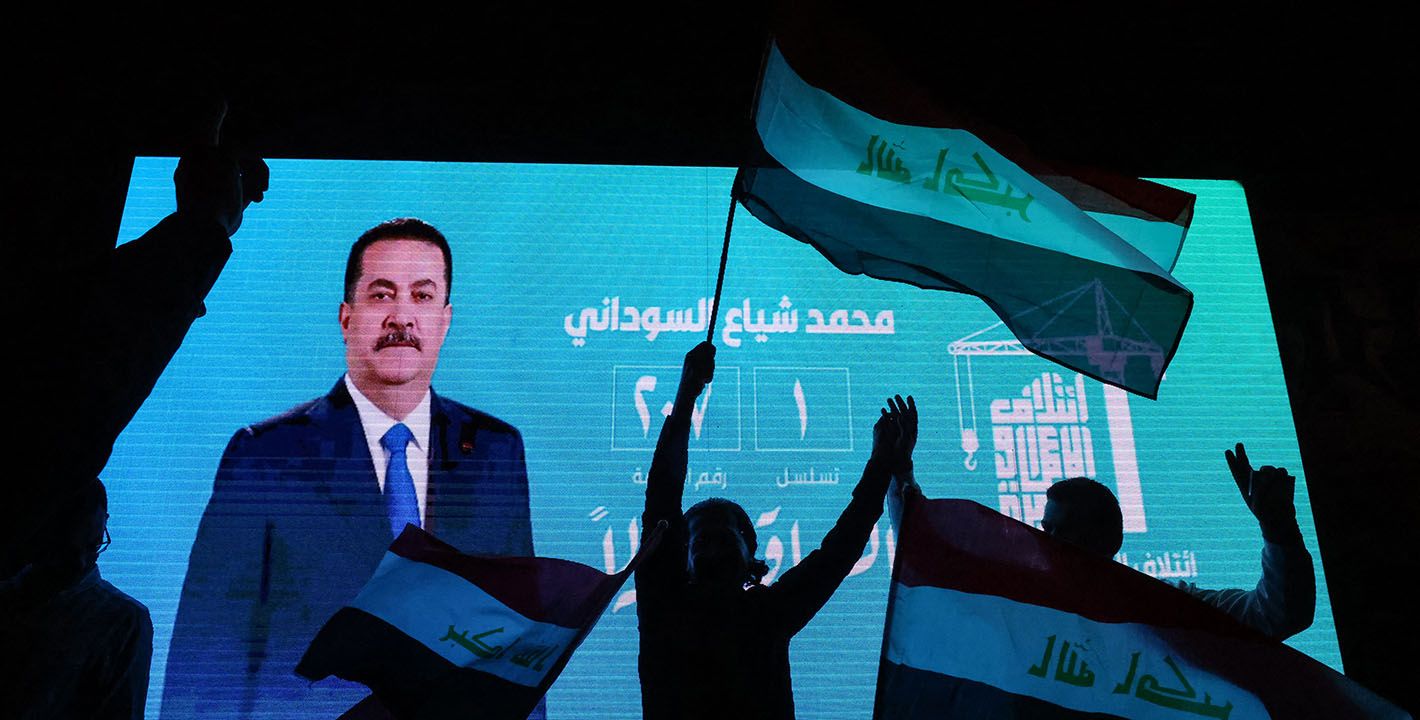
Source: Getty
In an interview, Shahla al-Kli discusses the country’s parliamentary elections and what they reveal.
Shahla al-Kli is Counterpart International’s Iraq Representative, a non-resident scholar at the Middle East Institute, and a former chief of party for the U.S. government-funded Iraq Civil Society Activity. She has also served as an advisor to the speaker of the Iraqi Parliament, senior advisor to the speaker of the Kurdistan Parliament, research analysis and knowledge mobilization director at Proximity International, and Middle East deputy regional director at Mercy Corps. In an interview with Diwan conducted in late December, Kli discussed the significance, and the political limitations, of the recently concluded Iraqi parliamentary elections.
Rayyan Al-Shawaf: What are your takeaways from the recent Iraqi elections?
Shahla al-Kli: The core takeaway is that the 2025 elections reflected continuity more than change. Electoral dynamics underscored that transactional politics, rather than transformational democracy, remains the order of the day. Nearly two decades after democratization, competition remains driven by patronage networks, sectarian mobilization, and elite bargaining, not political programs. The system operates as a marketplace for political goods, where parties trade short-term benefits for votes and citizens engage through survival calculations or strategic disengagement, rather than any belief in reform.
Second, identity politics and sociopolitical elites continue to dominate outcomes. This preserves the advantage of those very elites and effectively closes the system to new political actors. Established blocs that have perfected resource distribution outperform those offering governance reform.
Third, voter behavior and legitimacy signals are far more complex than turnout figures suggest. While participation was higher than in 2021, much of it was driven by short-term tactical calculations rather than confidence in systemic change. Indeed, these elections have already come to be known locally as the “billionaires’ elections,” reflecting how elite parties that control state resources deployed vast financial power to buy votes, offer temporary service delivery, and influence key bureaucratic and local gatekeepers. At the same time, boycotts by major constituencies, particularly the followers of Muqtada al-Sadr and segments of moderate liberal forces, further fragmented the field and weakened the perception of elections as a genuine mechanism for accountability.
Fourth, the elections exposed a persistent gap between form and substance. Electoral procedures were orderly and relatively calm, but this was the result of negotiations between elites as well as election-law engineering within the Coordination Framework (which brings together all major Shiite forces except for the Sadrist movement), and not stronger institutions or restored public trust in the political system. Ultimately, regional pressures, international influence, and internal disillusionment reinforce a central conclusion: without structural reforms that shift incentives away from rent distribution and toward performance and accountability, Iraqi elections will remain rituals of system maintenance, as opposed to vehicles for political transformation.
RS: Which politicians have a good chance of becoming Iraq’s next prime minister, and why?
SK: The starting point is that the decision is no longer primarily electoral. Domestically, and by the Coordination Framework’s own public statements, the prime minister is conceived of less as a political leader and more as an executive tasked with implementing a pre-agreed Shiite elite consensus. The Coordination Framework has systematically hollowed out the political weight of the premiership. This was made explicit during the current government-formation process, when the Coordination Framework formed a committee to “interview” prime-ministerial candidates. This step alone signals that the premiership is not awarded to the election winner but selected by a board of Shiite elites based on predefined conditions.
These conditions, which have been publicly articulated, include the next prime minister undertaking to consult with the Coordination Framework on all major decisions and refraining from running in the subsequent elections. In effect, this prevents the office from wielding authority or consolidating power. Under such a formula, what matters more than who wishes to become prime minister is whether the person in question is willing to operate within tight constraints. Current Prime Minister Mohammed Shia al-Sudani, for example, presents himself as a continuity candidate who can stabilize relations with the United States without undertaking substantive reform of the Popular Mobilization Forces, the umbrella organization grouping together Iran-backed militias.
For the Coordination Framework, there is clear hesitation about empowering an incumbent too much, a concern shaped by lingering fears of a repeat of the Nouri al-Maliki phenomenon. Maliki consolidated power over two terms as prime minister and marginalized Shiite rivals. This explains why the process has become cautious, committee-driven, and heavily managed, and also why elections in Iraq have become largely procedural rather than transformative. Regardless of who wins or which list comes first, the decisive choice when it comes to the prime minister is not made by voters but by the Coordination Framework. Electoral results shape the contours of negotiations, but they do not determine executive authority. The popular vote has been effectively decoupled from real decisionmaking, turning elections into mechanisms for recalibrating elite bargains, rather than vehicles for political change or democratic accountability.
RS: Given the extent to which Iran and the United States (as well as other actors, such as Türkiye) impinge on Iraqi independence and sovereignty, does it matter much who becomes prime minister?
SK: In strategic terms, it matters far less than is often assumed. The Coordination Framework itself understands that the prime minister has limited authority over Iraq’s core strategic files, particularly militias, security doctrine, and regional alignment. As a result, Sunni and Kurdish actors increasingly recognize that real negotiations over governance, budgets, oil, and security guarantees must be conducted with the Coordination Framework as a collective power center, and not with the prime minister. Externally, both Iran and the United States operate with this same understanding. Washington, particularly under renewed pressure from the Trump administration, has been increasingly explicit about the need to consolidate state authority and dismantle militia autonomy.
Iran, meanwhile, is acting cautiously. Tehran recognizes that it is operating under greater constraints, but it also knows that its influence does not hinge on the identity of the prime minister, given its deep political and military penetration of the Coordination Framework itself, as well as major and critical Iraqi bureaucracies. For Tehran, silence is strategic. As long as its proxies remain embedded within Iraq’s governing architecture, Iran does not need to publicly intervene in the prime-ministerial question. Its priority is to preserve militia influence in a way that allows those factions to be managed. Ultimately, the more consequential question is not who becomes prime minister, but how post-election negotiations unfold with Kurdish and Sunni actors, what commitments are made, how they are documented, and whether they are enforceable. These bargains will shape Iraq’s governance trajectory far more than the identity of a prime minister whose authority has already been structurally constrained.
In the case of the Kurds and Sunnis, leverage is exercised through negotiations, rather than consolidating institutional power. For the Kurds, particularly the Kurdistan Democratic Party (KDP), the post-election dynamic is one of conditional leverage rather than institutional power. The KDP emerged as the party with the highest number of votes nationwide and performed well in strategically important governorates outside the Kurdistan Region, such as Nineveh. It remains the only cohesive party to have achieved this result independently, securing over 1 million votes nationwide as a single party rather than through a multiparty electoral list, a distinction giving it real political weight. The Patriotic Union of Kurdistan, meanwhile, largely retained its seat share and further consolidated its influence in Kirkuk.
Traditionally, Kurdish leverage has been used to negotiate the implementation of constitutional provisions, particularly those related to federalism, revenue sharing, disputed territories, and senior state positions such as the presidency. This election is no different. The KDP views its mandate as a bargaining asset, and its objective is to extract tangible and enforceable guarantees on budget allocations, oil and gas arrangements, territorial administration, and the institutional devolution of power. This leverage is pragmatic and transactional. Crucially, the KDP’s leverage stems not only from parliamentary representation but also from its external strategic utility, especially vis-à-vis Türkiye and the United States. The KDP sits at the intersection of several files that matter deeply to Baghdad and the Coordination Framework: regional energy routes, border security, Türkiye’s military posture, Syria, and the U.S.-Türkiye dynamic in northeast Syria. Ankara’s trade corridors, security operations, and energy interests in the Kurdistan Region are tied more closely to KDP governance than to Baghdad.
Similarly, for Washington, the KDP remains one of the few strong and functional interlocutors in an otherwise fragmented Iraqi political environment, particularly on counterterrorism, regional deescalation, and managing U.S.-Türkiye relations. This gives the KDP indirect but real leverage. The Coordination Framework cannot ignore Kurdish demands without risking complications on externally sensitive files, including energy flows, border security, Türkiye’s operations, and U.S. engagement.
On the Sunni side, leverage is weaker and more fragmented, but not absent. Sunni influence depends largely on post-election coordination. The formation of the National Political Council, which brings together rival Sunni actors, reflects an effort to overcome longstanding fragmentation. The first real test of this coordination is the selection of a candidate for the speakership. Mohammed al-Halbousi, despite leading the largest Sunni bloc and initially putting himself forward, has signaled a willingness to step aside. Regional actors, particularly Gulf states and Türkiye, appear to be supporting Sunni unity to prevent further dilution of influence. Ultimately, Kurdish and Sunni influence after the elections is not about controlling outcomes, but about shaping the boundaries within which the Coordination Framework governs. This leverage is not constitutional power exercised in isolation, but rather negotiated power within a fragmented political marketplace.
RS: What do you make of the Official Gazette of Iraq referring to Hezbollah of Lebanon and Ansar Allah (the Houthis) of Yemen as “terrorist organizations”? Was it an innocent editorial mistake or an attempt to embarrass Prime Minister Mohammed Shia al-Sudani?
SK: The episode occurred at a highly sensitive moment in the government-formation process and immediately undermined Sudani’s prospects for a second term by placing him at the center of a manufactured controversy. It also exposed the depth of Iranian political, military, and bureaucratic influence, particularly in how quickly pressure translated into a corrective response by the Central Bank of Iraq, which stated that that the inclusion of the names in the Gazette was inadvertent, describing it as a procedural mistake that would be formally corrected. In practical terms, this move was largely symbolic. Iraq’s financial dealings with Hezbollah and the Houthis, where they exist, are already structured outside the international banking and financial system. As such, the Gazette listing and the Central Bank clarification had minimal real-world impact on financial flows.
What matters more is the pattern. Almost immediately after the Gazette scandal, a separate incident occurred in which an official letter, purportedly sent from the Iraqi Supreme Judicial Council to the Public Prosecution Office, instructed the latter to pursue criminal charges against those calling for the overthrow of the government.* That letter triggered public outrage over freedom of expression, so the council issued a correction the following day in which it attributed the statement to a “personal error” on the part of the acting chief of staff. Taken together, these two episodes illustrate how state bureaucracies in Iraq are routinely instrumentalized by political actors. Administrative processes, official publications, and regulatory bodies are used to score political points, weaken rivals, and shape narratives, often at the expense of institutional credibility and good governance. Rather than strengthening the state, this practice further entrenches fragility and deepens public distrust in Iraq’s governing institutions.
* This sentence was modified to correct an error.
Rayyan Al-Shawaf
Carnegie does not take institutional positions on public policy issues; the views represented herein are those of the author(s) and do not necessarily reflect the views of Carnegie, its staff, or its trustees.
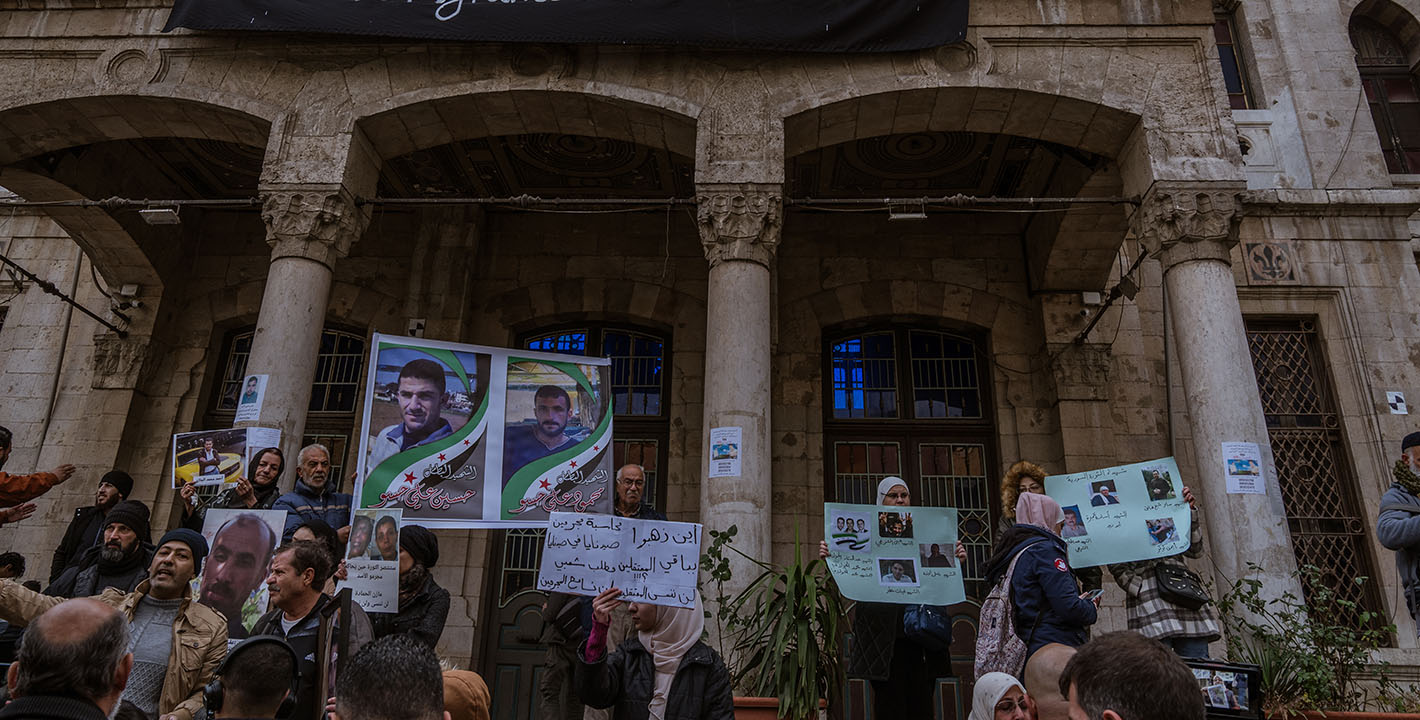
Reconciliation councils are emerging throughout the country to mediate in intracommunal disputes, many from the war years.
Natacha Danon
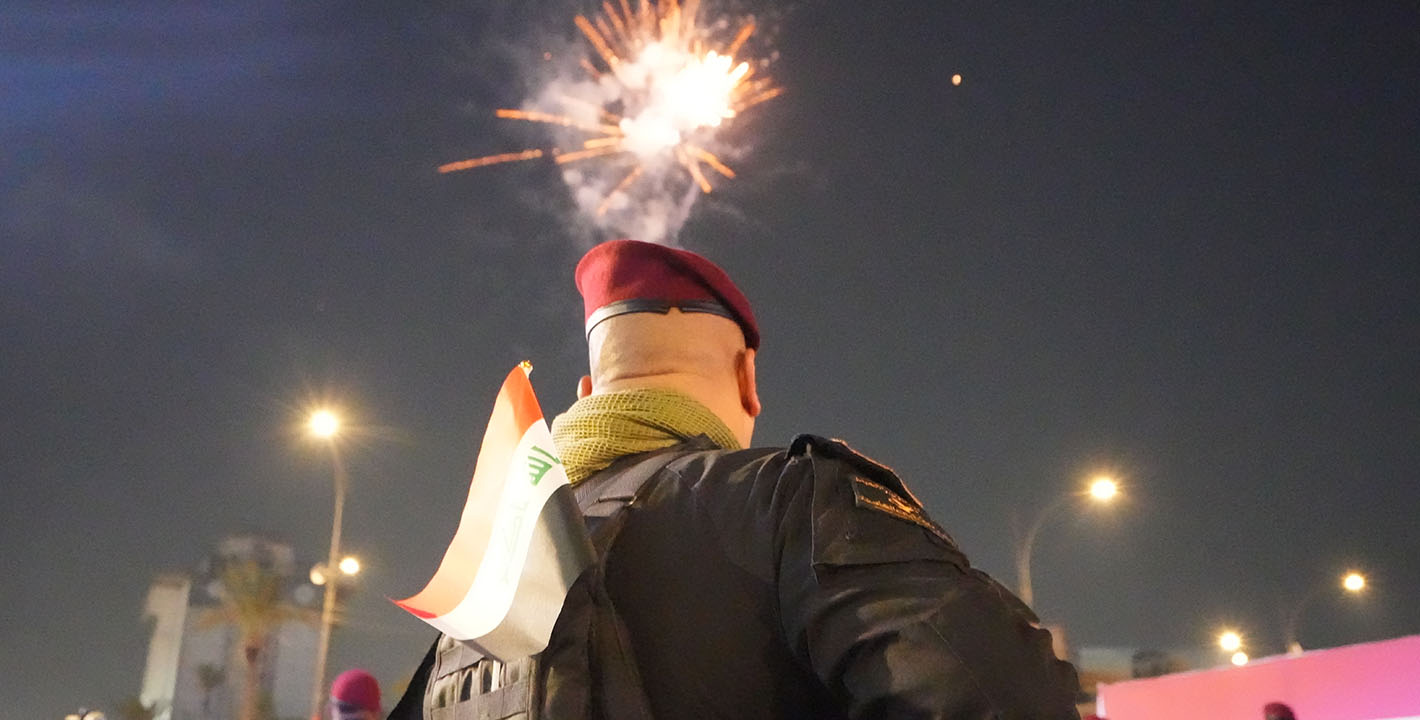
As the U.S.-led Coalition withdraws, the Kurds’ reliance on Baghdad, and on themselves, will only increase.
Wladimir van Wilgenburg

As the U.S. stumbles in its war with Iran, we are likely to see an acceleration of its disengagement from the region.

Michael Young
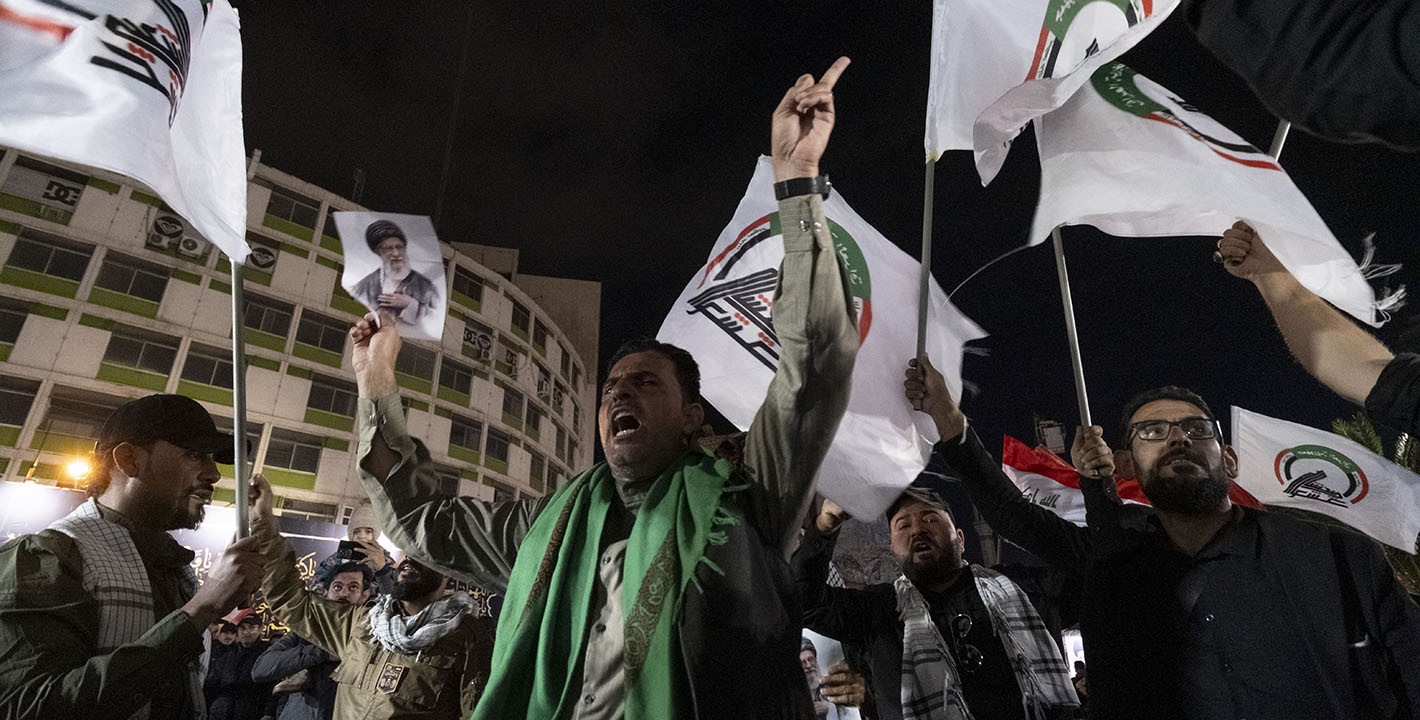
The Zaidi government’s objective to collect weapons is constrained by regional conflict, but it can take certain measures at home.
Ali Al-Mawlawi

The accord represents a pivotal moment in the region to avert a security vacuum in the Gulf.


Azeema Cheema, Mohanad Hage Ali