• Research
  • Diwan
  • About
  • Experts
Carnegie Middle East logoCarnegie lettermark logo
LebanonIran
{
  "authors": [],
  "type": "pressRelease",
  "centerAffiliationAll": "dc",
  "centers": [
    "Carnegie Endowment for International Peace"
  ],
  "collections": [],
  "englishNewsletterAll": "asia",
  "nonEnglishNewsletterAll": "",
  "primaryCenter": "Carnegie Endowment for International Peace",
  "programAffiliation": "AP",
  "programs": [
    "Asia"
  ],
  "projects": [],
  "regions": [
    "East Asia",
    "China"
  ],
  "topics": [
    "Political Reform",
    "Democracy",
    "Military"
  ]
}
REQUIRED IMAGE

REQUIRED IMAGE

Press Release

Press Release: Democracy in Hong Kong

As Hong Kong nears its September 12th legislative elections, the city’s democrats and the United States need to take cautious steps to ensure democratization takes hold in Hong Kong.

Link Copied
Published on Aug 4, 2004

Source: Carnegie

4 August 2004
FOR IMMEDIATE RELEASE

As Hong Kong nears its September 12th legislative elections, the city’s democrats and the United States need to take cautious steps to ensure democratization takes hold in Hong Kong, warns Veron Hung, associate in the China Program of the Carnegie Endowment for International Peace. In a new policy brief, Getting to Democracy in Hong Kong, Hung offers specific recommendations: Hong Kong democrats must get out the vote in September and tone down their demands; the United States must reject the punitive economic measures against Hong Kong currently being considered by the U.S. Congress; and both parties must better understand Beijing’s fears and respond to its efforts to reach out to Hong Kong democrats. Access Carnegie’s new policy brief, at www.CarnegieEndowment.org/china. A Mandarin translation will be available on September 1st.

Stakes are high in the struggle for Hong Kong’s democratization. Its course will be an indicator of how Greater China may politically adapt in the future, especially with regard to Taiwan. In addition, approximately 1,100 U.S. firms with more than $38.5 billion invested operate in Hong Kong. These interests must be protected by fair, accountable political and legal systems, and certainly would be threatened by political crisis.

To democratize peacefully, Hung recommends that Hong Kong democrats drop their demand for universal suffrage in 2007-08 but require commensurate concessions from Beijing—specifically, a blueprint and timetable for democratization—and refocus on the 2012 elections. Yet, in order to gain this leverage with Beijing, democrats must win at the polls in September; many estimate that voter turnout needs to be at a challenging 70-80 percent to achieve this goal. Since Beijing will likely attempt to divide and conquer the candidates, it is imperative that democrats mobilize voters and sharpen their political skills to stay united.

The United States also has a critical role to play. Contrary to views of critics in Congress, the United States should not suspend Hong Kong’s current special treatment under the U.S.-Hong Kong Policy Act. Instead, the United States should practice low-profile diplomacy, quietly reminding Beijing that international criticism of the ban on universal suffrage could overshadow the 2008 Olympics. U.S. NGOs can also help advise Hong Kong’s less-experienced democrats and monitor the coming elections.

Veron Hung is an associate in the China Program of the Carnegie Endowment for International Peace. She is admitted as a barrister in England, Wales, and Hong Kong, and is a member of the New York and D.C. Bars. A native of Hong Kong, Hung has worked in private practice and academia, and as a consultant for the United Nations Office of the High Commissioner for Human Rights.
 

Political ReformDemocracyMilitaryEast AsiaChina

Carnegie does not take institutional positions on public policy issues; the views represented herein are those of the author(s) and do not necessarily reflect the views of Carnegie, its staff, or its trustees.

More Work from Malcolm H. Kerr Carnegie Middle East Center

  • Commentary
    How China Aligned Itself with Saudi Arabia’s Vision 2030

    China has aligned its cooperation model with Saudi Arabia’s own priorities, most notably since the kingdom unveiled its Vision 2030. Although China announced the Belt and Road Initiative in 2013, the big push in relations happened only after the ascendance of King Salman to the throne in 2015 and Riyadh’s push for Beijing to meet Saudi needs.

      Hesham Alghannam

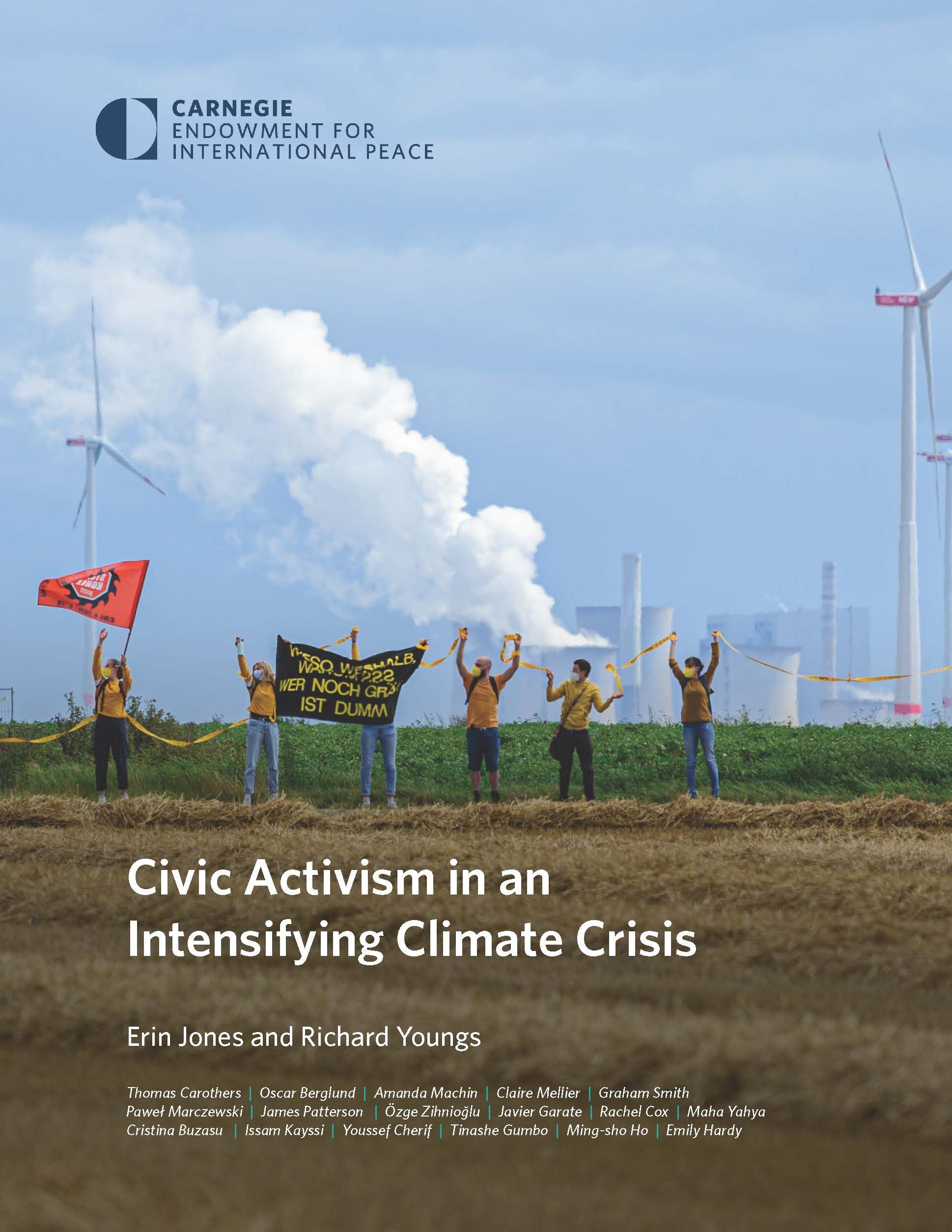
  • Civic Activisim in an Intensifying Climate Crisis
    Research
    Civic Activism in an Intensifying Climate Crisis

    To address the deepening climate crisis, climate activism is employing a wider variety of tactics and aiming at a broader set of goals. In response, the movement faces stronger repression and civic backlash against climate action.

      Erin Jones, Richard Youngs

  • Commentary
    Sada
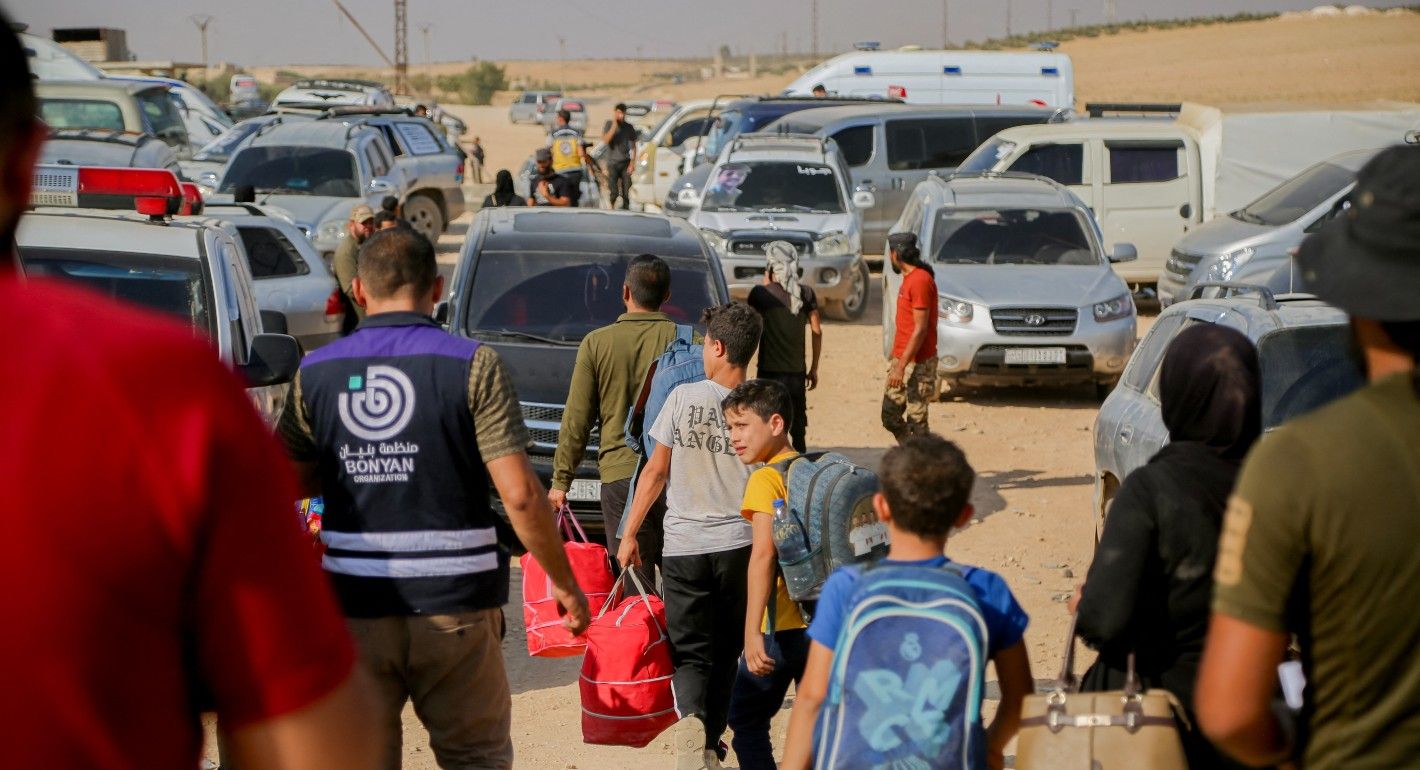
    Navigating Danger: Syrian Refugees in Lebanon Risk Returning

    A humanitarian crisis in Lebanon deepens, and Syrian refugees face a perilous choice: remain in a war-torn environment or return to Syria where they risk encountering significant dangers and discrimination. There are significant challenges and risks to their search for safety in Syria.

      Haid Haid

  • Paper
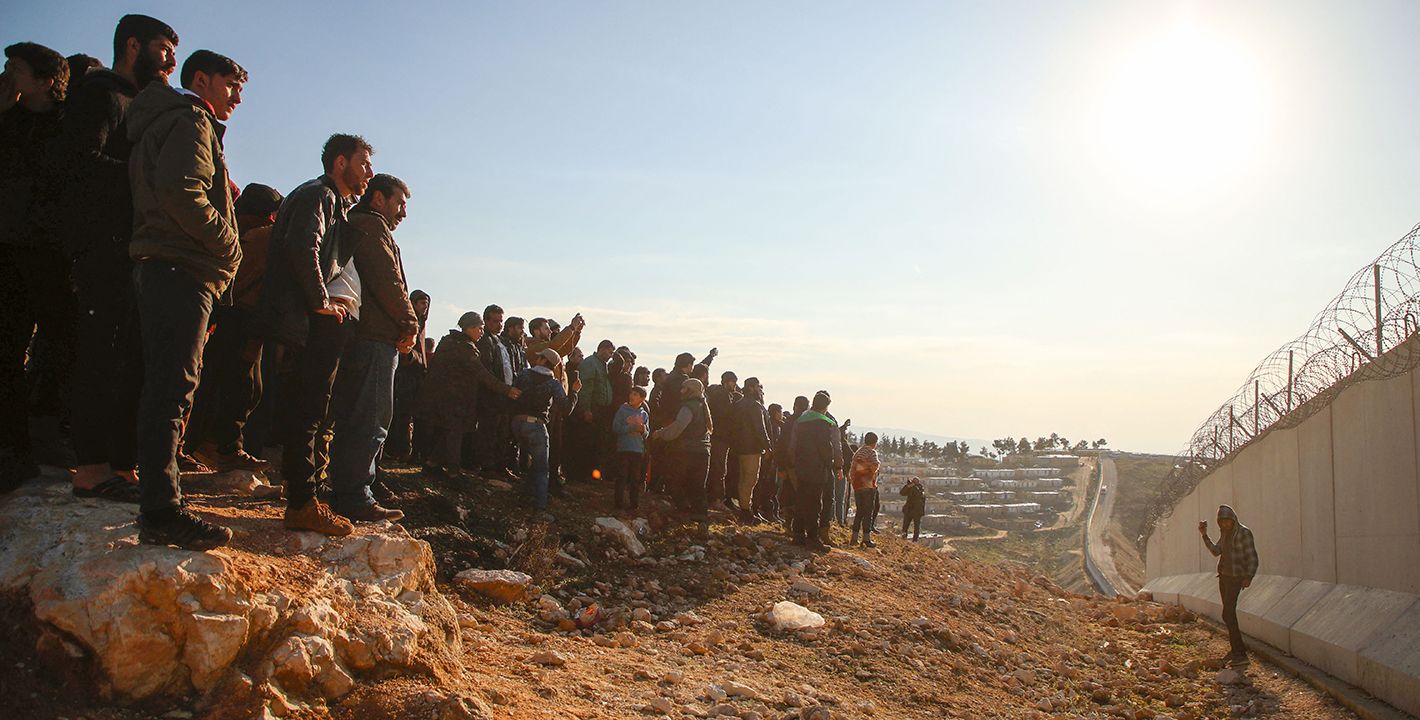
    Borders Without a Nation: Syria, Outside Powers, and Open-Ended Instability

    In Syria’s border regions, changes in demographics, economics, and security mean that an inter-Syrian peace process will require consensus among main regional powers that Syria must remain united, that no one side can be victorious, and that perennial instability threatens the region.

      Kheder Khaddour, Armenak Tokmajyan

  • Article
    How Gulf States Are Reinterpreting National Security Beyond Their Land Borders

    Gulf states such as Saudi Arabia and the UAE have determined that their national security goes beyond their physical borders. It is just as important to shield their airspace, territorial waters, and even maritime trade routes.

      Abdullah Baabood

Get more news and analysis from
Malcolm H. Kerr Carnegie Middle East Center
Carnegie Middle East logo, white
  • Research
  • Diwan
  • About
  • Experts
  • Projects
  • Events
  • Contact
  • Careers
  • Privacy
  • For Media
Get more news and analysis from
Malcolm H. Kerr Carnegie Middle East Center
© 2026 Carnegie Endowment for International Peace. All rights reserved.