

Research
- +6
Yasmine Farouk, Nathan J. Brown, Maysaa Shuja Al-Deen, …
{
  "authors": [
    "Michele Dunne"
  ],
  "type": "legacyinthemedia",
  "centerAffiliationAll": "dc",
  "centers": [
    "Carnegie Endowment for International Peace"
  ],
  "collections": [],
  "englishNewsletterAll": "democracy",
  "nonEnglishNewsletterAll": "",
  "primaryCenter": "Carnegie Endowment for International Peace",
  "programAffiliation": "DCG",
  "programs": [
    "Democracy, Conflict, and Governance",
    "Middle East"
  ],
  "projects": [],
  "regions": [
    "North America",
    "United States",
    "Middle East",
    "North Africa"
  ],
  "topics": [
    "Political Reform",
    "Democracy",
    "Foreign Policy"
  ]
}
Source: Getty
Many American commentators tend to identify Middle East democracy promotion as unwise, arguing that the Bush administration should have patiently promoted the growth of institutions, civil society, and the rule of law, instead of insisting on elections in Arab countries. This new canon seems reasonable but has three crucial flaws.
Source: Daily Star

But there are three flaws in the new anti-elections thinking about democracy in Arab countries. First, it ignores what is happening in the region. Second, it is out of touch with how democracy typically emerges. And third, it leads to a harmful instrumentalist approach to democracy promotion - one that has already done damage in American policy toward the Palestinians.
Instead, we need to recognize four things: First, Arab elections are here to stay. Iraq, Lebanon, and the Palestinian Authority held elections not because the US insisted that they take place, but because important political forces in those countries demanded them. More and more Arab countries are holding regular elections of various kinds and those elections, while imperfect, are improving gradually. Morocco, Egypt, Palestine, Iraq, Kuwait, Bahrain, and Yemen all offer examples. So the real choice for the US today is whether to begin discouraging Arab states from holding elections, or perhaps withholding assistance or advice designed to promote freeness and fairness. Clearly such a cynical course is inadvisable.
Second, democratic institutions will not grow without political competition. Democracy is more than elections. But the US cannot promote democratization purely through low-risk efforts to develop civil society and the rule of law. Thomas Carothers and other scholars have shown that the infrastructure of democracy does not develop in states where rulers face no political competition and therefore have no incentive to create institutions that limit their power. Visionary leaders who initiate democratization of their own accord are rare exceptions. Generally, transitions to democracy occur only when competition from an opposition and pressure for change become so strong that rulers must compromise.
Third, Arab societies benefit when Islamists participate in politics. Islamists are the most organized opposition force in most Arab countries, and often the first to show electoral gains. But they are not the only beneficiaries. In Morocco, Yemen, Egypt, Bahrain, and Jordan, experience shows that when Islamists are allowed to compete in elections within a clearly defined set of laws, they begin to adopt more pragmatic positions on key issues and to compromise with other political forces. And the competition from Islamists motivates secular parties to try harder to mobilize support and define policy agendas that make sense to voters. This happened, for example, with the secular Independence Party in Morocco, which won far more seats than its Islamist competitor in parliamentary elections there in early September.
And fourth, elections reflect political realities; they do not create them. The January 2006 victory in Palestinian legislative elections of the Islamic Resistance Movement, Hamas, revealed a truth that the US would rather not have seen. Over the nearly 20 years since Hamas was established, it has been gradually taking over leadership of the Palestinian cause from the increasingly discredited Fatah movement - an unfortunate situation for which Washington bears a share of the blame. Between 1994 and 2005, the US could have demanded reasonably clean and efficient governance from Fatah while it was in power (funded largely by the European Union and the US). Instead, it contorted democracy promotion efforts in a vain attempt to control political outcomes and produce a leadership to its liking. The harsh and violent power struggle between Palestinian groups, like the Hamas takeover of Gaza, was inevitable with or without elections.
Democratization should be a long-term, strategic goal in the Middle East. It is a goal that the US can pursue, prudently but seriously, while still enjoying cooperation with non-democratic Arab governments. But let us not fool ourselves that any meaningful promotion of democracy is risk free; the growth of political competition through free and fair elections has to be a part of the picture.
Michele Dunne is a senior associate at the Carnegie Endowment for International Peace. She wrote this commentary for THE DAILY STAR.

Former Nonresident Scholar, Middle East Program
Michele Dunne was a nonresident scholar in Carnegie’s Middle East Program, where her research focuses on political and economic change in Arab countries, particularly Egypt, as well as U.S. policy in the Middle East.
Recent Work


Yasmine Farouk, Nathan J. Brown, Maysaa Shuja Al-Deen, …
Robert Springborg, Emile Hokayem, Becca Wasser, …
Carnegie does not take institutional positions on public policy issues; the views represented herein are those of the author(s) and do not necessarily reflect the views of Carnegie, its staff, or its trustees.
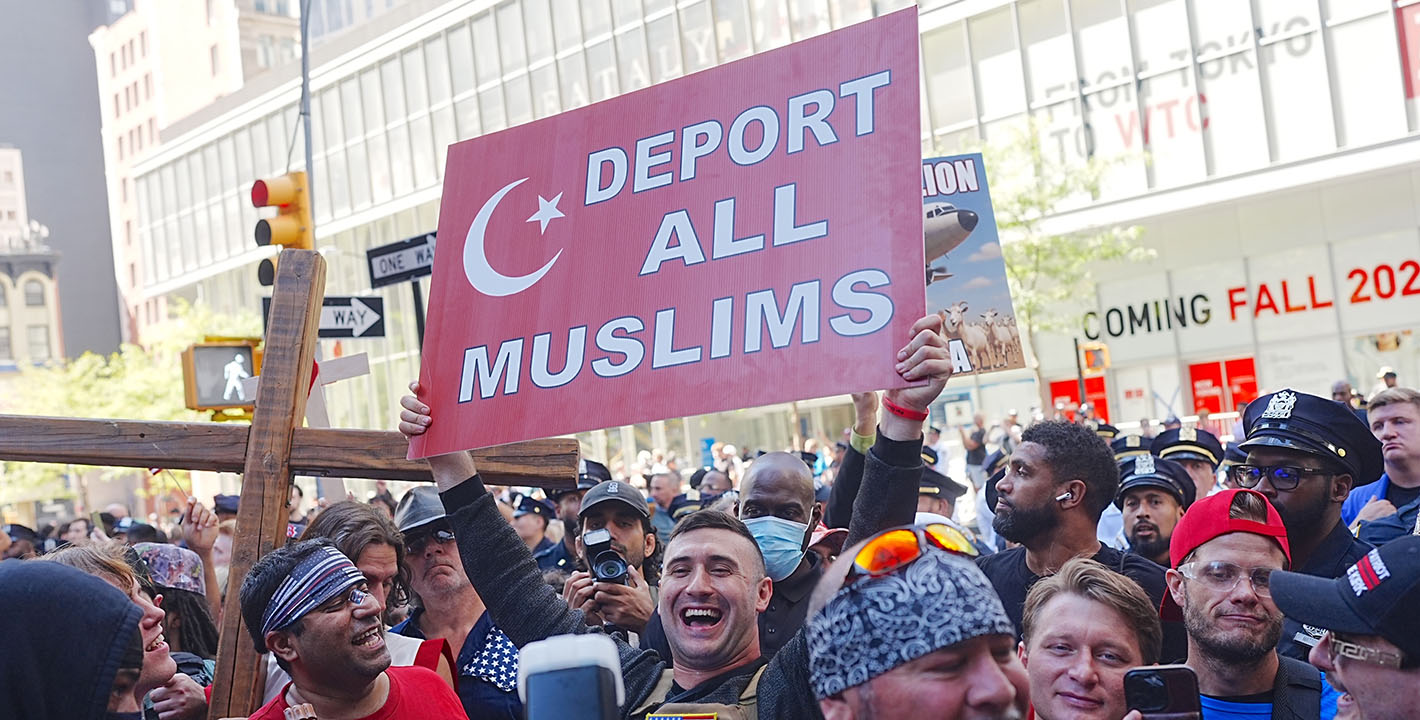
In an interview, Rozina Ali discusses her new book on the rise and manifestations of Islamophobia in the United States.

Michael Young

In an interview, Ian Lustick and Eli Clifton discuss their new book on why a prominent ally has so much influence in America.
Michael Young

As the U.S. stumbles in its war with Iran, we are likely to see an acceleration of its disengagement from the region.
Michael Young

Middle Eastern states should welcome an accelerated U.S. disengagement from their region.
Michael Young

In an interview, former ambassador Charles Freeman assesses the Trump administration’s war against Iran.
Michael Young