• Research
  • Diwan
  • About
  • Experts
Carnegie Middle East logoCarnegie lettermark logo
PalestineSyria
{
  "authors": [
    "Douglas H. Paal"
  ],
  "type": "legacyinthemedia",
  "centerAffiliationAll": "dc",
  "centers": [
    "Carnegie Endowment for International Peace"
  ],
  "collections": [
    "Korean Peninsula"
  ],
  "englishNewsletterAll": "asia",
  "nonEnglishNewsletterAll": "",
  "primaryCenter": "Carnegie Endowment for International Peace",
  "programAffiliation": "AP",
  "programs": [
    "Asia",
    "Nuclear Policy"
  ],
  "projects": [],
  "regions": [
    "East Asia",
    "North Korea"
  ],
  "topics": [
    "Security",
    "Military",
    "Foreign Policy",
    "Nuclear Policy"
  ]
}
Source: Getty

In The Media

North Korea Poses No Real Threat to the World

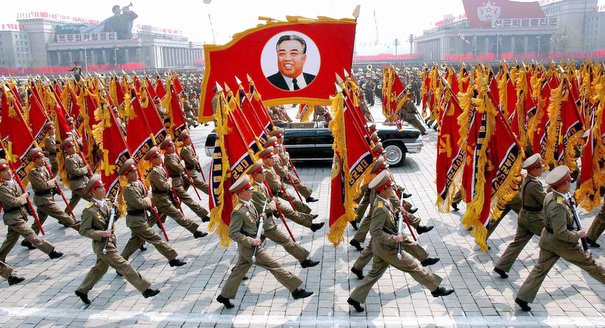
Successive American administrations have failed to understand that the North Korea is not prepared to give up its nuclear weapons. The only hope for a shift in North Korea's behavior seems to be an eventual successor to Kim Jong Il.

Link Copied
By Douglas H. Paal
Published on May 26, 2009

Source: RIA Novosti

Following North Korea’s underground test of a nuclear device on Monday, RIA Novosti spoke with Douglas H. Paal on the implications of the test.

North Korea Poses No Real Threat to the World: What has allowed North Korea to act in the way it does?
A: The accumulated mistakes of successive administrations to understand that the North Koreans really want to have a nuclear weapon and that they are not prepared to trade it away. There are honest disputes among many people about whether or not North Korea was at one time or another time willing to trade its nuclear weapons. But I think that now, since 1990 through 1994, despite agreements that Clinton had as well as the various agreements under president Bush, it is now very clear that North Korea wants a status very similar to India, where they obtain recognition of their right to retain nuclear weapons, but otherwise normalize relations with their neighbors and the United States.

Q: So what is the solution to the problem: the six-party talks, or something else?
A: The six-party talks are probably the only mechanism that, if there was a desire by Pyongyang to reach a solution, could provide the means to solve it. However, the situation has deteriorated to the point now where the six-party talks have been rejected by the North and I think China would have a very hard time getting the North Koreans back to the six-party talks. And to answer your fundamental question, I think we need to see some kind of change in North Korea. They currently have a powerful domestic motivation for what they are doing and we need to see domestic motivations adjusted in order to get them to take seriously the concerns of their neighbors and the United States.
 
Q: Would it be right to say that as long as Kim is in power nothing will change?
A: That appears to be the case. Because it is a one-man leadership he can change things anytime he wants to. Now, they appeared  to be focused on the succession arrangements, they are rapidly promoting the young son, they are creating arrangements around that son to have a kind of regency, in case Kim dies. To back him up they need the support of the military…and to demonstrate their importance to the country’s survival. The nuclear missile capabilities appear to be at the heart of that. 
 
Q: Do you think North Korea poses a real threat or is it just a political game that they are playing?
A: I am a little different from some observers, because I think the threat is very small. North Korea lacks the industrial capacity to build large numbers of long-ranged missiles. They will not be able to build so many weapons as to become a strategic factor in the region. But I have to acknowledge that they do pose a threat to South Korea both through short-range missiles, and the possibility of using the nuclear weapons in the South, even though there are just a few, or artillery from the North to the South. That would be the end of the North regime if they were to attack the South, but they still have that capacity. Moreover, they may force the Japanese to reconsider their very modest defense program. The Japanese have the capacity to move to a nuclear weapon, I do not think they will, but they certainly can. Certainly, politically Japan will debate whether or not move to a nuclear weapon in the short term because of this development in North Korea. And they do feel threatened by the North Korean short-ranged missiles and nuclear weapon. But as I said, North Korea is an industrial midget and not really in a position to pose a large-scale threat to the neighborhood.
Douglas H. Paal
Distinguished Fellow, Asia Program
Douglas H. Paal
SecurityMilitaryForeign PolicyNuclear PolicyEast AsiaNorth Korea

Carnegie does not take institutional positions on public policy issues; the views represented herein are those of the author(s) and do not necessarily reflect the views of Carnegie, its staff, or its trustees.

More Work from Malcolm H. Kerr Carnegie Middle East Center

  • Commentary
    Diwan
    Iran and the New Geopolitical Moment

    A coalition of states is seeking to avert a U.S. attack, and Israel is in the forefront of their mind.

      Michael Young

  • Commentary
    Carnegie Politika
    Baku Proceeds With Caution as Ethnic Azeris Join Protests in Neighboring Iran

    Baku may allow radical nationalists to publicly discuss “reunification” with Azeri Iranians, but the president and key officials prefer not to comment publicly on the protests in Iran.

      Bashir Kitachaev

  • Commentary
    Diwan
    Iran’s Woes Aren’t Only Domestic

    The country’s leadership is increasingly uneasy about multiple challenges from the Levant to the South Caucasus.

      Armenak Tokmajyan

  • A municipal employee raises the US flag among those of other nations in Sharm el-Sheikh, as the Egyptian Red Sea resort town gets ready to receive international leaders, following a Gaza ceasefire agreement, on October 11, 2025.
    Article
    The Tragedy of Middle Eastern Politics

    The countries of the region have engaged in sustained competition that has tested their capacities and limitations, while resisting domination by rivals. Can a more stable order emerge from this maelstrom, and what would it require?

      • Mohamed Ali Adraoui

      Hamza Meddeb, Mohamed Ali Adraoui

  • Paper
    The United States and the Emerging Security Order in Eastern Syria

    As Washington reduces its presence in the country, the success of its withdrawal and continued containment of the Islamic State will hinge on adopting an approach of flexible oversight built around three priorities, as well as balancing Turkish and Israeli red lines.

      Kheder Khaddour, Issam Kayssi

Get more news and analysis from
Malcolm H. Kerr Carnegie Middle East Center
Carnegie Middle East logo, white
  • Research
  • Diwan
  • About
  • Experts
  • Projects
  • Events
  • Contact
  • Careers
  • Privacy
  • For Media
Get more news and analysis from
Malcolm H. Kerr Carnegie Middle East Center
© 2026 Carnegie Endowment for International Peace. All rights reserved.