

Commentary
Huawei pushed hard to enter the Egyptian data centers market, until the Americans made a better offer.
Angie Omar
{
  "authors": [
    "Godfried van Benthem van den Bergh"
  ],
  "type": "other",
  "centerAffiliationAll": "dc",
  "centers": [
    "Carnegie Endowment for International Peace"
  ],
  "collections": [
    "U.S. Nuclear Policy"
  ],
  "englishNewsletterAll": "ctw",
  "nonEnglishNewsletterAll": "",
  "primaryCenter": "Carnegie Endowment for International Peace",
  "programAffiliation": "NPP",
  "programs": [
    "Nuclear Policy"
  ],
  "projects": [],
  "regions": [
    "North America",
    "United States",
    "East Asia",
    "China",
    "Caucasus",
    "Russia"
  ],
  "topics": [
    "Nuclear Policy"
  ]
}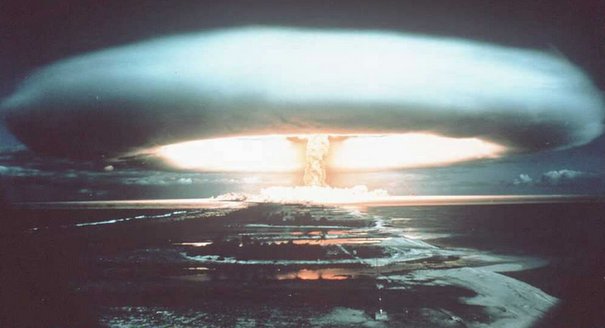
Source: Getty
Nuclear weapons have unintended beneficial consequences, argues Godfried van Benthem van den Bergh. They can make the intended development of a more peaceful global and political order possible. The Carnegie Nonproliferation Program presents this paper in hopes of furthering international dialogue and debate on the nuclear order, including the abolition of nuclear weapons.
In this Policy Outlook Godfried van Benthem van den Bergh, an eminent Dutch scholar, argues that nuclear weapons have unintended beneficial consequences. They can make the intended development of a more peaceful global and political order possible. The Carnegie Nonproliferation Program presents this paper in hopes of furthering international dialogue and debate on the nuclear order, including the abolition of nuclear weapons.
Summary
About the Author
Godfried van Benthem van den Bergh was professor of international relations at Erasmus University, Rotterdam, and the Institute of Social Studies, The Hague. He has been a Harkness Fellow at Harvard University and the University of California at Berkeley; chairman of the Board of the Netherlands Association for International Affairs; and member of the Advisory Council for International Affairs of the Dutch Ministries of Foreign Affairs and Defense. Among his publications are The Nuclear Revolution and the End of the Cold War: Forced Restraint (Basingstoke and London, 1992) and Naar een Nucleaire Wereldorde (Amsterdam, 2008).
Godfried van Benthem van den Bergh
Carnegie does not take institutional positions on public policy issues; the views represented herein are those of the author(s) and do not necessarily reflect the views of Carnegie, its staff, or its trustees.

Huawei pushed hard to enter the Egyptian data centers market, until the Americans made a better offer.

Angie Omar

Middle Eastern states should welcome an accelerated U.S. disengagement from their region.

Michael Young

In an interview, former ambassador Charles Freeman assesses the Trump administration’s war against Iran.
Michael Young

By failing to address Palestinian representation, the current process is bound to lead to just another temporary arrangement.

Nathan J. Brown

Morocco and Algeria, each in its own way, are having to navigate the global economic fallout of the U.S.-Israeli military campaign against Iran.

Yasmine Zarhloule