

In The Media
Minxin Pei
{
  "authors": [
    "Minxin Pei"
  ],
  "type": "legacyinthemedia",
  "centerAffiliationAll": "dc",
  "centers": [
    "Carnegie Endowment for International Peace"
  ],
  "collections": [],
  "englishNewsletterAll": "asia",
  "nonEnglishNewsletterAll": "",
  "primaryCenter": "Carnegie Endowment for International Peace",
  "programAffiliation": "AP",
  "programs": [
    "Asia"
  ],
  "projects": [],
  "regions": [
    "North America",
    "United States",
    "East Asia",
    "China"
  ],
  "topics": [
    "Economy"
  ]
}
Source: Getty
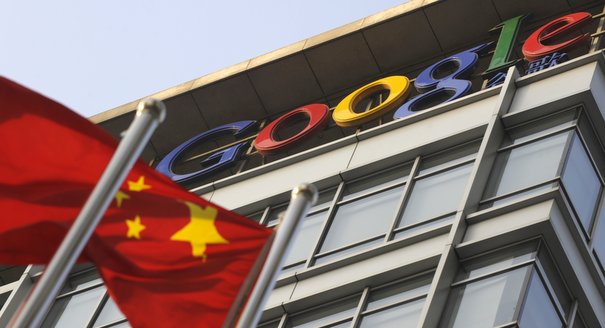
Google’s defiance of the Chinese government will likely remain a crucial moment in China’s relations with the West in general, and should be viewed as a lesson on China’s political calculations behind its policy toward Western companies.
Source: The Diplomat

Although recent events might tempt many to tell Google ‘I told you so,’ the company has still garnered sympathy around the world for standing up to Beijing. And anyone who cherishes the wealth of information generated by unfettered Google searches and hates the idea that secret police might have access to the keys to their e-mail boxes should indeed wish Google luck.
Yet, regardless of the outcome of this contest between a politically vengeful autocratic government and a technologically savvy US firm, the Google episode will likely remain a crucial moment in China’s relations with the West in general, and with Western companies doing business in China in particular.
This is not to suggest that Google’s defiance will force a crack in the ‘Great Firewall of China.’ Indeed, in the short term, the effects of Google’s confrontational tactic will be negative as the Chinese government will almost certainly impose tighter restrictions on the flow of information; Beijing understands clearly the risks of allowing Google to set a precedent by encouraging others to challenge its political control.
Sadly, despite Google’s stand, it has received practically no solidarity from Western companies, most of whom are either afraid of retaliation by Beijing or convinced that Google has made a horrible mistake by giving Beijing no ‘face’ – a Chinese expression for the public humiliation of the government. This disappointing response from the West’s corporate community suggests that it has not fully understood China, especially the political calculations behind its policy toward Western companies.
Among Western business leaders, China stands out as a shining example of what developing countries should do when it comes to foreign direct investment (FDI). Since 1979, China’s pro-FDI policies, including tax concessions, low environmental and labour standards, and speedy approval times, have turned it into a magnet for FDI. And both China and Western investors have benefited greatly from the arrangement, with the love-fest between Beijing and foreign businesses reaching such intensity that many Western corporate leaders have often cited China’s low tax, easy rules approach an example of how their own countries should conduct business. And in the process they have become effective advocates for Beijing, downplaying human rights issues. For them, the business of China is strictly business.
The truth, of course, is completely different.
For Beijing, business is not about business -- it is about politics. This is clear from the way Beijing treats both domestic and foreign businesses. China initially welcomed foreign investment because the ruling Chinese Communist Party desperately needed capital, technology and management expertise to revive China’s moribund economy in the wake of the disastrous Cultural Revolution. In their political calculations, private Western capital was preferable to private domestic capital because a strong indigenous business community might have the potential to support social and political forces that would challenge the rule of the party. As a result, Beijing has treated foreign capital much more generously than the domestic private sector. Many important sectors, such as banking, financial services, petrochemicals, energy exploration and automobile production were opened to foreign investors but not to domestic private firms.
While favouring foreign capital over private domestic capital, Beijing has also maintained its bottom-line: it will not allow foreign firms to control and establish a significant presence in what it considers strategic sectors, such as telecom services, banking (foreigners are passive minority investors at best) and energy. Above all, no private capital -- foreign or otherwise -- is to be allowed into the sector most critical to regime security: the media.
Today, flush with $2.3 trillion in hard currency, China no longer has the same need of foreign capital and its government has readjusted its economic policy accordingly. Because state-owned enterprises are both national champions and political patronage machines (the Communist Party can reward its loyalists with lucrative appointments in these state-owned firms), Beijing’s policy now clearly favours them over both domestic and foreign capital.
As for Google, it has committed a double offense. Its search technology poses a clear and present threat to the party’s regime security, while its capacity to dominate the Internet search business would deprive China of its own national champion, Baidu (which, although a private business, is easier to control).
Google’s senior management may have learned a thing or two about dealing with a one-party regime through its unhappy foray into China. It’s unclear, though, whether other Western firms have learned anything at all at Google’s expense.

Former Adjunct Senior Associate, Asia Program
Pei is Tom and Margot Pritzker ‘72 Professor of Government and the director of the Keck Center for International and Strategic Studies at Claremont McKenna College.
Recent Work
Minxin Pei
Minxin Pei
Carnegie does not take institutional positions on public policy issues; the views represented herein are those of the author(s) and do not necessarily reflect the views of Carnegie, its staff, or its trustees.

As talks begin between Washington and Tehran, Beirut has an opening to advance a regional plan for the party’s disarmament.

Michael Young
What is behind Marco Rubio’s announcement that the body is now an international nongovernmental organization?

Zaha Hassan

Policy discussion is ignoring that the Palestinian national project is hollowed out and apartheid is a present danger.

Nathan J. Brown

As negotiations with Iran and Lebanon continue, chaos is at the heart of the Netanyahu government’s calculations.
Michael Young

The party’s domestic and regional roles have changed, so Lebanon should devise a disarmament strategy that encompasses this.
Michael Young