

Paper
Adam Baczko, Gilles Dorronsoro, Arthur Quesnay
{
  "authors": [
    "Gilles Dorronsoro"
  ],
  "type": "legacyinthemedia",
  "centerAffiliationAll": "dc",
  "centers": [
    "Carnegie Endowment for International Peace",
    "Carnegie Europe"
  ],
  "collections": [],
  "englishNewsletterAll": "ctw",
  "nonEnglishNewsletterAll": "",
  "primaryCenter": "Carnegie Endowment for International Peace",
  "programAffiliation": "SAP",
  "programs": [
    "South Asia"
  ],
  "projects": [],
  "regions": [
    "North America",
    "United States",
    "South Asia",
    "Afghanistan",
    "Asia"
  ],
  "topics": [
    "Security",
    "Military",
    "Foreign Policy"
  ]
}
Source: Getty
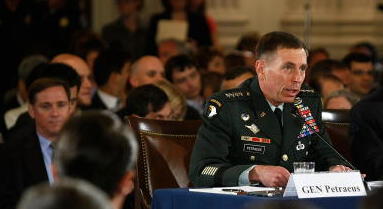
The departure of General McChrystal and arrival of General Petraeus provides a golden opportunity to abandon a failing strategy in Afghanistan.
Source: The New York Times

The coalition’s mounting casualties only increases pressure on the United States and its allies to withdraw quickly.
Progress in Marja is elusive and gains are unlikely to materialize for several years, after the United States is scheduled to begin the draw down of its forces. For Kandahar, the coalition wisely abandoned plans for a major military offensive that were doomed to be a disaster. But with low levels of support for the local government and high levels of corruption, there is virtually no chance for success in the area.
Given the reality on the ground, there is little hope for reversing the situation in Afghanistan over the next 12 to 18 months. The Taliban continue to gain strength and it is unrealistic to try to weaken them before beginning negotiations.
The new U.S. leadership has a chance to design and carry out a more realistic approach. General Petraeus should scale down the current offensive and limit the coalition’s mounting casualties — these casualties only put more pressure on the United States and its allies to withdraw quickly.
Negotiations with the Taliban should begin this winter after the coalition offers a cease fire. As the negotiations move ahead, the United States needs to assume a leadership position as the current Afghan government cannot be trusted to defend the interests of the international community.
The time to rethink U.S. strategy is now and McChrystal’s departure provides an unexpected opportunity to change course.
Former Nonresident Scholar, South Asia Program
Dorronsoro’s research focuses on security and political development in Afghanistan. He was a professor of political science at the Sorbonne in Paris and the Institute of Political Studies of Rennes.
Recent Work
Adam Baczko, Gilles Dorronsoro, Arthur Quesnay
Gilles Dorronsoro
Carnegie does not take institutional positions on public policy issues; the views represented herein are those of the author(s) and do not necessarily reflect the views of Carnegie, its staff, or its trustees.

Huawei pushed hard to enter the Egyptian data centers market, until the Americans made a better offer.

Angie Omar

Middle Eastern states should welcome an accelerated U.S. disengagement from their region.

Michael Young

In an interview, former ambassador Charles Freeman assesses the Trump administration’s war against Iran.
Michael Young

By failing to address Palestinian representation, the current process is bound to lead to just another temporary arrangement.

Nathan J. Brown

The armed forces champion a form of capitalism that is generating revenue, but its reliance on rent faces diminishing returns, leaving the country with massive sunk costs and deferred returns, deepening dependency on external borrowing.

Yezid Sayigh