

Q&A
- +1
Amr Hamzawy, Andrew Leber, Eric Lob, …
{
  "authors": [
    "Marwan Muasher"
  ],
  "type": "legacyinthemedia",
  "centerAffiliationAll": "dc",
  "centers": [
    "Carnegie Endowment for International Peace",
    "Carnegie Europe",
    "Malcolm H. Kerr Carnegie Middle East Center"
  ],
  "collections": [],
  "englishNewsletterAll": "menaTransitions",
  "nonEnglishNewsletterAll": "",
  "primaryCenter": "Carnegie Endowment for International Peace",
  "programAffiliation": "MEP",
  "programs": [
    "Middle East"
  ],
  "projects": [],
  "regions": [
    "Middle East",
    "Israel",
    "Palestine",
    "Levant"
  ],
  "topics": [
    "Security"
  ]
}
Source: Getty
A regional approach to the conflict between Israel and Palestine would ensure that all parties involved have the ability to make painful compromises and still achieve a viable agreement.
Source: Americans for Peace Now

The regional approach would provide a regional safety net for both the Israelis and Palestinians. The Israelis would receive normalized relations with the Arab and Muslim world and security guarantees from the Arab world, in particular in regards to Hamas and Hezbollah. The Palestinians would be able to compromise on critical final status issues, such as the status of East Jerusalem and refugees, without being demonized by the Arab world for making concessions.
Two principal regional players are the Saudis and Syrians. The Saudis can provide the necessary cover for the Palestinians when they compromise in the course of bilateral negotiations and the Syrians, if they commit to ending support for Hamas and Hezbollah in exchange for the Golan Heights, can ensure Israeli security. Ultimately, a peace process that ignores such a regional approach is “chasing a mirage,” Muasher concluded.

Vice President for Studies
Marwan Muasher is vice president for studies at Carnegie, where he oversees research in Washington and Beirut on the Middle East. Muasher served as foreign minister (2002–2004) and deputy prime minister (2004–2005) of Jordan, and his career has spanned the areas of diplomacy, development, civil society, and communications.
Recent Work



Amr Hamzawy, Andrew Leber, Eric Lob, …
Marwan Muasher
Carnegie does not take institutional positions on public policy issues; the views represented herein are those of the author(s) and do not necessarily reflect the views of Carnegie, its staff, or its trustees.

In an interview, Ian Lustick and Eli Clifton discuss their new book on why a prominent ally has so much influence in America.

Michael Young

As the U.S. stumbles in its war with Iran, we are likely to see an acceleration of its disengagement from the region.
Michael Young
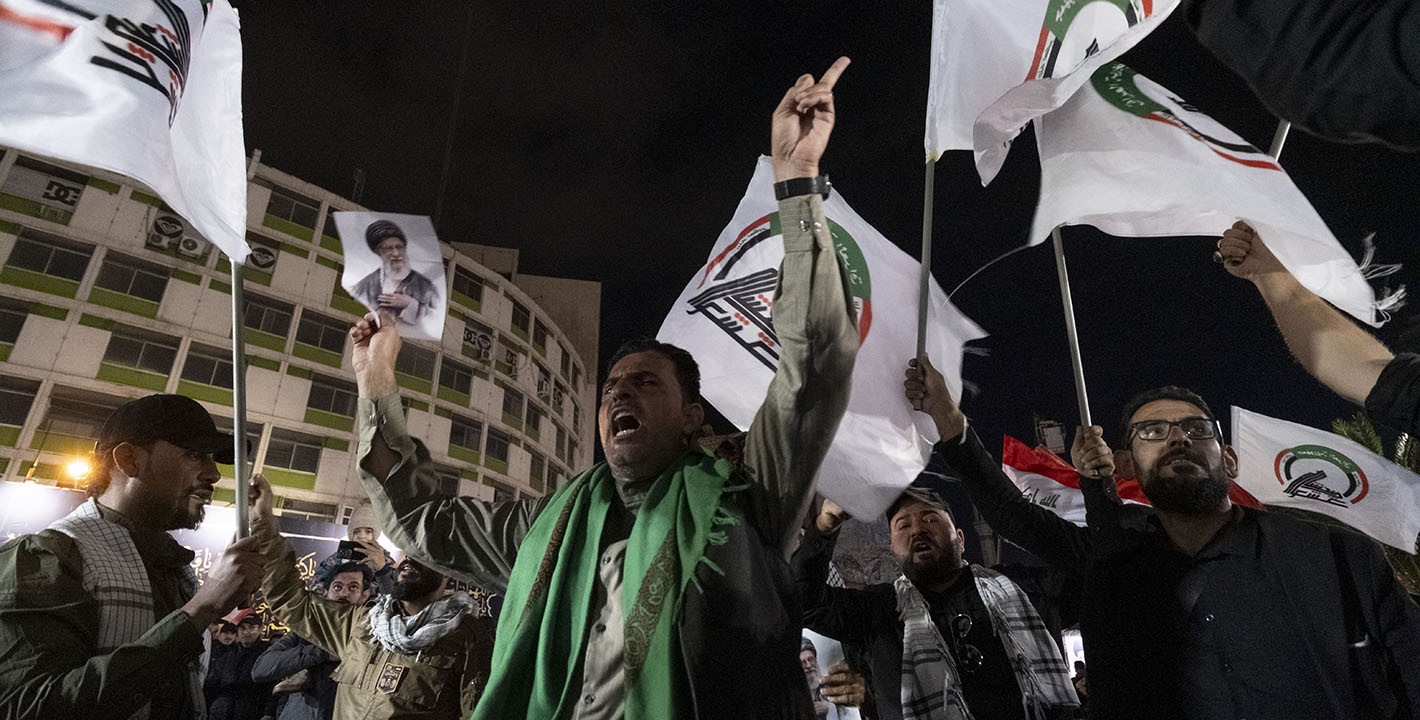
The Zaidi government’s objective to collect weapons is constrained by regional conflict, but it can take certain measures at home.
Ali Al-Mawlawi

It is improbable that Israel’s forthcoming elections will alter much in terms of how the country thinks about security.

Nathan J. Brown

Huawei pushed hard to enter the Egyptian data centers market, until the Americans made a better offer.

Angie Omar