

Other
Detlef Waechter
{
  "authors": [
    "Detlef Waechter"
  ],
  "type": "other",
  "centerAffiliationAll": "dc",
  "centers": [
    "Carnegie Endowment for International Peace",
    "Carnegie Europe",
    "Carnegie Russia Eurasia Center"
  ],
  "collections": [
    "Transatlantic Cooperation",
    "U.S. Nuclear Policy"
  ],
  "englishNewsletterAll": "ctw",
  "nonEnglishNewsletterAll": "",
  "primaryCenter": "Carnegie Endowment for International Peace",
  "programAffiliation": "NPP",
  "programs": [
    "Nuclear Policy"
  ],
  "projects": [],
  "regions": [
    "North America",
    "United States",
    "Caucasus",
    "Russia",
    "Western Europe",
    "Germany",
    "Europe"
  ],
  "topics": [
    "Nuclear Policy",
    "Global Governance"
  ]
}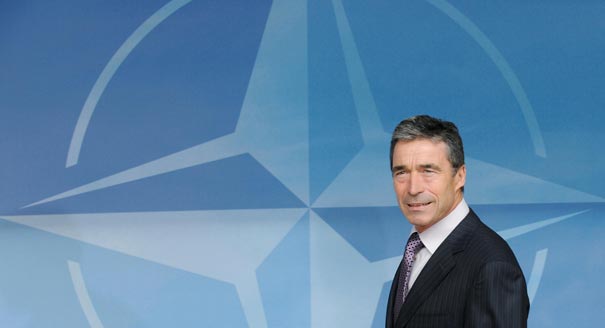
Source: Getty
When NATO leaders convene in November, they will undertake a reexamination of the alliance’s policy on nuclear weapons, a review that, spurred by recent nonproliferation initiatives, could split NATO’s members if not handled carefully.
When NATO leaders convene in Lisbon November 19-20, they will not only update the Alliance’s Strategic Concept to guide its work over the next decade but also reexamine its policy on nuclear weapons. Spurred by recent nonproliferation initiatives, the review could split NATO’s members if not handled carefully.
Detlef Waechter writes that NATO members should endorse the approach Secretary of State Hillary Clinton outlined in her April meeting with foreign ministers in Estonia, which called for NATO to retain its nuclear status but reduce the role and number of nuclear weapons. This modest but realistic course will allow NATO to play a constructive role in arms control, he argues.
Using a multi-track approach “requires considerable will to compromise on the part of the United States, which owns the tactical nuclear weapons in Europe as well as the strategic weapons systems,” Waechter writes. “But the result—a European continent free of nuclear weapons, a NATO reconciled with Russia, and an Alliance free to tackle emerging security threats—would certainly make the effort worthwhile.”
Former Visiting Scholar, Nuclear Policy Program
Waechter is a visiting scholar in Carnegie’s Nuclear Policy Program, where his research focuses on NATO, nuclear, security and disarmament policy.
Recent Work
Detlef Waechter
Carnegie does not take institutional positions on public policy issues; the views represented herein are those of the author(s) and do not necessarily reflect the views of Carnegie, its staff, or its trustees.

In an interview, Rozina Ali discusses her new book on the rise and manifestations of Islamophobia in the United States.

Michael Young

In an interview, Ian Lustick and Eli Clifton discuss their new book on why a prominent ally has so much influence in America.
Michael Young

As the U.S. stumbles in its war with Iran, we are likely to see an acceleration of its disengagement from the region.
Michael Young

Middle Eastern states should welcome an accelerated U.S. disengagement from their region.
Michael Young

In an interview, former ambassador Charles Freeman assesses the Trump administration’s war against Iran.
Michael Young