

In The Media
Jessica Tuchman Mathews
{
  "authors": [
    "Jessica Tuchman Mathews"
  ],
  "type": "legacyinthemedia",
  "centerAffiliationAll": "",
  "centers": [
    "Carnegie Endowment for International Peace",
    "Malcolm H. Kerr Carnegie Middle East Center",
    "Carnegie Russia Eurasia Center"
  ],
  "collections": [],
  "englishNewsletterAll": "",
  "nonEnglishNewsletterAll": "",
  "primaryCenter": "Carnegie Endowment for International Peace",
  "programAffiliation": "",
  "programs": [],
  "projects": [
    "Eurasia in Transition"
  ],
  "regions": [
    "Middle East",
    "Iran",
    "North Africa",
    "Libya",
    "Iraq",
    "Syria",
    "East Asia",
    "North Korea",
    "Gulf",
    "North America",
    "United States"
  ],
  "topics": [
    "Security",
    "Nuclear Policy",
    "Military",
    "Foreign Policy"
  ]
}
Source: Getty
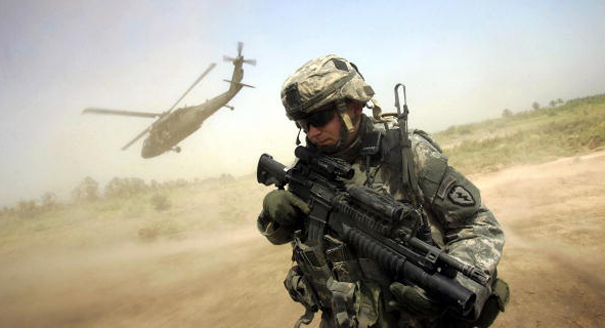
An international commitment to keep weapons of mass destruction out of Saddam Hussein’s hands could have worked and led to a WMD enforcement mechanism for use not only in Iraq, but also in North Korea, Libya, Syria, Iran, and elsewhere.
Source: Washington Post

An additional casualty is the loss of a mechanism for enforcing nonproliferation agreements, though how this might have changed the course of subsequent events — in Iran, for example — cannot be known.
The public may also never know exactly why or when the Bush administration made its tragically misguided decision to go to war. Former Treasury secretary Paul O’Neill has said that unseating Saddam Hussein dominated a meeting with President George W. Bush 10 days after Bush’s inauguration — eight months before the Sept. 11, 2001, attacks. Among the many reasons posited — avenging an Iraqi attack on Bush’s father, getting the United States’ hands on Mideast oil, extending democracy across the region — only the charge that Hussein was building weapons of mass destruction came close to selling the American people on war.
It’s now clear that national intelligence services were hideously wrong and that administration officials, including the president, employed a degree of exaggeration and misuse of raw intelligence that amounted to duplicity in trying to make a convincing case. What’s less well-known, however, is that at the same time, United Nations inspectors were getting the story right. Their assessments of Iraq’s nuclear, chemical, biological and missile programs in the months leading up to the war were remarkably close to what was later found. Yet by insisting on invading before these inspections had time to succeed, the United States aborted what could have been a striking international success.
From 1991 to 1998, a force known as UNSCOM and the International Atomic Energy Agency discovered and eliminated most, and possibly all, of Iraq’s WMD-related facilities, including a massive program to enrich uranium for weapons. Through painstaking detective work, UNSCOM uncovered Iraq’s most secret program, which dealt with biological weapons, and oversaw destruction of most of its chemical and biological weapons agents. UNSCOM uncovered covert transactions between Iraq and more than 500 companies from 40 countries and implemented a mechanism to track and block banned exports and imports. The annual cost for all this? About $30 million.
The next round of inspections lasted less than four months. By the time Vice President Dick Cheney and Defense Secretary Donald Rumsfeld were calling the process a “sham” and “exhausted,” just before the U.S. invasion forced the operation to shut down, inspectors had visited only half of the more than 700 sites identified by UNSCOM and had barely begun to examine new sites.
After the first weeks of war, the United States launched its own year-long WMD hunt, at a cost of $900 million, only to discover little that was new.
Given all this, the international community should consider: What might have happened had the United States sought WMD disarmament and not regime change?
Inspections do not consist of running from place to place, hoping to find something hidden. Conducting lengthy interviews, establishing relationships with key individuals, building a story from person to person, launching procurement investigations, performing technical analysis and sifting through paper all contribute. Together with physical inspections, they can produce solid answers. The process would have taken roughly a year in Iraq. After destroying what was found, open-ended monitoring would have been put in place. Based on that success, a permanent inspections capability — under discussion after UNSCOM — might have been established in New York or Geneva.
Such an outcome would have made clear that it was not just the United States or a handful of major powers that cares about stopping the spread of weapons of mass destruction. Rather, this widely supported international effort, carried through to final disarmament, would have reflected that the nearly 200 nations that have signed WMD treaties view illegal weapons programs as an intolerable threat to international peace.
The threat of force was necessary for this first use of inspections in Iraq. Would a standing inspections capability have gradually acquired the authority for intervention without such a threat? We cannot know — but the record is clear that when U.N. action carried unimpeachable legitimacy, broad support and unity of purpose in the Security Council, even Saddam Hussein backed down before it. In international diplomacy, success breeds strength, just as failure to enforce agreements leads to fecklessness.
A painful conclusion is inescapable: Had the Bush administration pursued an international commitment to keep weapons of mass destruction out of Hussein’s hands, such an agreement could have worked.
From it, a WMD enforcement mechanism could have been built for use not only in Iraq but also in North Korea, Libya, Syria, Iran and elsewhere. The deep split between nuclear haves and have-nots, inflamed by the war, would have been greatly eased. The long-term cooperation needed to keep WMDs out of terrorists’ hands would have been strengthened, rather than undermined. The horrible precedent of a unilateral right to attack in “preventive self-defense” would not have been asserted, and multilateral intervention to prevent the spread of nuclear weapons would not be widely opposed, as it is today, as a disguised intent on the part of a few to force regime change. That is the short list.
This article originally appeared in the Washington Post.

Distinguished Fellow
Mathews is a distinguished fellow at the Carnegie Endowment for International Peace. She served as Carnegie’s president for 18 years.
Recent Work
Jessica Tuchman Mathews
Jessica Tuchman Mathews
Carnegie does not take institutional positions on public policy issues; the views represented herein are those of the author(s) and do not necessarily reflect the views of Carnegie, its staff, or its trustees.
As the U.S.-led Coalition withdraws, the Kurds’ reliance on Baghdad, and on themselves, will only increase.
Wladimir van Wilgenburg

In an interview, Ian Lustick and Eli Clifton discuss their new book on why a prominent ally has so much influence in America.

Michael Young

As the U.S. stumbles in its war with Iran, we are likely to see an acceleration of its disengagement from the region.
Michael Young

In Egypt’s dense cities, the disappearance of foliage has health implications and punishes daily commuters.

Angie Omar
The Zaidi government’s objective to collect weapons is constrained by regional conflict, but it can take certain measures at home.
Ali Al-Mawlawi