

Other
Michael D. Swaine
{
  "authors": [
    "Michael D. Swaine"
  ],
  "type": "legacyinthemedia",
  "centerAffiliationAll": "dc",
  "centers": [
    "Carnegie Endowment for International Peace",
    "Carnegie China"
  ],
  "collections": [
    "China’s Foreign Relations",
    "U.S.-China Relations"
  ],
  "englishNewsletterAll": "asia",
  "nonEnglishNewsletterAll": "",
  "primaryCenter": "Carnegie Endowment for International Peace",
  "programAffiliation": "AP",
  "programs": [
    "Asia"
  ],
  "projects": [],
  "regions": [
    "North America",
    "United States",
    "East Asia",
    "China"
  ],
  "topics": [
    "Security",
    "Military",
    "Foreign Policy"
  ]
}
Source: Getty
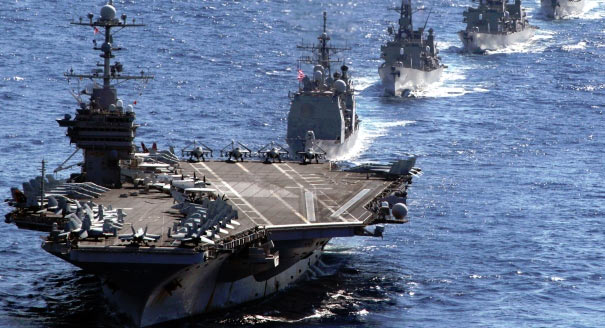
Fundamental differences in U.S. and Chinese views of regional security could increase the likelihood of crises in the Asia-Pacific.
Source: China Leadership Monitor

This article takes a close look at the Chinese reactions to Washington’s increased stress on Asia, including Chinese assessments of the perceived implications of this policy shift for the region and China in particular. Three categories of sources are examined :
The essay begins with a brief summary of the history and evolution of the Pacific Pivot (centering on key leadership speeches and writings as well as statements by U.S. government sources, such as State Department and Defense Department officials and spokespersons), followed by a quantitative and qualitative assessment of the Chinese response, divided into both authoritative and quasi-authoritative versus non-authoritative sources. The quantitative analysis examines the frequency and timing of the appearance of statements regarding the pivot in selected key media.
The qualitative analysis examines the content and timing of Chinese statements and commentaries with regard to five issue areas where references to the Pacific Pivot are most evident:
However, not all of the authoritative, quasi-authoritative, and non-authoritative sources examined cover every one of these six issue areas.

Former Senior Fellow, Asia Program
Swaine was a senior fellow at the Carnegie Endowment for International Peace and one of the most prominent American analysts in Chinese security studies.
Recent Work
Michael D. Swaine
Michael D. Swaine
Carnegie does not take institutional positions on public policy issues; the views represented herein are those of the author(s) and do not necessarily reflect the views of Carnegie, its staff, or its trustees.

As the U.S. stumbles in its war with Iran, we are likely to see an acceleration of its disengagement from the region.

Michael Young

Huawei pushed hard to enter the Egyptian data centers market, until the Americans made a better offer.

Angie Omar

Middle Eastern states should welcome an accelerated U.S. disengagement from their region.
Michael Young

In an interview, former ambassador Charles Freeman assesses the Trump administration’s war against Iran.
Michael Young

By failing to address Palestinian representation, the current process is bound to lead to just another temporary arrangement.

Nathan J. Brown