

Article
Wang Tao
{
  "authors": [
    "Wang Tao"
  ],
  "type": "legacyinthemedia",
  "centerAffiliationAll": "",
  "centers": [
    "Carnegie Endowment for International Peace",
    "Carnegie China"
  ],
  "collections": [],
  "englishNewsletterAll": "",
  "nonEnglishNewsletterAll": "",
  "primaryCenter": "Carnegie China",
  "programAffiliation": "",
  "programs": [],
  "projects": [],
  "regions": [],
  "topics": [
    "Security"
  ]
}
Source: Getty
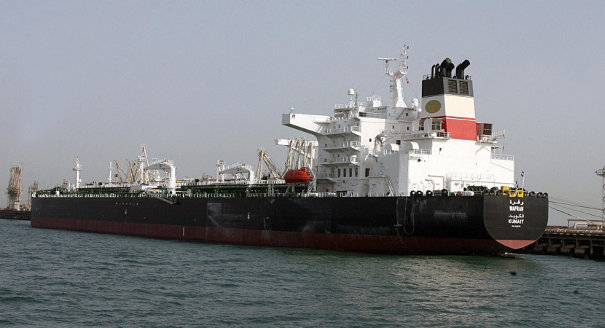
Although the South China Sea offers the potential to alleviate China's dependence on foreign oil, maintaining peace in the region is more critical to China’s energy security than the exploitation of the resources in the region.
Source: CCTV
Speaking to CCTV, Carnegie’s Wang Tao discussed the regional sensitivities surrounding the South China Sea and the area's potential to alleviate China’s dependence on foreign oil imports. He also outlined some of the serious regional and environmental concerns raised by the South China Sea.
Emphasizing the environmental risks of deep sea oil exploration in the South China Sea and the strategic importance of the region to China, Wang said that the priority for Beijing should be developing sophisticated oil extraction technologies to produce oil as safely as possible. He added that since this area is critical to the transport of China’s global oil imports, maintaining peace in the South China Sea is more important to China’s oil supply and energy security than the exploitation of the resources in the region.
Former Nonresident Scholar, Carnegie-Tsinghua Center for Global Policy
Wang Tao was a nonresident scholar in the Energy and Climate Program based at the Carnegie–Tsinghua Center for Global Policy.
Recent Work
Wang Tao
Wang Tao, Yang Yifang
Carnegie does not take institutional positions on public policy issues; the views represented herein are those of the author(s) and do not necessarily reflect the views of Carnegie, its staff, or its trustees.

Just look at Iraq in 1991.

Marwan Muasher

Baku may allow radical nationalists to publicly discuss “reunification” with Azeri Iranians, but the president and key officials prefer not to comment publicly on the protests in Iran.

Bashir Kitachaev
In addressing Hezbollah’s disarmament, the Lebanese state must start by increasing its own leverage.

Michael Young
The country’s political and military establishment is still debating how to interpret the recent war’s outcome.

Nicole Grajewski
Spot analysis from Carnegie scholars on events relating to the Middle East and North Africa.

Mohanad Hage Ali