

Q&A
Stephen Tankel
{
  "authors": [
    "Stephen Tankel"
  ],
  "type": "legacyinthemedia",
  "centerAffiliationAll": "dc",
  "centers": [
    "Carnegie Endowment for International Peace"
  ],
  "collections": [],
  "englishNewsletterAll": "ctw",
  "nonEnglishNewsletterAll": "",
  "primaryCenter": "Carnegie Endowment for International Peace",
  "programAffiliation": "SAP",
  "programs": [
    "South Asia"
  ],
  "projects": [],
  "regions": [
    "North America",
    "United States",
    "South Asia",
    "Pakistan"
  ],
  "topics": [
    "Security",
    "Military",
    "Foreign Policy"
  ]
}
Source: Getty
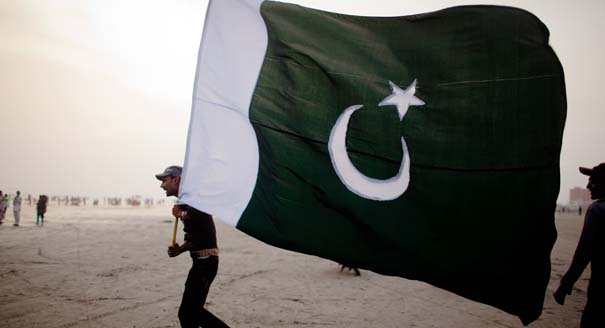
Following Pakistan’s recent decision to reopen its border crossings to U.S. and NATO military transit into Afghanistan, the U.S.-Pakistani relationship has improved, but significant challenges remain.
Source: Washington Journal
Speaking on the Washington Journal, Carnegie's Stephen Tankel discussed some of the context and consequences of Pakistan's recent decision to re-open its border crossings for U.S. and NATO military transit into Afghanistan. He argued that while this decision was a step forward, the bilateral relationship was still a troubled one. Pakistan desperately needs to normalize its relations with its neighbors and enter into a more transactional, distanced relationship with the United States, he asserted. Tankel also discussed Lashkar-e-Taiba, the jihadi group responsible for the 2008 Mumbai attack, and stated that it may gain increasing staying power in Pakistani society if the Pakistani state does not stop its support soon.
Former Nonresident Scholar, South Asia Program
Tankel was a nonresident scholar at the Carnegie Endowment, where his research focuses on insurgency, terrorism, and the evolution of nonstate armed groups.
Recent Work
Stephen Tankel
Stephen Tankel
Carnegie does not take institutional positions on public policy issues; the views represented herein are those of the author(s) and do not necessarily reflect the views of Carnegie, its staff, or its trustees.

As the U.S. stumbles in its war with Iran, we are likely to see an acceleration of its disengagement from the region.

Michael Young

Huawei pushed hard to enter the Egyptian data centers market, until the Americans made a better offer.

Angie Omar

Middle Eastern states should welcome an accelerated U.S. disengagement from their region.
Michael Young

In an interview, former ambassador Charles Freeman assesses the Trump administration’s war against Iran.
Michael Young

By failing to address Palestinian representation, the current process is bound to lead to just another temporary arrangement.

Nathan J. Brown