• Research
  • Diwan
  • About
  • Experts
Carnegie Middle East logoCarnegie lettermark logo
PalestineSyria
{
  "authors": [
    "Jan Techau"
  ],
  "type": "other",
  "centerAffiliationAll": "",
  "centers": [
    "Carnegie Endowment for International Peace",
    "Carnegie Europe"
  ],
  "collections": [],
  "englishNewsletterAll": "",
  "nonEnglishNewsletterAll": "",
  "primaryCenter": "Carnegie Europe",
  "programAffiliation": "",
  "programs": [],
  "projects": [],
  "regions": [
    "Europe"
  ],
  "topics": [
    "Foreign Policy"
  ]
}
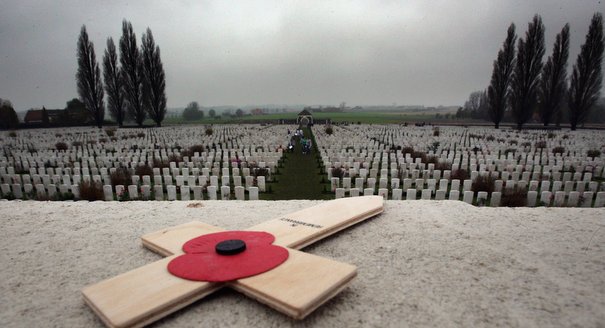
Source: Getty

Other
Carnegie Europe

Remembrance Day Lecture

Peace is achieved through a permanent balancing of diverging interests and an understanding that work toward peace will never end; it must be achieved again and again.

Link Copied
By Jan Techau
Published on Nov 10, 2012

Source: Flemish Parliament

Each year, the Flemish Peace Institute, the Peace Fund of the City of Ypres, and the In Flanders Fields Museum commemorate the end of the First World War with a Remembrance Day Lecture. This year, Carnegie’s Jan Techau was invited to discuss his thoughts on war and peace on the eve of Armistice Day. Techau took this opportunity to discuss the process of peace in Europe and beyond.
Highlights

  • Peace: Techau argued that peace, like health, is not an end state, but a continuous process. It is achieved through a permanent balancing of diverging interests and an understanding that work toward peace will never end; it must be achieved again and again.
     
  • Europe and the Process of Peace: The EU is an ideal example of “peace as a process” rather than a “peace process,” Techau said. The EU created a mechanism to address and resolve past problems by applying commonly accepted rules that remove causes of conflict and in turn produce peace. This contrasts with the currently failing Middle East peace process which lacks machinery and commonly accepted rules, and therefore is unable to solve problems, he added. He argued that Europe has not lost its intrinsic instabilities and is still capable of war, genocide, jealousy, inflated nationalism, disregard for minorities, territorial disputes, racism, a lack of compassion, and other negative qualities, but it has the mechanisms to fight these negative trends.
     
  • Europe and the World: Techau explained that over the last 60 years, Europe has focused on internal peace. It has shown little concern for its external role, as it outsourced its global strategic engagements to the United States in order to focus on pacifying itself. However, as U.S. defense priorities shift and EU integration with the world is becoming more profound, Europe is no longer able to continue to carry on this way, Techau contended. He stressed that Europe’s peace, wealth, freedom, and stability are no longer upheld internally, and Europe must look externally if it wants to maintain internal peace. He argued that Europe must become a more unified, stronger, and more self-confident global player, with a foreign policy and strategy, the means to implement them, and a willingness to tackle the tricky issues. Techau added that in order to maintain peace in a world that is increasingly interconnected, it is imperative that Europe go global with its peace mechanism.
     
  • An Ambitious Europe: The problem, according to Techau, is less a lack of money and attention span than a lack of ambition. He defined this ambition as the will to survive, the aspiration to look at facts and developments in the world, and to do something about the issues coming Europe’s way. Lack of ambition results in a lack of solidarity, Techau said. Europe needs an ambitious foreign policy, not to dominate, but to survive. Techau concluded that Europe needs to be a force for good in the world, because few others want to be that, and few others can.

About the Author

Jan Techau

Director, Europe Team, Eurasia Group

Techau is director with Eurasia Group's Europe team, covering Germany and European security from Berlin. Previously, he was director of Carnegie Europe.

    Recent Work
  • Commentary
    Can Europe Trust the United States Again?

      Nathalie Tocci, Jan Techau

  • Commentary
    Pre-Reformation Europe and the Coming Schism

      Jan Techau

Jan Techau
Director, Europe Team, Eurasia Group
Jan Techau
Foreign PolicyEurope

Carnegie does not take institutional positions on public policy issues; the views represented herein are those of the author(s) and do not necessarily reflect the views of Carnegie, its staff, or its trustees.

More Work from Malcolm H. Kerr Carnegie Middle East Center

  • Commentary
    Diwan
    Iran and the New Geopolitical Moment

    A coalition of states is seeking to avert a U.S. attack, and Israel is in the forefront of their mind.

      Michael Young

  • Commentary
    Carnegie Politika
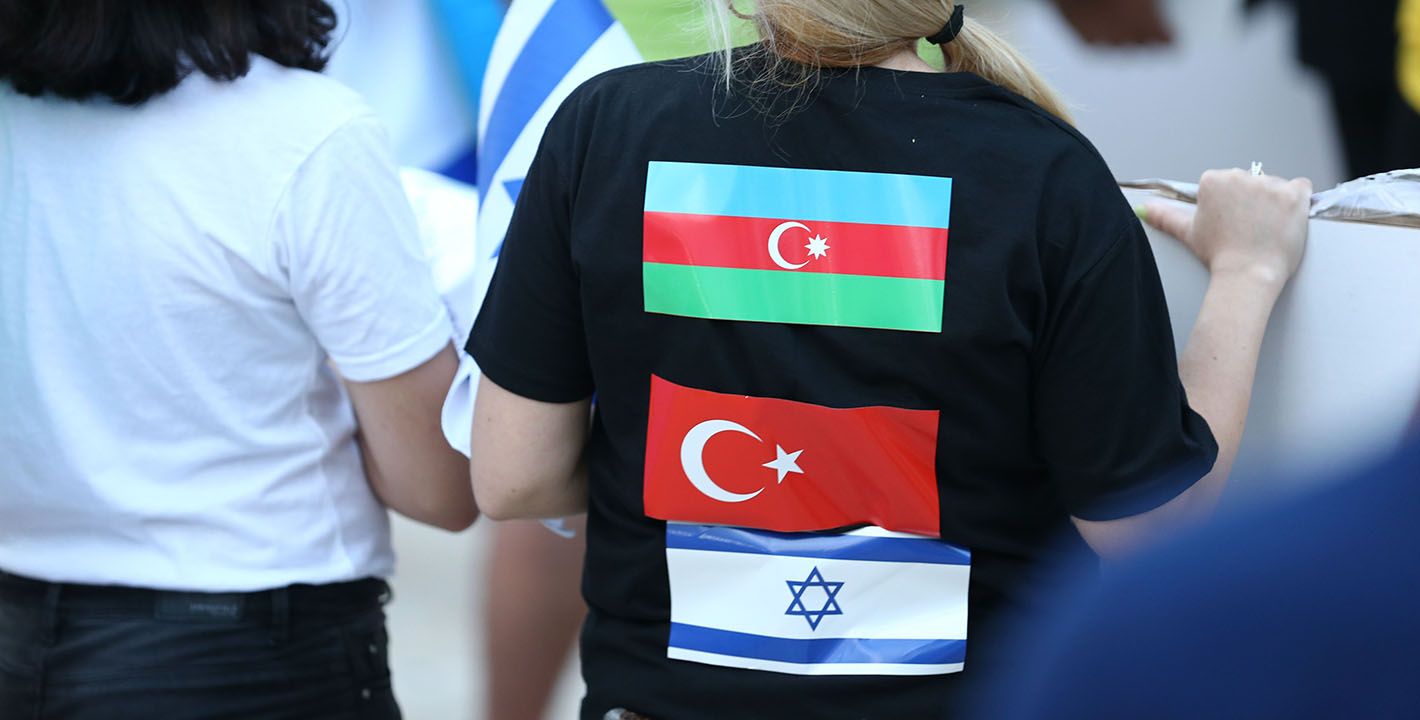
    Baku Proceeds With Caution as Ethnic Azeris Join Protests in Neighboring Iran

    Baku may allow radical nationalists to publicly discuss “reunification” with Azeri Iranians, but the president and key officials prefer not to comment publicly on the protests in Iran.

      Bashir Kitachaev
  • Commentary
    Diwan
    Iran’s Woes Aren’t Only Domestic

    The country’s leadership is increasingly uneasy about multiple challenges from the Levant to the South Caucasus.

      Armenak Tokmajyan
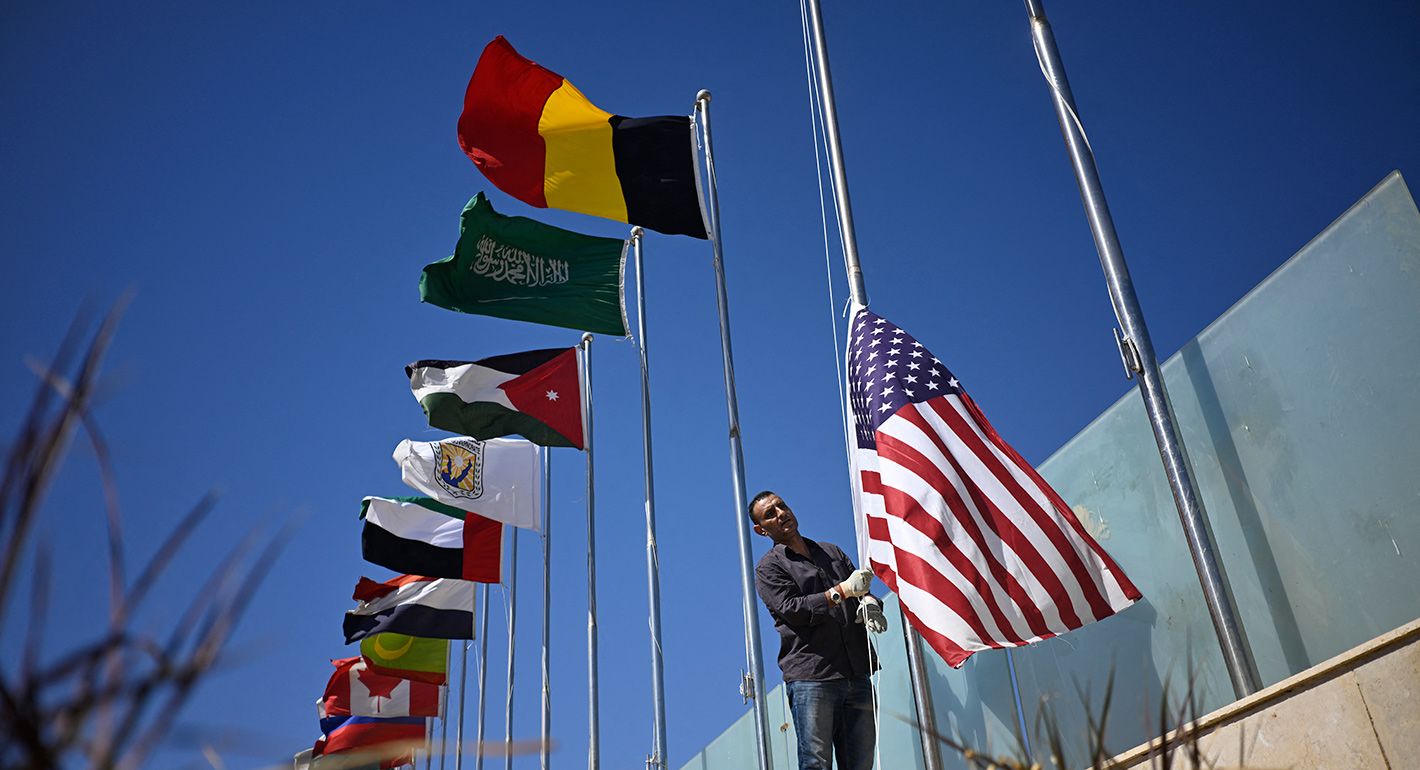
  • A municipal employee raises the US flag among those of other nations in Sharm el-Sheikh, as the Egyptian Red Sea resort town gets ready to receive international leaders, following a Gaza ceasefire agreement, on October 11, 2025.
    Article
    The Tragedy of Middle Eastern Politics

    The countries of the region have engaged in sustained competition that has tested their capacities and limitations, while resisting domination by rivals. Can a more stable order emerge from this maelstrom, and what would it require?
      • Mohamed Ali Adraoui

      Hamza Meddeb, Mohamed Ali Adraoui

  • Paper
    The United States and the Emerging Security Order in Eastern Syria

    As Washington reduces its presence in the country, the success of its withdrawal and continued containment of the Islamic State will hinge on adopting an approach of flexible oversight built around three priorities, as well as balancing Turkish and Israeli red lines.

      Kheder Khaddour, Issam Kayssi

Get more news and analysis from
Malcolm H. Kerr Carnegie Middle East Center
Carnegie Middle East logo, white
  • Research
  • Diwan
  • About
  • Experts
  • Projects
  • Events
  • Contact
  • Careers
  • Privacy
  • For Media
Get more news and analysis from
Malcolm H. Kerr Carnegie Middle East Center
© 2026 Carnegie Endowment for International Peace. All rights reserved.