

Article
Frederic Wehrey, Charles H. Johnson
{
  "authors": [
    "Frederic Wehrey"
  ],
  "type": "legacyinthemedia",
  "centerAffiliationAll": "dc",
  "centers": [
    "Carnegie Endowment for International Peace"
  ],
  "collections": [],
  "englishNewsletterAll": "menaTransitions",
  "nonEnglishNewsletterAll": "",
  "primaryCenter": "Carnegie Endowment for International Peace",
  "programAffiliation": "MEP",
  "programs": [
    "Middle East"
  ],
  "projects": [],
  "regions": [
    "North America",
    "United States",
    "Middle East"
  ],
  "topics": [
    "Security",
    "Military",
    "Foreign Policy"
  ]
}
Source: Getty
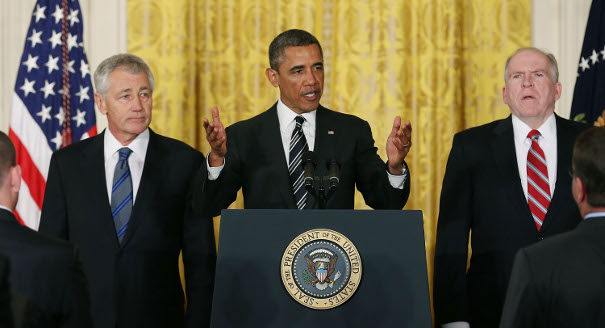
The nomination of Chuck Hagel for U.S. defense secretary comes at a time when promoting America’s strategic interests will frequently compete with the pressures induced by the current era of austerity.
Source: KSA2
The nomination of Chuck Hagel for U.S. defense secretary comes at a time when promoting America’s strategic interests will frequently compete with the pressures induced by the current era of austerity. Speaking with KSA2, Carnegie's Frederic Wehrey noted that, if confirmed, Hagel would be operating under a new orientation towards military strategy that is largely reticent to commit troops to military interventions. “This is a man whose approach is guided by pragmatism and his experiences with the Vietnam war,” said Wehrey. Hagel will also have to address the challenge of how to project power in the Persian Gulf with less resources and less of a footprint. Ultimately, whether it is in regards to the U.S.-Israel relationship, the Iranian nuclear program, or projecting American power, the Hagel nomination represents the Obama administration’s commitment to a realist and pragmatic foreign policy, Wehrey concluded.
Senior Fellow, Middle East Program
Frederic Wehrey is a senior fellow in the Middle East Program at the Carnegie Endowment for International Peace, where his research focuses on governance, conflict, and security in Libya, North Africa, and the Persian Gulf.
Recent Work
Frederic Wehrey, Charles H. Johnson
Frederic Wehrey, Charles H. Johnson
Carnegie does not take institutional positions on public policy issues; the views represented herein are those of the author(s) and do not necessarily reflect the views of Carnegie, its staff, or its trustees.

Huawei pushed hard to enter the Egyptian data centers market, until the Americans made a better offer.

Angie Omar

Middle Eastern states should welcome an accelerated U.S. disengagement from their region.

Michael Young

In an interview, former ambassador Charles Freeman assesses the Trump administration’s war against Iran.
Michael Young

The accord represents a pivotal moment in the region to avert a security vacuum in the Gulf.


Azeema Cheema, Mohanad Hage Ali

In an interview, Jason Burke discusses his sweeping account of the “revolutionists” who so shaped the 1970s and early 1980s.
Michael Young